Quick answer
Start by placing two or three Itzy Blocks within reach during tummy time or sitting play, then model squeezing, stacking, and naming textures. Follow your baby's cues and keep sessions short. These squishy-soft blocks are designed for sensory exploration, not for building tall towers.
Why sensory blocks work for babies around 8 months
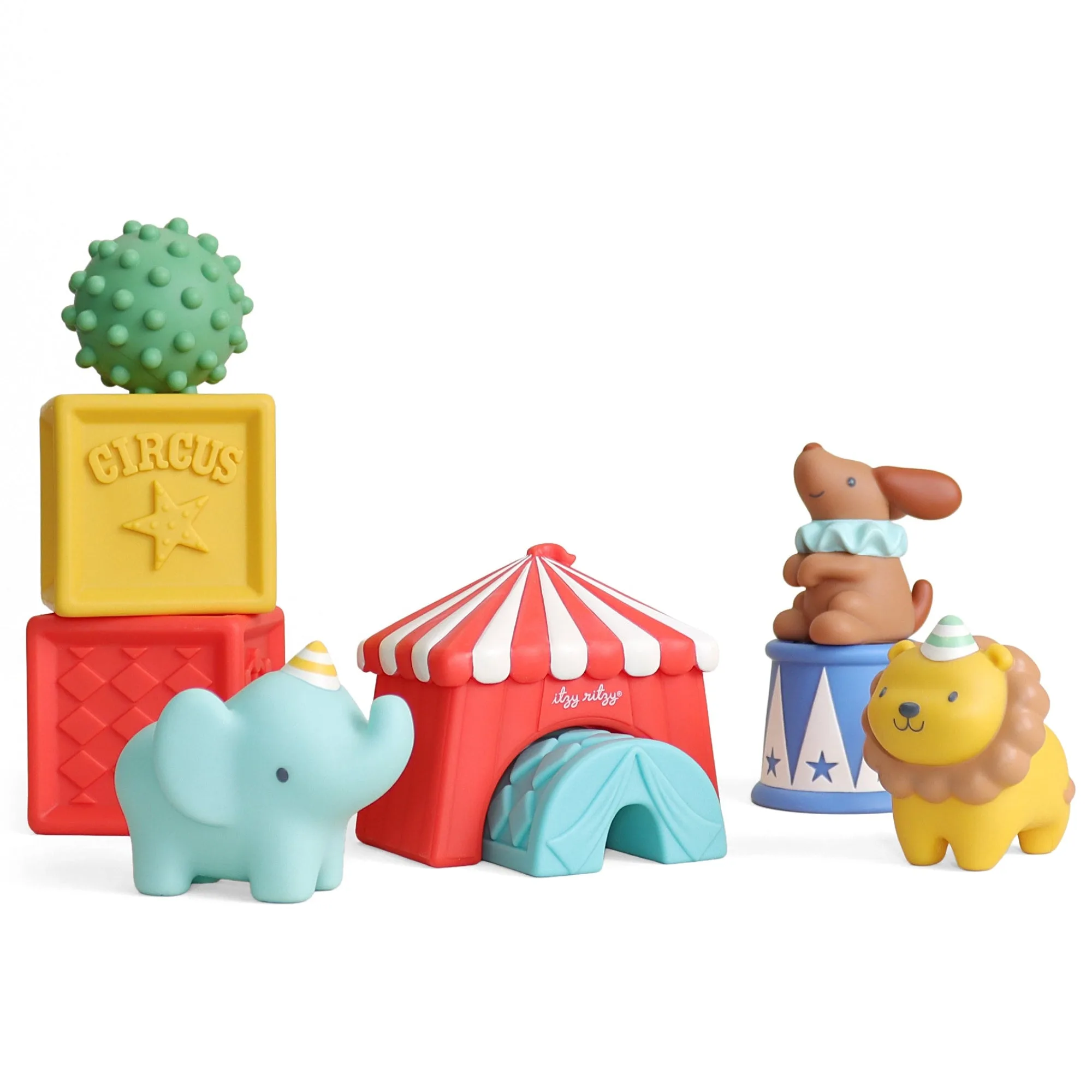
Around 8 months, babies are learning to grasp, transfer objects between hands, and mouth everything. Itzy Blocks Sensory Blocks Set includes 10 pieces with squishy-soft blocks and textured characters. That mix gives your baby different shapes and surfaces to explore without requiring advanced motor skills. The soft material also means less noise and fewer hard edges than wooden or plastic blocks.
Setting up a safe sensory play space
Choose a clean, flat surface like a play mat or a blanket on the floor. Remove any small objects or choking hazards nearby. Sit at your baby's level so you can guide play and watch for mouthing. If your baby is still wobbly, use a nursing pillow or your lap for support. Keep the full set out of reach at first and offer only a few pieces.
How to introduce the blocks step by step
Hand your baby one block and let them hold it. Narrate what you see: 'This one is bumpy' or 'This one is soft.' Then show a simple action like squeezing or tapping the block on the mat. Wait for your baby to try. If they lose interest, put the block away and offer a different one later. Repeat this short cycle a few times per day.
Simple sensory block activities to try
Stack two blocks and let your baby knock them down. Hide a block under a small cloth and ask 'Where did it go?' Roll a block back and forth. Match textured characters by feel while naming them. These games build cause-and-effect understanding and fine motor skills without needing instructions your baby can't follow yet.
Common mistakes and how to avoid them
Don't expect your baby to stack or sort by color right away. Don't leave the whole set in the play area at once; too many pieces can overwhelm. Don't use the blocks as teethers if your baby is actively teething and needs something specifically designed for sore gums. And don't compare your baby's play to an older sibling's—sensory play is about exploration, not performance.
Step-by-step: how to play with Itzy Blocks
- Start with one block: Place a single Itzy Block in your baby's hand during a calm moment. Let them squeeze, mouth, or shake it while you name the texture. Checkpoint: your baby shows interest by looking, grasping, or bringing it to their mouth.
- Model a simple action: Squeeze the block, tap it on the floor, or roll it gently toward your baby. Repeat the action twice, then pause and wait. Common mistake: doing the action too fast or too many times, which can overstimulate instead of invite imitation.
- Add a second block for stacking or knocking: Once your baby is engaged, stack two blocks and let them knock the stack down. Cheer the result and hand the blocks back for another round. Checkpoint: your baby tries to stack, swipe, or knock the blocks again.
- Introduce a textured character: Bring out one textured character and let your baby feel it while you describe it. Compare it to the squishy block: 'This one is bumpy, this one is soft.' Common mistake: expecting your baby to match or sort characters by texture; just let them explore.
- Keep sessions short and end on a positive note: Stop after 5–10 minutes or when your baby looks away, fusses, or arches their back. Put the blocks away and try again later. Next step: rotate which blocks you offer each day to keep the sensory experience fresh.
About the blocks in this guide
- Itzy Blocks™ Sensory Blocks Set: This 10-piece play set features squishy-soft blocks and textured characters to stimulate the senses and spark creative storytelling. The soft material and varied textures make the set suitable for babies who are just beginning to grasp and mouth objects, and the 10 pieces allow you to rotate a few at a time.