Bitter jasmine tea usually means one of three things went wrong
Jasmine green tea is a green tea base scented with jasmine blossoms, so it carries the same fragility as other green teas: the leaf gives up its sweetness quickly and its tannins slowly. When a cup turns harsh or drying, the cause is almost always too much heat, too long in the water, or too many leaves for the amount of water.
The fix is not a secret technique. It is measuring the leaf, watching the water temperature, and tasting a little earlier than you think you should. The Tea Shelf's Jasmine Green Tea gives you a printed starting point, which is the best place to begin before you adjust anything.
The starting point printed on the pouch
-
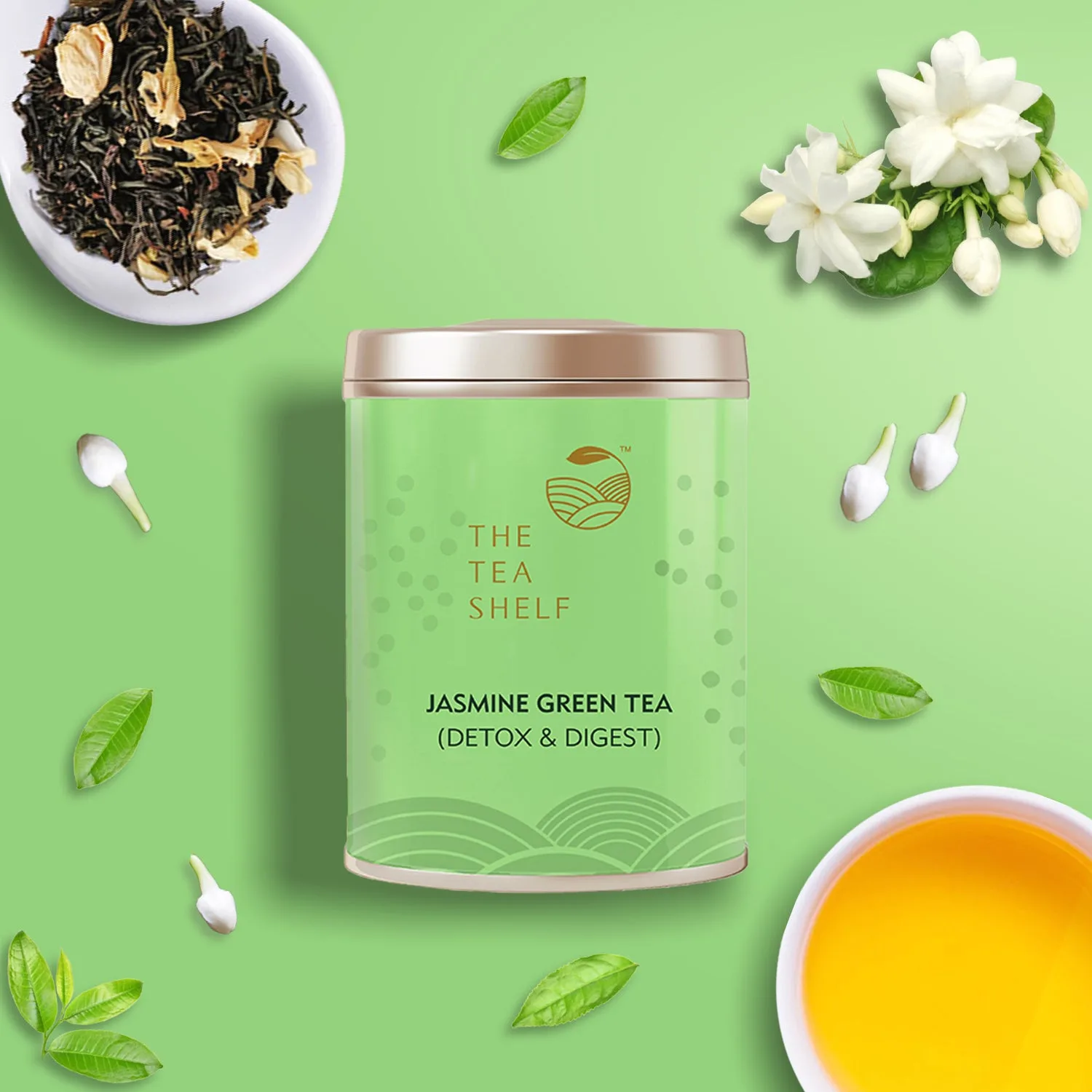
Jasmine Green Tea: Brewing instructions: 1 TSP/CUP | 3-4 MINS | 90-100°C This is the manufacturer's starting ratio, time, and temperature range. Begin here, then adjust one variable at a time rather than guessing.
Jasmine Green Tea
-
Jasmine Green Tea: Ingredients: Jasmine Buds, Green Tea The cup is green tea scented with jasmine buds, so green-tea brewing logic applies: heat and time are what push it toward bitterness.
-
Jasmine Green Tea: Tasting Notes: High fragrance with subtle sweetness Subtle sweetness is the target. If your cup is sharp or astringent, you have moved past what the leaf is meant to give.
Water temperature: stay inside the printed range
The pouch specifies 90-100°C, which is a wide band. Within that band, the lower end is the safer place to start if you have been getting bitter cups, and the upper end suits anyone who finds the tea thin or faint. Let a boiled kettle rest briefly rather than pouring straight from a rolling boil, and use a thermometer the first few times so you learn what your kettle actually does.
One caution worth stating plainly: do not go below the printed range in search of smoothness. Under-heated water pulls out the fragrance poorly and leaves you with a flat cup, which is a different disappointment from bitterness. Adjust within the range first.
Steeping time: taste before the clock runs out
The printed time is 3-4 MINS. Treat that as a window, not a target. Set a timer for the low end, pour a spoonful into a small cup, and taste. If it already carries fragrance and a soft sweetness, stop there. If it is watery, give it more time inside the window.
This matters more with jasmine than with many teas because the floral note arrives early and the astringency arrives late. A cup that sits past the point where the fragrance peaks will still smell lovely and taste rough. Your nose is a useful checkpoint: when the jasmine scent is clear at the rim of the cup, you are close.
A brewing routine that keeps bitterness out
- Measure the leaf: Use 1 TSP per cup as printed. Loose leaf jasmine varies in density, so a level teaspoon of buds and leaf is a better guide than a heaped one.
- Heat the water and let it settle: Bring water to a boil, then let it come down into the 90-100°C range. Check with a thermometer until you know your kettle's habits.
- Pour and start timing: Add the water, start a timer at the low end of 3-4 MINS, and keep the cup covered if your brewer allows it so the floral aromatics stay in.
- Taste at the low end: Sip from a spoon. Fragrant and gently sweet means it is ready; thin means it needs a little longer; sharp means you have gone too far.
- Separate the leaf from the water: Remove the leaves or lift the infuser once the cup is right. Leaving them in the water keeps extracting tannins.
Leaf quantity is the variable most people overlook
If your temperature and time are inside the printed range and the cup is still bitter, look at how much leaf went in. A heaped teaspoon or a generous pinch in a small cup raises the concentration and pushes the tea toward astringency even at a short steep. Level the teaspoon and use the printed 1 TSP per cup before changing anything else.
The reverse is also true: if your tea tastes weak and you keep adding time, you may end up with a cup that is both thin and harsh. Add a little leaf rather than steeping longer, then taste again.
What the pouch format tells you about freshness
- Jasmine Green Tea: Available as a 100gm Loose Tea Pouch (50 Servings) Loose leaf in a pouch lets you measure your own teaspoon per cup, which is exactly the control this brewing method depends on. The stated serving count is the manufacturer's figure, not a promise about your own teaspoon size.
Re-steeping loose leaf jasmine
Loose leaf green tea is often brewed more than once, and jasmine is no exception: the second infusion tends to be softer and more floral, with less of the green-tea edge. The supplied information does not give a re-steep time or a maximum number of infusions, so treat this as something to test rather than a rule.
A sensible approach is to keep the leaf from your first cup, use water at the same 90-100°C, and taste earlier than you did the first time. If the second cup is pleasant, try a third. When the leaf smells of wet hay rather than jasmine, you have reached the end of what it will give.
If you want a stronger second cup, add a little fresh leaf rather than steeping the spent leaf for a long time, which mostly extracts the roughness you avoided the first time.
Storage and the bitterness that comes from stale leaf
Jasmine's fragrance is volatile, which is why the aroma fades before the leaf looks any different. A pouch that has been open for months, stored near the stove or in a warm cupboard, will brew a cup that tastes dull and slightly papery no matter how carefully you control temperature.
Keep the pouch sealed and away from heat, light, and strong smells, and press the air out before closing it. The supplied information does not state a shelf life, so use the aroma as your guide: if the dry leaf no longer smells clearly of jasmine, expect a flatter cup and consider a fresher pouch before blaming your technique.
A short checklist before your next cup
Level teaspoon of leaf per cup, water inside 90-100°C, a timer set to the low end of 3-4 MINS, and a taste before you commit. If the cup is bitter, change one thing at a time: less leaf, then cooler water, then a shorter steep. If it is weak, add leaf or move toward the upper end of the temperature range.
The Tea Shelf's Jasmine Green Tea is built around high fragrance and subtle sweetness, and both are easy to protect once you stop treating brewing as a fixed countdown. Taste often, adjust one variable, and the cup will tell you when it is right.