Quick answer
Use Jiffy Spin-Shaping and Finishing Disks for broad, flat surfaces and open proximal areas where you can control the disk edge. Switch to interproximal finishing strips when the contact is tight, the margin sits below the contact point, or a rotating disk cannot reach safely. Neither tool replaces the other; the surface and access decide.
Where each tool actually works
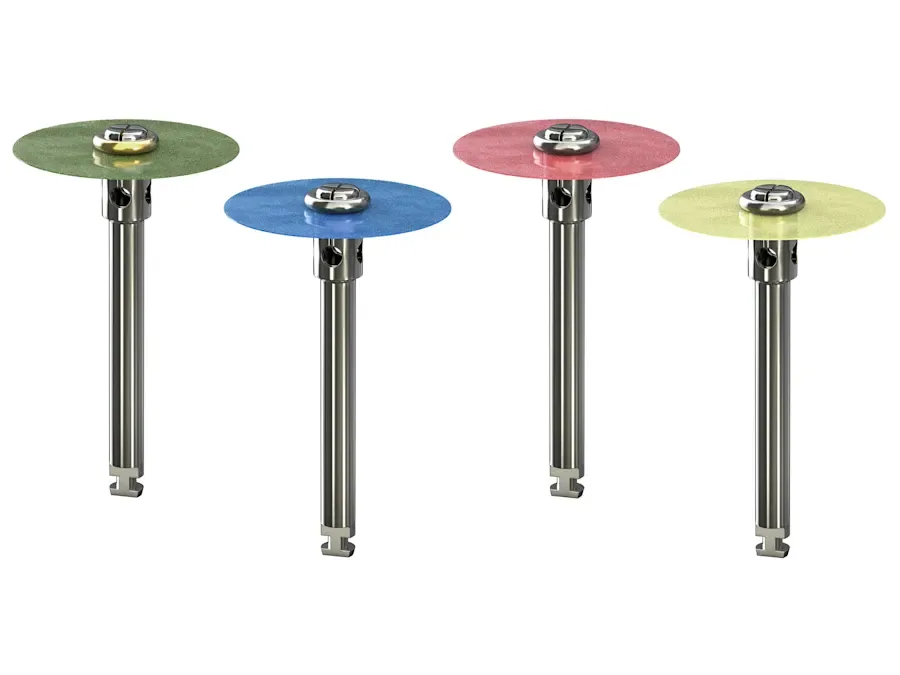
Jiffy Spin-Shaping and Finishing Disks are designed for shaping and finishing tasks on accessible surfaces. If you can see the surface and the disk edge is not at risk of cutting adjacent tooth structure, a disk gives you fast, even reduction and smoothing. The limitation is geometric: the disk is a flat, rotating instrument, so it cannot slip into a tight interproximal contact without damaging the neighboring tooth or the restoration.
Interproximal finishing strips work by drawing an abrasive strip through the contact. They are the practical choice when the contact is tight, when the finishing line sits at or below the contact, or when you need to polish a proximal surface without opening the contact. The trade-off is that strips are slower, they can be difficult to keep flat against the margin, and they may not reach the same uniform surface as a disk on broad areas.
Access, control, and the contact point
The contact point is the dividing line. If the restoration is entirely above the contact and you can approach it from the buccal or lingual without crossing the adjacent tooth, a Jiffy disk is usually more efficient. You get consistent speed and a flat reference plane, which helps when you are shaping a composite to match a flat or slightly curved surface.
If the restoration crosses the contact or the margin is subgingival, a strip lets you work through the contact without removing more tooth structure. The strip follows the proximal contour, so you can polish the margin while keeping the contact. The trade-off is that you are working by feel, and strip tension can round the contact if you overdo it. Check the contact with floss after strip finishing; if it feels open, you have removed too much.
A practical sequence for proximal composite
Start with the tool that matches the access. If the proximal surface is open and visible, shape with a Jiffy disk first, then finish the contact with a strip. If the contact is tight from the start, begin with a strip and reserve the disk for the accessible buccal or lingual surfaces.
Do not jump straight to a fine strip. Use a medium strip to refine the proximal contour, then switch to a finer strip for polishing. Keep the strip wet or use a lubricant if the manufacturer recommends it; dry strips can bind and leave scratches. After finishing, verify the contact with floss and inspect the margin with a probe. If the margin catches, go back one step rather than polishing harder.
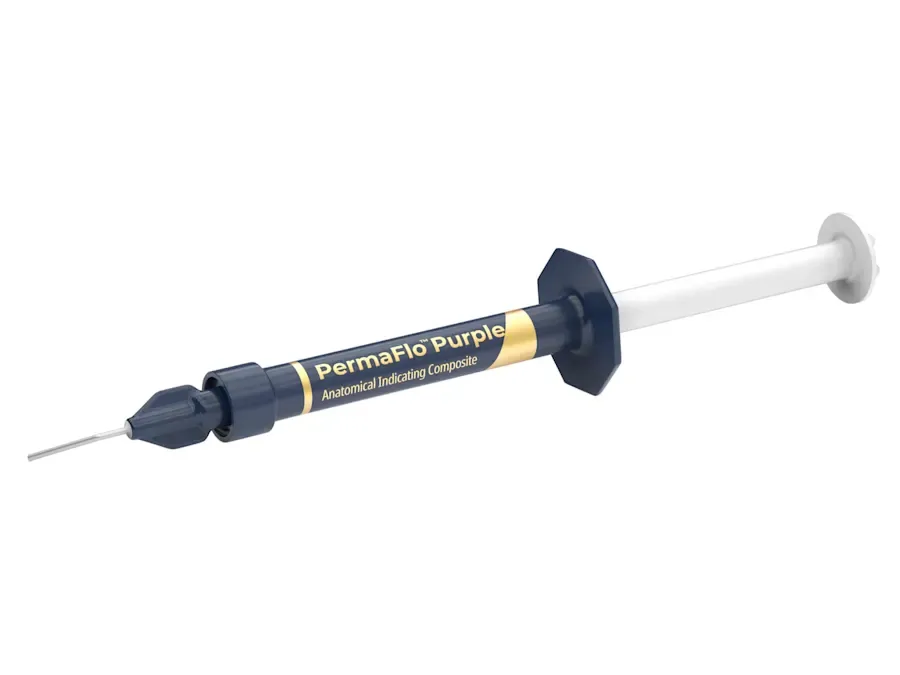
For coronal seal identification, PermaFlo Purple light-cured anatomical indicating composite can help you see where the seal sits before you finish. It is used with an adhesive system to create an easily identified coronal seal, which is useful when you need to confirm coverage before final polishing.
Light curing and cleanup around the same area
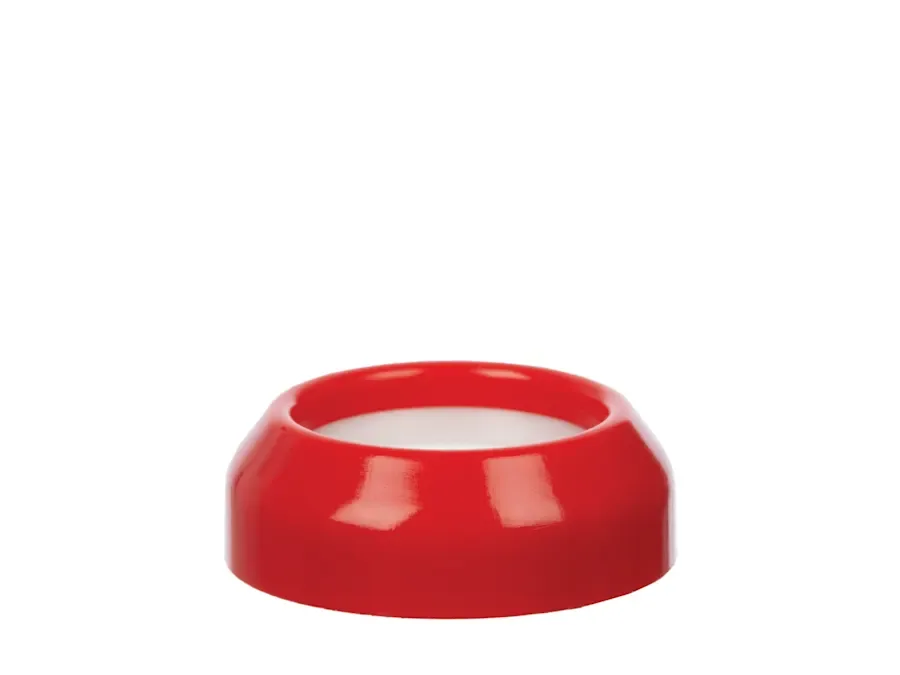
Finishing and polishing often happen near the same proximal areas you just cured. If you use a VALO curing light, the VALO X Diffuser Lens is designed to achieve even light distribution, which matters when the restoration sits in a proximal box and you need consistent curing before you finish. Uneven curing can leave soft spots that show up as dull or rough surfaces once you start polishing.
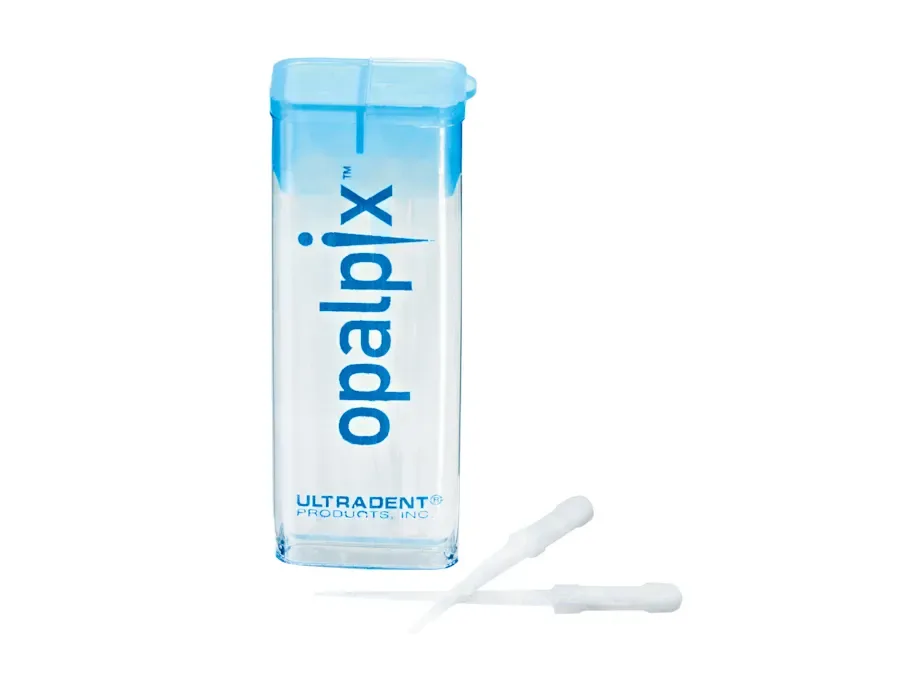
For patients with bonded retainers or fixed interproximal hardware, Opalpix interproximal cleaners are designed to balance flexibility and rigidity to clean around bonded retainers. They are not finishing instruments, but they are relevant after proximal finishing because they help maintain the cleaned contact between visits. Keep finishing and hygiene tools separate; do not use a finishing strip for hygiene cleaning, and do not use an interproximal cleaner to polish a restoration.
Trade-offs at a glance
- Jiffy Spin-Shaping and Finishing Disks: speed vs. access: Disks shape and finish accessible surfaces quickly and evenly, but they cannot safely enter a tight contact without risking the adjacent tooth. Choose a disk when the surface is visible and the contact is not in the path of the disk edge.
- Interproximal finishing strips: reach vs. control: Strips reach below the contact and polish proximal margins that a disk cannot, but they are slower and work by feel, so over-tensioning can open the contact. Choose a strip when the contact is tight or the margin is subgingival, then verify the contact with floss.
- Sequence matters more than brand: Using a disk first on open surfaces and a strip second on the contact gives you the speed of a disk and the reach of a strip without overworking either. If the margin still catches after both, step back to a medium strip rather than polishing harder.
Product facts that affect the choice
- Jiffy™ Spin-Shaping and Finishing Disks: Jiffy Spin-Shaping and Finishing Disks are designed for efficient shaping and finishing tasks and are categorized for finishing applications. They are the faster option when the surface is accessible and you can control the disk edge without crossing the contact.
- Opalpix™-Interproximal Cleaner: Opalpix interproximal cleaners balance flexibility and rigidity to clean around bonded retainers. Useful for maintaining interproximal hygiene after finishing, but not a substitute for a finishing strip or disk.
- VALO™ X Diffuser Lens: The VALO X Diffuser Lens is designed to achieve even light distribution for VALO curing lights. Even curing before finishing reduces the chance of soft, poorly polished proximal composite.
- PermaFlo™ Purple-Light-Cured Anatomical Indicating Composite: PermaFlo Purple light-cured anatomical indicating composite is used with an adhesive system to create an easily identified coronal seal. Helps confirm seal coverage before you finish, so you do not polish away an incomplete seal.
Which tool fits your case
Best for
- Accessible proximal surfaces where the disk edge can be controlled without crossing the contact
- Shaping and finishing broad flat or slightly curved composite surfaces
- Clinicians who want a fast, consistent finish before final proximal polishing
Not for
- Tight interproximal contacts where a rotating disk cannot reach safely
- Subgingival margins that require a strip to follow the proximal contour
- Replacing interproximal hygiene tools such as Opalpix cleaners for bonded retainers