Start with chest circumference, not body weight
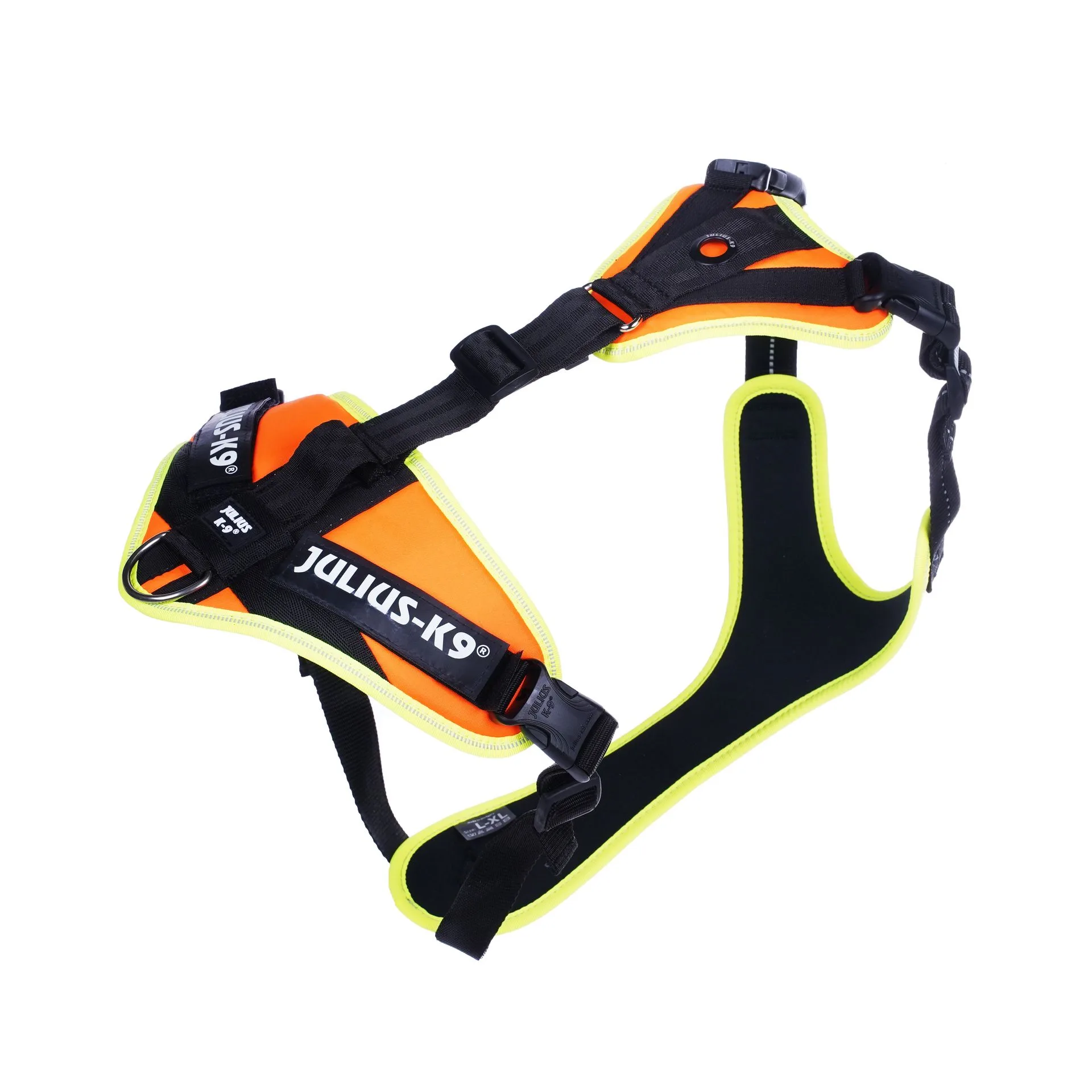
The Julius-K9 Mantrailing Dog Harness is sized by chest circumference, not by weight alone. The product record lists four sizes with both chest measurements and dog weight ranges, but the chest measurement is the primary fit dimension. Use a soft measuring tape around the widest part of your dog's chest, just behind the front legs. Keep the tape snug but not tight enough to compress the fur or skin.
If your dog falls between two sizes, choose the size that matches the chest measurement most closely. The harness has fully adjustable straps, so you can fine-tune the fit after choosing the base size. Do not size up just because your dog is heavy for its breed—weight ranges are a secondary guide, and a harness that is too large will not stay stable during tracking.
Size chart for the Mantrailing Harness
-
Julius-K9 Mantrailing Dog Harness: Size XS: chest 46–65 cm / 18–25.5 in, dog weight 7–14 kg / 15–31 lbs Use this row if your dog's chest falls in this range; weight is a secondary check.
Julius-K9 Mantrailing Dog Harness
-
Julius-K9 Mantrailing Dog Harness: Size S: chest 53–75 cm / 21–29 in, dog weight 13–24 kg / 29–53 lbs A common size for medium dogs; confirm chest girth before ordering.
-
Julius-K9 Mantrailing Dog Harness: Size M: chest 70–85 cm / 27.5–33.5 in, dog weight 24–38 kg / 53–84 lbs For larger dogs; check that the chest measurement fits within the range.
-
Julius-K9 Mantrailing Dog Harness: Size L-XL: chest 77–99 cm / 30–39 in, dog weight 38–56 kg / 84–124 lbs The largest size; ensure the chest girth is at least 77 cm / 30 in.
How to put the harness on and adjust it
The Mantrailing Harness is designed to be quick to put on, but a correct sequence matters for a snug, secure fit.
- 1. Loosen all straps before fitting: Open the buckles and loosen the adjustable straps so the harness slips over your dog's head and chest without pulling.
- 2. Slide the harness over the head: Guide the harness over your dog's head and settle the chest panel on the breastbone. The neck opening should sit comfortably without pressing on the throat.
- 3. Fasten the chest strap: Close the buckle around the chest. The strap should be snug enough that you can still slide two fingers underneath, but not so loose that the harness shifts during tracking.
- 4. Adjust the shoulder and chest straps: Tighten or loosen the adjustable straps so the harness sits level and does not twist. The chest pressure should be distributed across the chest, not concentrated on the neck.
- 5. Check range of motion: With the harness on, ask your dog to walk a few steps and turn. The harness should not restrict the front legs or rub behind the shoulders. Make small adjustments as needed.
Using the elastic leash anchor
The Mantrailing Harness includes an elastic leash anchor designed to absorb sudden force when your dog pulls on the lead. Attach your tracking line to this anchor rather than to a collar. The elastic reduces strain on both handler and dog during intense searches, and it helps maintain smoother motion when your dog surges forward on a scent.
Because the anchor is elastic, it will stretch under load. Keep a firm grip on the line and avoid letting it snap back. The harness is built for working dogs on a tight lead, so the anchor is intended for tracking, not for casual walks where a fixed-length leash is easier to manage.
When this harness is the right choice—and when it is not
This harness is purpose-built for mantrailing and search work: tracking a specific person by scent, whether in training or professional search and rescue. Its design supports a snug, anatomically optimized fit that keeps the harness stable during high-intensity searches, and the chest pressure distribution avoids strain on the neck even during intense pulls.
It is not designed for casual walks or free running. If you need a harness for everyday city walks, the IDC® Powerharness is the recommended alternative. For long outdoor adventures, the IDC® Longwalk Harness offers better comfort and support. Choose the Mantrailing Harness when your priority is precision tracking and total control on a tight lead.
Product details that affect setup
- Julius-K9 Mantrailing Dog Harness: Fully adjustable straps for a fine-tuned fit on any body type You can adjust the harness after choosing the base size to achieve a snug, secure fit.
- Julius-K9 Mantrailing Dog Harness: Quick to put on—hassle-free application for handler and dog The design supports a fast, repeatable fitting routine before each search.
- Julius-K9 Mantrailing Dog Harness: Durable and lightweight materials built for long-lasting performance in all outdoor environments The harness is intended for outdoor search work; check straps regularly for wear.
- Julius-K9 Mantrailing Dog Harness: Proposition 65 Warning: This product may contain chemicals known to the State of California to cause cancer. California residents should be aware of this warning when purchasing.
A final fit check before your first search
With the harness on and adjusted, watch your dog move. The harness should stay centered on the chest without riding up or twisting to one side. The neck opening should not press on the throat, and the chest strap should not dig into the armpits. If you see any of these issues, re-adjust the straps or re-measure your dog's chest to confirm the size.
Because the product record does not include specific cleaning instructions, follow the general care guidance for padded harnesses: hand wash with mild soap and water, rinse thoroughly, and air dry away from direct heat. Avoid machine washing unless the manufacturer confirms it is safe. Regularly inspect the elastic leash anchor and all straps for wear before each use.