The one decision that shapes everything: where will it live?
The Kai Outdoor Children's Mud Kitchen is described in the catalog as a multi-functional station for muddy backyard discoveries and tidy indoor sensory play. That dual-purpose framing is the most useful fact for buyers, because it changes how you plan space, cleanup, and materials before you order.
If you plan to keep it on a patio or in the yard, you are choosing a permanent outdoor play station. If you plan to bring it inside as a sensory table, you are choosing a piece that has to fit your playroom and tolerate indoor messes. Neither use is wrong, but each sets different expectations for size, placement, and care.
What the catalog confirms about the Kai Mud Kitchen
-
Kai Outdoor Children's Mud Kitchen: Purpose-built for muddy backyard discoveries and tidy indoor sensory play. This is the core design intent. It tells you the station is meant to move between messy outdoor play and contained indoor sensory activities, so plan for both possibilities.
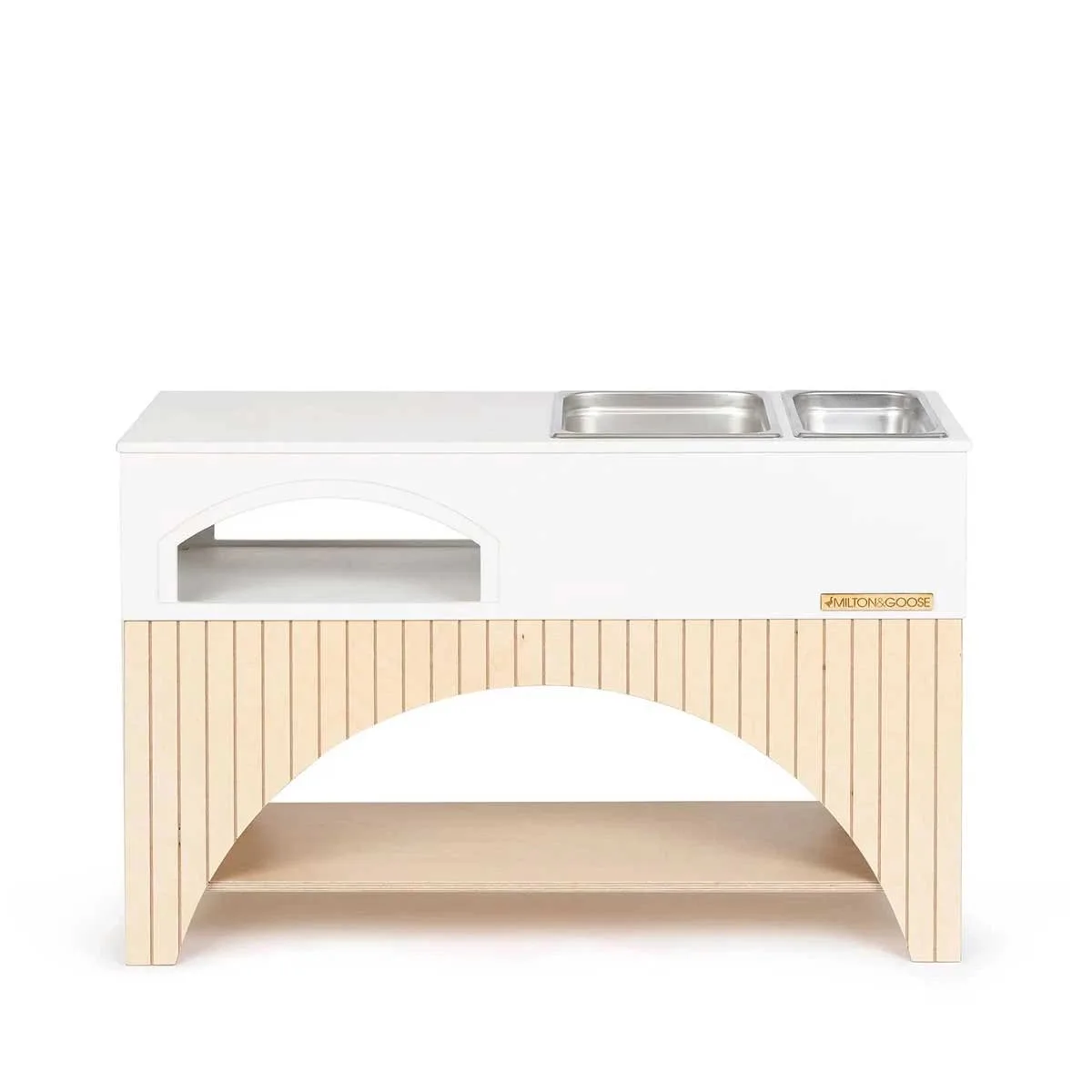
Kai Outdoor Children's Mud Kitchen
-
Kai Outdoor Children's Mud Kitchen: Turns sticks, leaves, water, or sensory grains into open-ended play. The play value depends on what you supply. Budget for loose parts and sensory materials, not just the kitchen itself.
-
Kai Outdoor Children's Mud Kitchen: Available in a Standard variant. There is one listed configuration. If you need a specific size or finish, confirm it before ordering rather than assuming options exist.
Planning space for an outdoor play kitchen setup
The catalog does not list dimensions, so you cannot calculate a footprint from the product record alone. Treat that as a planning gap, not a reason to guess. Before you commit to a patio corner or a playroom wall, measure the area you have in mind and confirm the actual dimensions with the store.
Leave room around the station for children to move, mix, and reach the play surface. A mud kitchen is a workspace, not just a piece of furniture, so the usable zone is larger than the unit itself. If you plan to bring it inside, measure doorways and hallways too, since a station built for backyard play may be awkward to carry through tight spaces.
Materials: what to check before you buy
- Outdoor durability claims: The catalog describes the Kai as premium and durable, but it does not list a specific material, finish, or weatherproofing specification. Ask the store to confirm the construction and any recommended outdoor storage before you leave it exposed year-round.
- Indoor suitability: The catalog supports indoor use as a sensory table, but it does not provide care instructions for indoor placement. Confirm whether the surface and base are suitable for the sensory materials you plan to use.
- Care and cleaning: No care, safety, or compatibility instructions were supplied with this record. Do not assume a cleaning method. Request the manufacturer's care guidance so you do not damage the finish with the wrong product.
The honest trade-off: price versus confirmed detail
At USD 415.36, with a catalog comparison price of USD 649.00, the Kai sits in the premium range for a children's mud kitchen. The catalog supports that positioning with its dual indoor/outdoor design and open-ended play framing, but the record does not include specifications, safety notes, or operating instructions.
That does not mean the product is lacking. It means the supplied information is sparse, and a careful buyer should fill the gaps before ordering. Ask for dimensions, material details, and care guidance. If those answers fit your space and routine, the Kai's flexibility is a real advantage. If you need a fully specified product before you buy, this listing will require extra confirmation.
A simple pre-purchase checklist
- Measure your intended spot: Choose the patio, yard, or playroom location and measure the available floor area. Confirm the Kai's dimensions with the store before you order.
- Decide on primary use: Outdoor mud play and indoor sensory play have different cleanup needs. Pick the main location so you can plan storage and materials around it.
- Confirm material and care: Ask for the construction material and the manufacturer's cleaning guidance. The catalog does not supply these details.
- Plan your sensory supplies: The Kai is designed for sticks, leaves, water, and sensory grains. Decide what you will provide and where it will be stored between play sessions.