Quick answer
Choose the Kailh Box Winter Tactile Switch if you want a box-style tactile switch and can plan around set sizes of 45 or 110. Choose the Keychron K Pro Switch if you need a standard-profile tactile option in a set size that matches your exact build, from 45 to 110 switches.
Mount type and keycap compatibility
The Kailh Box Winter is a box-style switch, while the Keychron K Pro uses a normal profile design. Box switches are often chosen for their different stem and housing construction, but the practical difference for most builders is how they feel and sound rather than a compatibility barrier. Both are MX-style switches and fit standard MX keycaps, so your keycap set is not the deciding factor here.
The real trade-off is familiarity versus a different typing feel. If you already like standard-profile switches, the K Pro is the safer choice. If you want to try a box-style tactile switch, the Box Winter is the one to test.
Set sizes and build planning
The Kailh Box Winter comes in sets of 45 or 110 switches, while the Keychron K Pro is sold in sets of 45, 70, 90, or 110 with a bottle included. That wider range makes the K Pro easier to match to smaller layouts without overbuying. For a 65% or 75% board, a 70 or 90 set may cover the build with fewer spares; for a full-size board, the 110 set is the practical choice for either switch.
If you are building a 40% or macro pad, the 45-switch set works for both, but the K Pro gives you more granular options if your layout falls between standard sizes. The Box Winter’s two sizes are simpler but less flexible.
Price and value
At catalog prices, the Keychron K Pro Switch set starts at USD 9.44 (compared with USD 14.99), while the Kailh Box Winter Tactile Switch set is USD 36.29 (compared with USD 54.99). The K Pro is clearly the lower-cost entry point, especially for smaller set sizes. The Box Winter costs more, so it makes sense only if you specifically want a box-style tactile switch or prefer its feel.
Price per switch varies by set size, so compare the total for the number of switches you actually need rather than the headline price. For a full build, the difference is smaller per switch but still favors the K Pro.
Trade-offs to weigh
- Box-style feel vs standard-profile familiarity: The Kailh Box Winter gives you a box-style tactile switch, which may feel and sound different from a standard switch. The Keychron K Pro uses a normal profile design, so it is the more predictable choice if you already like standard switches. If you cannot try both, start with the K Pro unless you specifically want a box switch.
- Set-size flexibility vs simplicity: The K Pro comes in 45, 70, 90, and 110 sets, so you can match smaller or irregular layouts more precisely. The Box Winter comes in 45 or 110 only, which is simpler but may leave you with extras or a shortfall. Count your switches including stabilizer-adjacent keys before choosing a set size.
- Upfront cost vs specific preference: The K Pro set starts at USD 9.44, while the Box Winter set is USD 36.29. The Box Winter costs more, so choose it only if the box-style tactile feel is worth the premium to you. Compare price per switch for the set size you need, not just the set price.
Product facts
-
Kailh Box Winter Tactile Switch: Kailh Box Winter Tactile Switch sets are available in 45 or 110 switches. You can cover a small board or a full-size build, but there is no mid-size set for layouts between those counts.
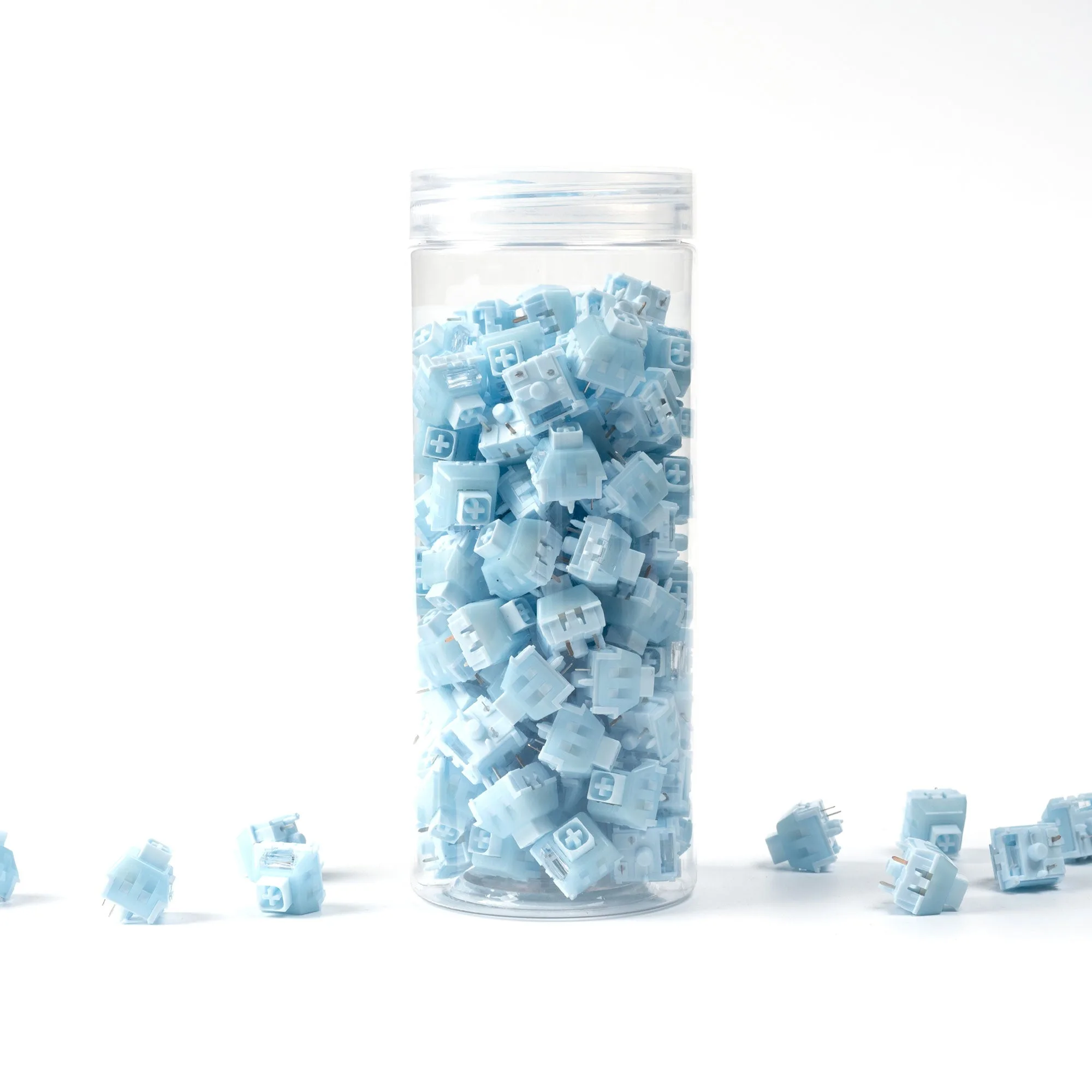
Kailh Box Winter Tactile Switch
-
Keychron K Pro Switch: Keychron K Pro Switches are sold in sets of 110, 90, 70, or 45 switches, with the bottle included, and the Banana option is a normal profile switch. The wider set range lets you buy closer to your exact switch count, and the normal profile suits builders who prefer a standard switch design.

Keychron K Pro Switch
Which switch is right for you?
Best for
- Builders who want a box-style tactile switch and can use a 45 or 110 set
- Typists curious about how a box switch differs from a standard switch
Not for
- Builders on a tight budget who want the lowest-cost tactile option
- Anyone who needs a set size between 45 and 110 without buying extras