Quick answer
Choose the 角皿 square plate when you want a defined edge for single portions and a calmer, architectural look. Choose the 丸盆 round tray when you are carrying or presenting shared food and want the wood's knots and rings to lead the composition.
Shape changes how you serve, not just how it looks
A square plate gives you corners, and corners do real work: they stop a portion from sliding outward and make a single serving look deliberate. A round tray gives you an uninterrupted rim, which is why it reads as a carrier for several items rather than a plate for one.
The practical consequence is handling. Square corners demand a little more care when you lift the piece near a table edge, while a round form is easier to rotate and pass hand to hand.
The wood grain decides the mood of each piece
These two objects treat the tree differently. The 丸盆 by Kazuto Yoshikawa is built around visible knots and annual rings, so the grain is the subject. The 角皿 by 坂野幸太 comes from a maker who studied architecture and later trained at the Gifu Academy of Forest Culture, a background that tends to produce restrained, line-led forms rather than grain-forward ones.
If your table is already busy with pattern, the quieter square plate calms it. If your table is plain, the round tray's knots give it something to look at.
Where the comparison runs out of information
The catalog does not supply dimensions, wood species, weight or finish for either piece, so this is not a size or material comparison. Treat the choice as one of shape and role, and confirm measurements with the store before you commit to a shelf, cabinet or dining table with tight clearance.
Trade-offs to weigh before you choose
- Defined portion vs open presentation: Pick the 角皿 if you serve individual portions and want the edge to frame them. Pick the 丸盆 if you serve shared food and want the tray to hold several small dishes at once.
- Quiet form vs grain as the feature: The square plate's value is its composed, architectural line. The round tray's value is the knots and rings that make each piece one of a kind. You are trading predictability for character. If you need two pieces that look alike, the round tray's natural variation works against you.
- Handling and storage: Round trays rotate and pass easily but take up a circular footprint in a cabinet. Square plates stack more efficiently against straight sides but need more care at the corners when lifted.
Product facts
-
角皿: A wooden square plate made by artist 坂野幸太, who began making wooden tableware in 2023 from a base in Aichi Prefecture. A recent, focused tableware practice points to a piece intended for everyday serving rather than display only.
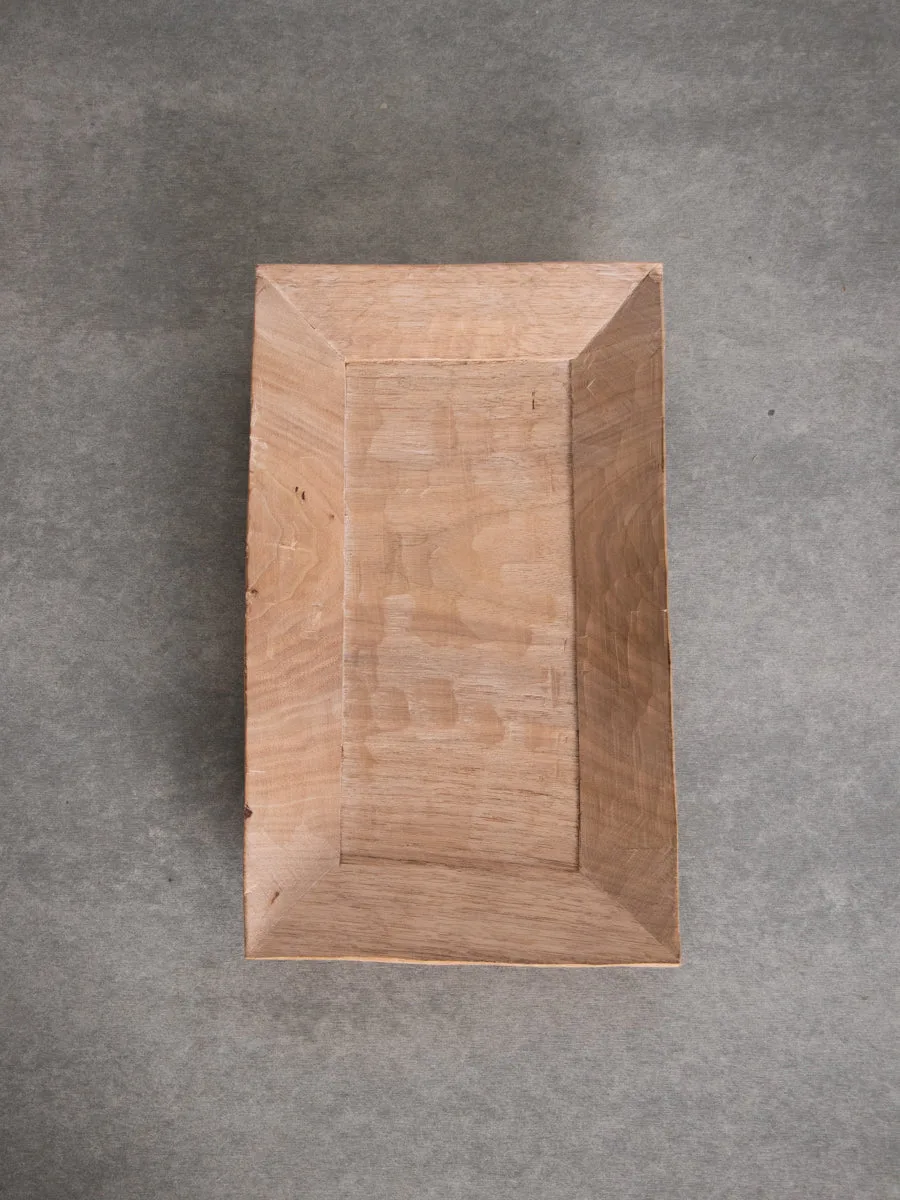
角皿
-
丸盆: A round wooden tray by Kazuto Yoshikawa in which each piece shows its own knots and annual rings, with smooth, flowing curves. Because the grain varies piece to piece, the tray you receive will differ from the photo, so choose it for character rather than exact match.
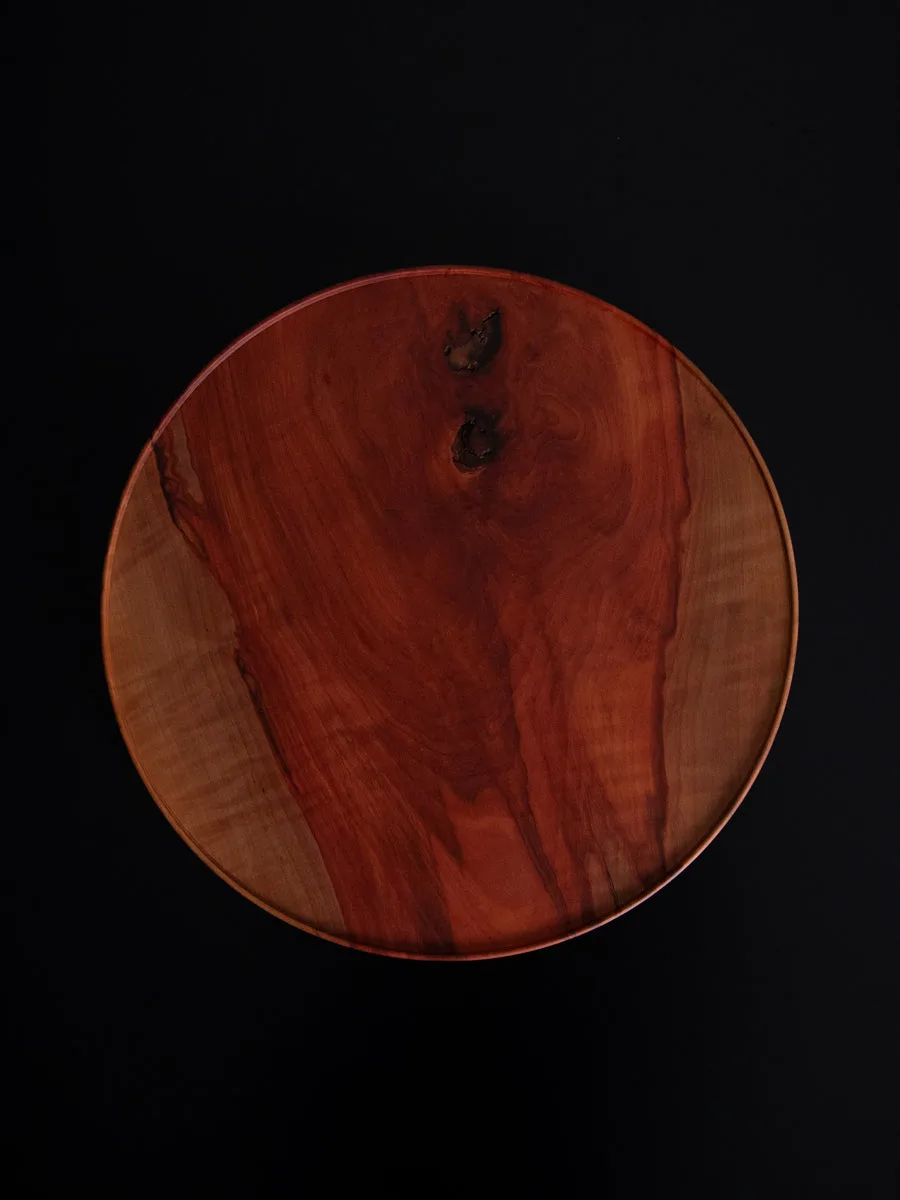
丸盆
Which should you choose?
Best for
- Serving single portions where a defined edge helps the presentation
- Tables that already have pattern and need a calmer, line-led piece
- Buyers who want a square dish with a clear architectural character
Not for
- Carrying several small dishes at once, where a round tray does the job better
- Buyers who want the wood grain itself to be the centerpiece
- Anyone who needs confirmed dimensions before buying, since the catalog does not list them