Why Vesuvio suede behaves differently on the bench
Kaleidoscope Vesuvio suede double bend is a chrome-tanned split with a soft, velour-like hand and a subtle lustrous sheen. That softness makes it pleasant to handle, but it also means the leather can stretch and shift more than a firm veg-tan side. The double bend format gives you a large, workable piece, but the 2 to 4 oz. (0.8 to 1.6 mm) thickness range calls for a deliberate approach to cutting and sewing.
This guide focuses on what the supplied product information supports: the material's characteristics, the average size, the color options, and the ordering constraints. Where a detail is not confirmed, such as specific needle size or seam allowance, you will see a note to test on scrap rather than a made-up rule.
What the catalog confirms about this suede
-
Kaleidoscope Vesuvio Suede Double Bend - Neutrals: Weight/Thickness: 2 to 4 oz. (0.8 to 1.6 mm) This range sits on the lighter side of bag-weight leather, so it drapes well but may need reinforcement in stress areas.
Kaleidoscope Vesuvio Suede Double Bend - Neutrals
-
Kaleidoscope Vesuvio Suede Double Bend - Neutrals: Average Size: 14 to 16 sq. ft. (1.3 to 1.49 sq. meters) A piece this size gives you room to plan pattern placement around any small holes and to cut multiple bag panels.
-
Kaleidoscope Vesuvio Suede Double Bend - Neutrals: May contain small holes. You will need to inspect the hide and lay out pattern pieces to avoid or incorporate these holes.
-
Kaleidoscope Vesuvio Suede Double Bend - Neutrals: Soft with a velour effect, the Vesuvio Collection of double bend suede splits lend a nice lustrous sheen finish for an incredible selection of neutral colors. The soft hand and sheen affect how the leather feeds under a presser foot and how seams press flat.
Cutting Vesuvio suede: a practical sequence
Because the leather is soft and may contain small holes, cutting deserves more planning than with a firm side. Work through these steps before you make the first cut.
- Unroll and inspect the full piece: Lay the double bend flat and look for small holes, thin spots, or areas with uneven sheen. Mark them with chalk or tape so you can plan around them.
- Map your pattern pieces: Place your bag panels, gussets, and straps on the leather with the most visible parts in the cleanest areas. Keep holes near edges or in hidden zones such as the inside of a pocket.
- Cut with a sharp blade and light pressure: A fresh blade and a firm, flat surface help prevent the soft suede from stretching as you cut. Make long, continuous strokes rather than sawing back and forth.
- Test a scrap for sewing behavior: Before sewing the final piece, run a test seam on a scrap from the same hide. This lets you check how the suede feeds and whether your machine settings need adjustment.
Sewing suede leather: what to watch for
Sewing suede leather like this Vesuvio split is less about a single setting and more about controlling stretch and bulk. The velour surface can grip the presser foot, so a roller foot or a piece of tape on the underside of the foot may help, but test first. Use a scrap to find a stitch length that does not perforate the leather too aggressively; a slightly longer stitch is often more forgiving on soft suede.
Because the thickness range is 2 to 4 oz., seams can become bulky when you join multiple layers. Plan seam construction so that bulky junctions, such as where a strap meets a bag body, are pressed or skived before final assembly. The supplied information does not include a recommended needle size or thread weight, so treat your test seam as the deciding checkpoint.
Checkpoints before you commit to the final seam
- Check for hole placement: Confirm that any small holes in the hide are either cut away or positioned where they will not weaken a seam or show on the finished bag.
- Test seam strength on scrap: Sew a short seam on a scrap, then tug gently to see how the suede behaves. If the leather stretches excessively, consider a reinforcement tape or a different seam style.
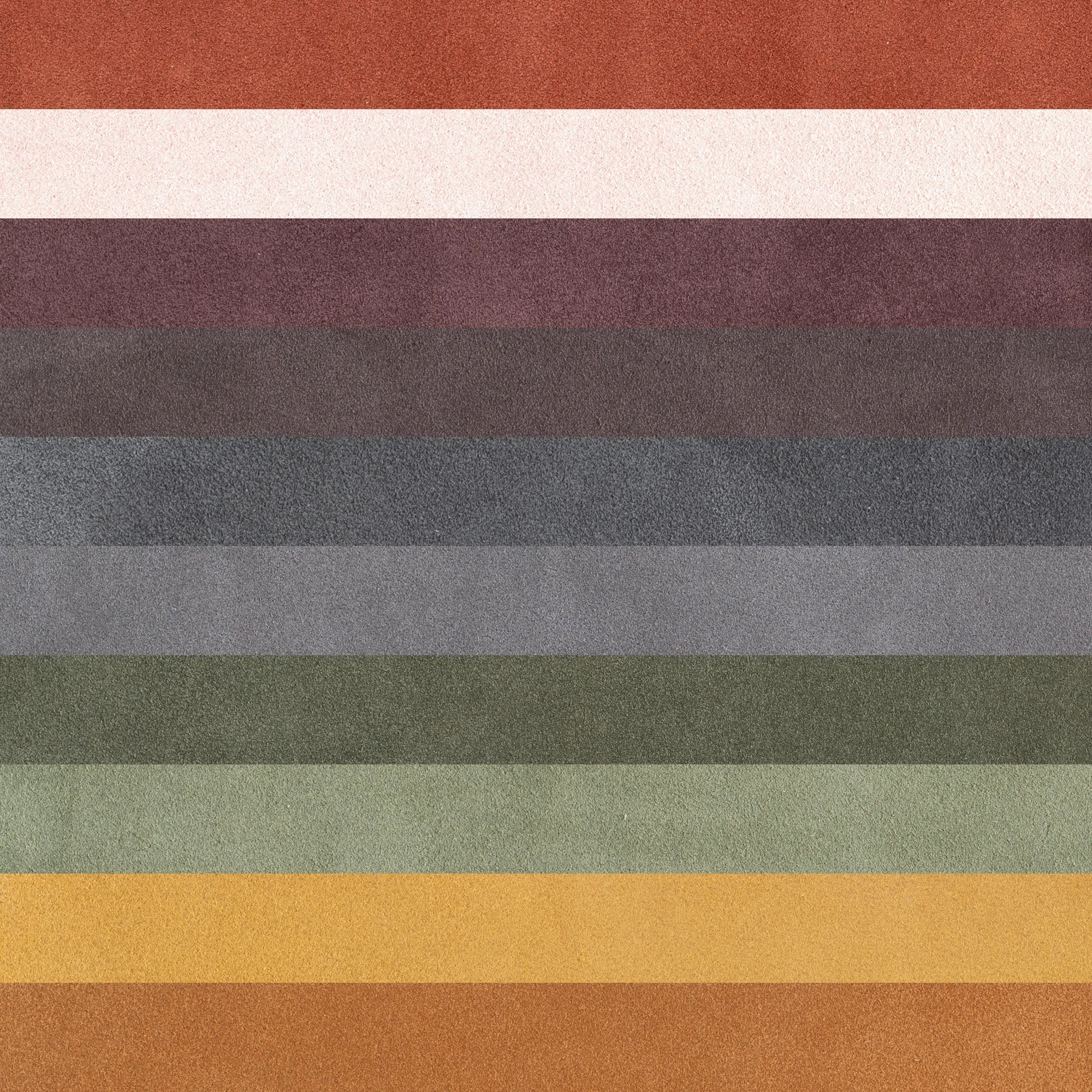
- Match thread and color: The neutral color options range from White and Birch to Earth and Ciment. Test thread color against the actual hide under daylight before sewing.
- Plan for edge finishing: Suede edges can be left raw, folded, or bound. The supplied information does not specify an edge finish, so choose one that suits your bag design and test it on scrap.
Neutral suede leather care for a finished bag
The Vesuvio collection comes in a range of neutral colors, including White, Peach, Musk, Bamboo, and Seagull. Light neutrals show handling marks and smudges more readily than darker tones like Earth or Cortex, so plan care before the bag goes into use. The supplied information does not include a specific care product or routine, so start with a dry, soft brush or cloth to lift dust, and test any cleaner on an inconspicuous area first.
Because the leather has a velour effect, avoid soaking it or scrubbing aggressively. Store the finished bag away from direct sunlight and keep it dry. If the bag gets wet, let it air-dry naturally rather than using direct heat, which can stiffen suede. These are general suede-care practices, not manufacturer instructions for this specific product.
Ordering details that affect your project timeline
- Kaleidoscope Vesuvio Suede Double Bend - Neutrals: Kaleidoscope is closed for summer break from August 4th - August 25th. Orders placed in this timeframe will ship after production resumes. If you are planning a bag project around late summer, account for this pause in production.
- Kaleidoscope Vesuvio Suede Double Bend - Neutrals: The lead time for Kaleidoscope orders is 2-3 weeks. Build this lead time into your project schedule, especially if you need the leather before a class or deadline.
- Kaleidoscope Vesuvio Suede Double Bend - Neutrals: Orders for this product cannot be cancelled, returned, or exchanged. Confirm your color choice and quantity before ordering, since the sale is final.
- Kaleidoscope Vesuvio Suede Double Bend - Neutrals: Tannage: Chrome Tan Chrome tanning contributes to the soft hand and is a useful detail if you are comparing this suede to other tannages.
Choosing a color for your suede bag project
With twelve neutral color options, the choice often comes down to how the bag will be used. Lighter shades like White, Birch, and Seagull suit summery, minimalist designs but require more frequent care. Mid-tones like Praline, Peach, and Musk offer a softer look while hiding minor marks better. Darker neutrals such as Earth, Cortex, and Ciment are more forgiving for everyday bags and travel.
Ordering a sample or swatch is not mentioned in the supplied information, so if color accuracy is critical, consider that the sheen of the suede can shift the apparent color under different lighting. The catalog price is USD 101.99, with a comparison price of USD 149.99, but check the current listing for any changes before you buy.