
Quick answer
Choose the kangaroo hide bullwhip if you want a traditional leather whip with a steel-rod handle and layered kangaroo construction. Choose the paracord bullwhip if you prefer a lower-cost synthetic overlay that still uses leather plaited bellies and comes in six lengths.
Overlay material sets the feel and the maintenance
The biggest difference is the outer layer. The kangaroo hide bullwhip uses a 16-plait kangaroo hide overlay, while the paracord bullwhip uses 16 strands of black paracord over leather plaited bellies. Kangaroo hide is a natural material that develops character with use but needs more careful storage and conditioning than paracord. Paracord is synthetic and generally more forgiving of damp conditions, but it has a different, stiffer feel in the hand.
Handle and internal construction affect balance
The kangaroo hide model has a 9-inch handle with a steel rod inside, plus a leather core, two kangaroo leather bolsters, and two 4-strand braided bellies. That layered build adds weight and a solid, traditional balance. The paracord model also uses leather plaited bellies, but the catalog does not list a steel rod or the same bolster count, so its balance will differ. If you want a whip that feels substantial and traditional, the kangaroo hide build is the clearer choice.
Length options and price change the decision
Both whips come in multiple lengths, but the paracord model is offered in six lengths from 6 to 16 feet, while the kangaroo hide model is listed in 6, 8, 10, 12, 14, and 16 feet. The paracord whip is also priced lower in the catalog. If you are buying your first bullwhip or want a backup for practice, the paracord option lowers the cost of trying different lengths. If you already know your preferred length and want a leather whip, the kangaroo hide model is the more traditional pick.
Key trade-offs
- Material feel: Kangaroo hide offers a natural leather feel that breaks in over time; paracord feels stiffer and more uniform out of the box. If you want a whip that ages with use, leather is the choice; if you want consistent feel, paracord is simpler.
- Maintenance: Leather needs conditioning and dry storage; paracord tolerates damp conditions better but can still wear. Consider your climate and storage space before choosing.
- Cost and length options: The paracord model is lower priced and comes in six lengths from 6 to 16 feet; the kangaroo hide model is also available in 6 to 16 feet but at a higher price. If you are unsure of your ideal length, the lower-cost paracord option makes it easier to experiment.
Product facts
-
Bull Whip 6, 8, 10, 12, 14 & 16 Feet long 16 Strands Kangaroo Hide Leather Equestrian Bullwhip Leather Belly and Bolster Inside, Indiana Jones: 16-plait kangaroo hide overlay over a leather core, two kangaroo leather bolsters, and two 4-strand braided bellies. This layered leather construction gives the whip a traditional feel and durability that leather enthusiasts look for.
Bull Whip 6, 8, 10, 12, 14 & 16 Feet long 16 Strands Kangaroo Hide Leather Equestrian Bullwhip Leather Belly and Bolster Inside, Indiana Jones
-
Zoro Black Paracord Bull Whip 16 Strands with Leather Plaited Bellies | 6 to 16 Feet Bullwhip: 16 strands of black paracord over genuine leather plaited bellies, available in six lengths from 6 to 16 feet. The synthetic overlay is more weather-resistant than leather, and the length range lets you choose a size for your space and skill level.
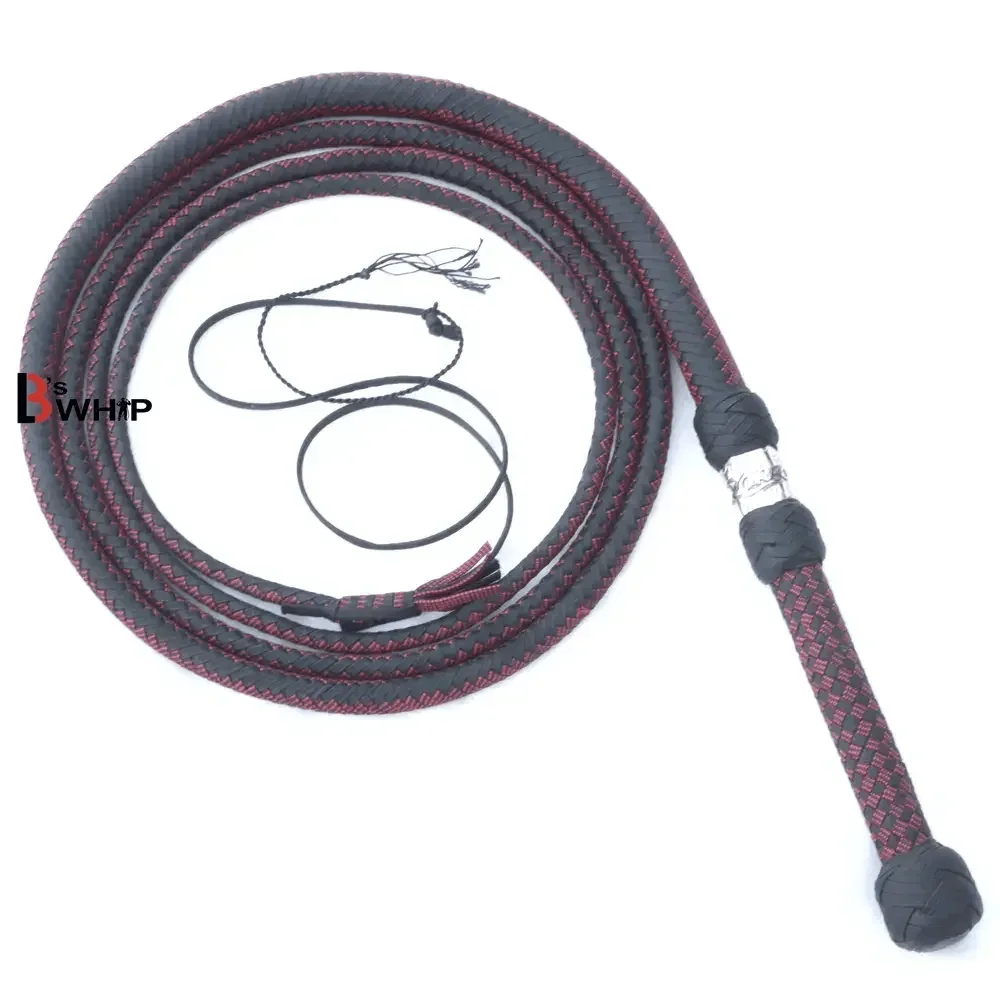
Zoro Black Paracord Bull Whip 16 Strands with Leather Plaited Bellies | 6 to 16 Feet Bullwhip
Who should choose which
Best for
- Buyers who want a traditional kangaroo hide bullwhip with a steel-rod handle and layered leather construction.
- Equestrian or performance users who prefer the feel and character of natural leather.
Not for
- Buyers who want the lowest-cost option or need a whip that tolerates wet conditions with minimal care.
- Shoppers who are unsure of their preferred length and want to try several sizes without spending much.