Quick answer
Dress your baby in one thin layer, position the carrier so air can move between you, and check the back of the neck every 15 to 20 minutes. If the skin is hot and damp or your baby goes quiet and limp, take them out, unwrap the carrier, and cool down in shade or indoors. Fabric choice matters too, so favor a carrier with a light, breathable weave rather than a thick padded one for warm-weather walks.
Why carriers trap heat in the first place
A carrier works by holding your baby against your chest, and your body is a radiator. That contact blocks the two things that normally cool a baby: moving air across the skin and the ability to shift position. Add a padded carrier with a wide waistband and the heat has nowhere to go.
This is not a reason to skip babywearing in summer. It is a reason to treat the carrier like clothing you both wear, not a fixed piece of gear. The steps below work with any carrier, but they are easier with a light fabric and a fit that lets you adjust airflow as the day warms up.
What overheating actually looks like
Heat trouble in a carrier rarely starts with obvious crying. It often starts with a flushed face, a warm and damp neck, or a baby who suddenly stops squirming and goes quiet. Flushed cheeks alone are common in a carrier and not automatically a problem, but flushed skin plus dampness plus drowsiness is a pattern to act on.
Check the back of the neck and the chest, not the hands or feet. Hands and feet run cooler than the core, so they can feel fine while the body is too warm. If the neck is hot and clammy, treat it as your cue to stop and cool down rather than push on to finish the walk.
Your warm-weather carrier routine, step by step
- 1. Dress your baby in one thin layer: Strip down to a short-sleeve bodysuit or a thin cotton outfit before you put the carrier on. A common mistake is adding a blanket or hat 'just in case' and then forgetting it once the sun is out. Checkpoint: if you would be comfortable in a t-shirt, your baby needs no more than that. Less fabric on the baby means more room for air to move.
- 2. Put the carrier on before your baby: Fit the carrier to your body first, then load your baby in. This keeps the fabric from bunching against their back and lets you set the straps where you want them. A common mistake is tightening everything after the baby is already in, which presses the carrier flat against their body and kills airflow. Adjust the carrier, then the baby.
- 3. Keep the carrier low and loose enough to breathe: Aim for a fit that is snug but not compressed. You should be able to slide a finger between the carrier and your baby's back. A common mistake is over-tightening for 'security' when the real problem is heat, not looseness. Checkpoint: if the fabric is stretched flat across the back, loosen it a notch. Snug, not sealed.
- 4. Check the neck every 15 to 20 minutes: Slide a finger behind the neck and feel for heat and dampness. Do this at every stop, not just when your baby fusses. A common mistake is waiting for crying, which often comes late. Checkpoint: hot and clammy means take a break now. The neck is your early-warning gauge.
- 5. Take a real cool-down break, not just a pause: Step into shade, a shop, or the car with air conditioning, and take your baby out of the carrier for a few minutes. A common mistake is standing in the sun and calling it a break. Checkpoint: if the neck is still warm after five minutes out of the carrier, stay put longer. Out of the carrier, out of the sun.
- 6. Time your walks around the day, not your to-do list: Go out early or after the peak heat, and keep the first walks short while you learn how your baby handles warmth. A common mistake is planning a long errand on the hottest afternoon and then having to manage a meltdown far from home. Checkpoint: if you are sweating before you leave, it is too hot for a long carry. Short, early, and shaded beats long and hot.
Carrier fabrics that help in warm weather
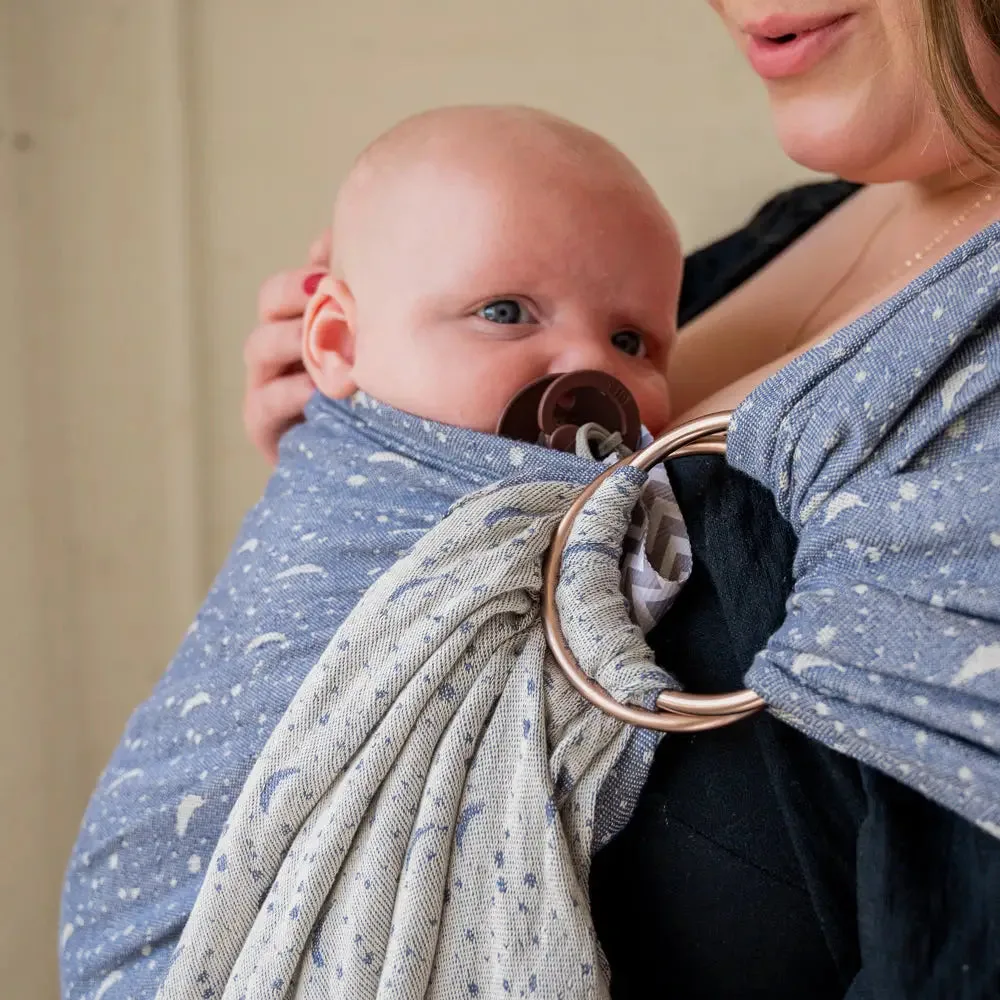
- Beargrass Ring Sling: The Beargrass Ring Sling is an earthy, nature-inspired chambray stripe that adjusts by sliding the fabric through the rings, with no buckles or snaps. A single layer of woven fabric over your baby traps less heat than a padded buckle carrier, and the ring adjustment lets you tighten or loosen in seconds as the temperature changes.
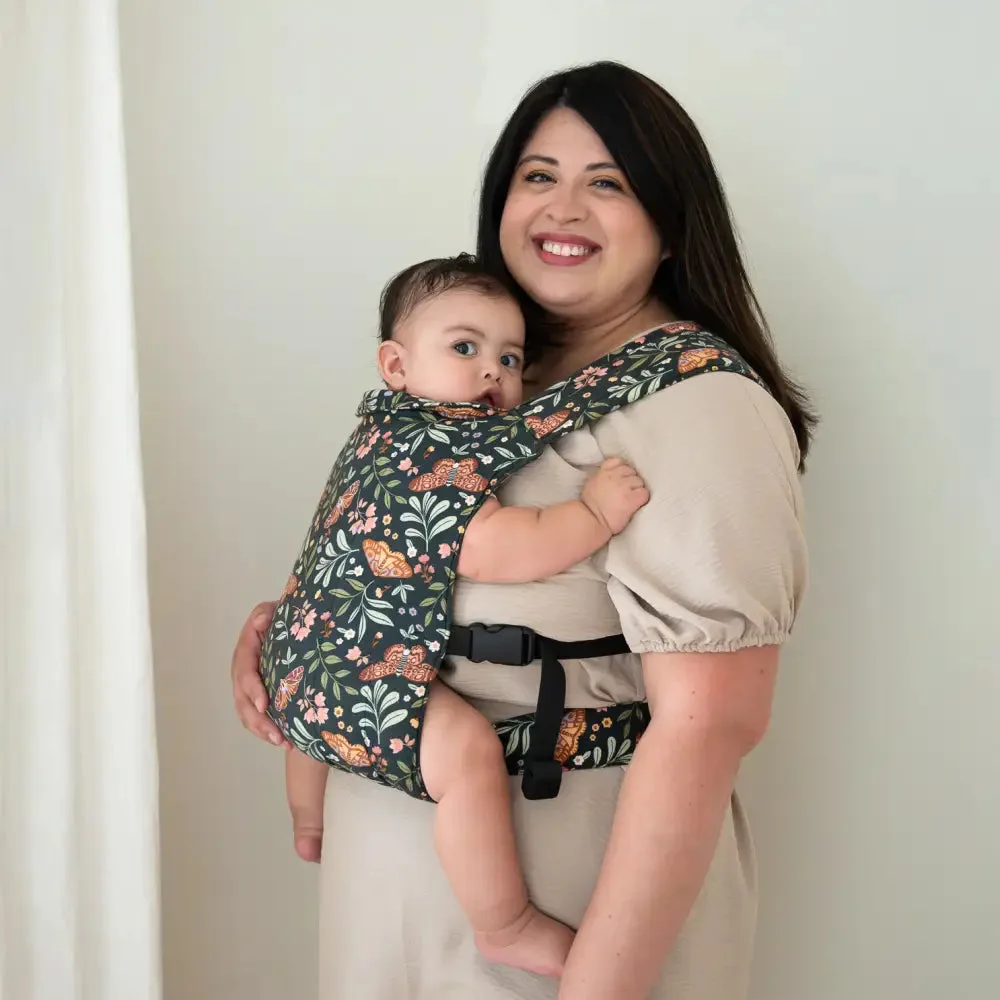
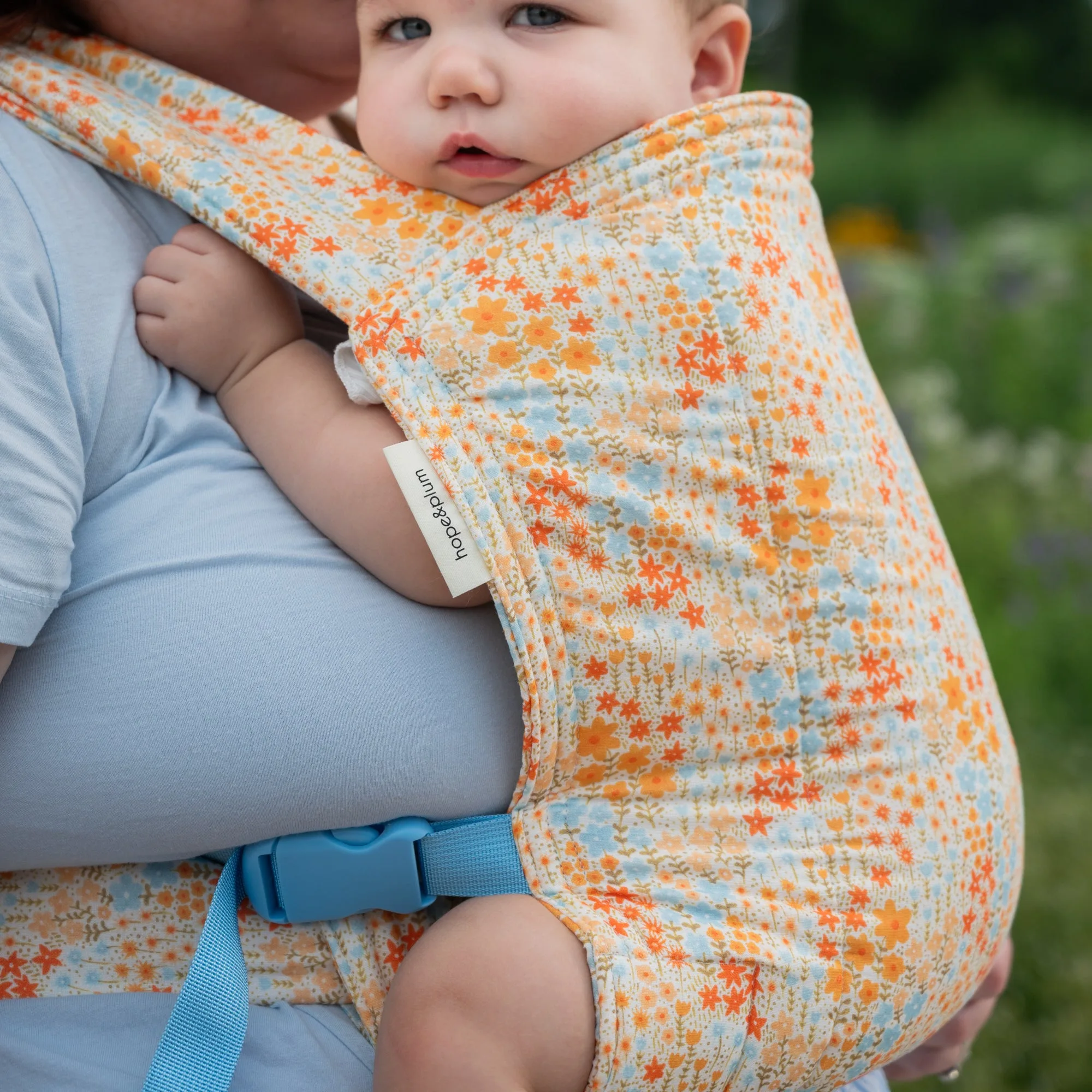
- Medley Lark Baby Carrier: The Medley Lark Baby Carrier uses a crisp green-and-white striped fabric with a bold illustrative print and is available in length options. A lighter printed fabric with an adjustable length helps you get a close, secure fit without extra bulk pressing against your baby's back, which is where heat builds up fastest.