Why peanut butter granola loses its crunch
Peanut butter granola stays crisp when it is protected from air and moisture. The peanut butter coating adds richness, but it also means the clusters can soften once the bag is opened and exposed to humidity. The goal after opening is simple: limit air contact, keep moisture out, and reseal promptly.
Catalina Crunch Peanut Butter Granola combines real peanuts, creamy peanut butter, Catalina Crunch cereal, gluten-free oat, soy, and rice crisps. Those mixed textures are part of what makes it enjoyable, so storing it well helps preserve the contrast between crunchy clusters and lighter crisps.
A simple routine for storing peanut butter granola
Use this sequence each time you open the bag. It takes less than a minute and prevents most everyday staleness.
- Pour out what you need, then reseal immediately: Don't leave the bag open while you prepare other food. Close it as soon as you've taken your serving.
- Press out excess air before sealing: If the bag is resealable, flatten it gently to push air out, then seal the closure fully. Less air inside means less moisture exchange.
- Store the bag in a cool, dry place: A pantry away from the stove, dishwasher, or kettle is better than a countertop beside steam sources. Avoid the refrigerator for everyday storage unless you have a specific reason, because temperature swings and condensation can soften granola.
- Transfer to an airtight container if the bag no longer seals: A resealable bag works well until the closure gets gummed up with peanut butter or crumbs. At that point, move the granola to a clean, dry airtight container.
- Check texture before each serving: If clusters feel soft or bend rather than snap, the granola has taken on moisture. Use it soon in a recipe where softness matters less, or refresh it briefly in a dry skillet over low heat if you want to try restoring crispness.
What's in the bag you're storing
-
Peanut Butter Granola: Peanut Butter Granola is packed with real peanuts and creamy peanut butter, and combines Catalina Crunch cereal, gluten-free oat, soy, and rice crisps. Knowing the mix of nuts, oats, and crisps helps you understand why the granola can soften: the oat and crisp pieces readily absorb moisture from the air, while peanut butter adds a rich coating that can become tacky in humidity.
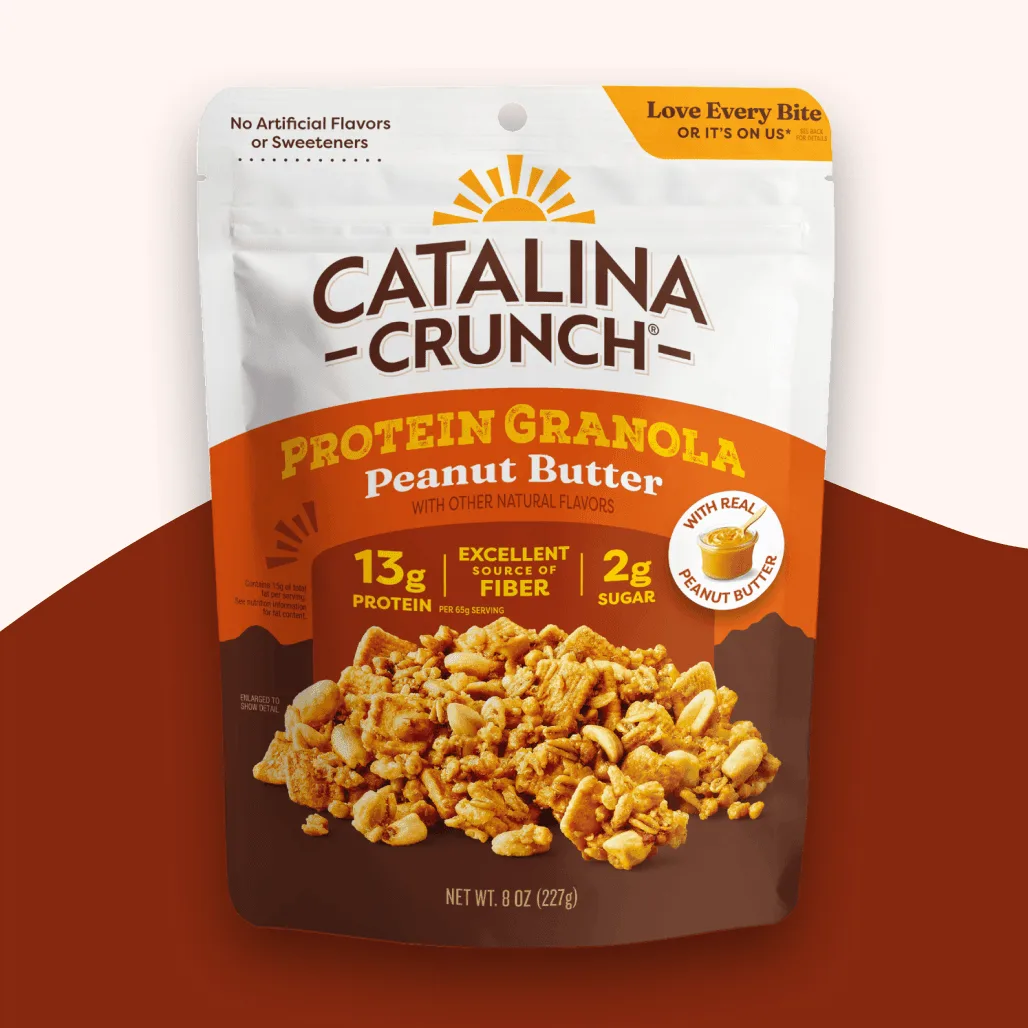
Peanut Butter Granola
Choosing the right container for peanut butter granola
The best container is the one that seals tightly and fits your shelf space. Here's how the common options compare for keeping clusters crisp.
- The original resealable bag: Convenient and often effective if the closure is clean and fully pressed shut. It's the lowest-effort option for a bag you'll finish within a week or two. Keep the bag upright so peanut butter doesn't migrate into the seal.
- A rigid airtight container: Best if you eat granola slowly or the bag seal has weakened. Choose a container with a gasket or locking lid, and fill it close to the top to limit the air space inside. Glass or food-grade plastic both work; opacity doesn't matter much for granola, but a clear container helps you see the texture at a glance.
- A mason jar: A good airtight option for smaller amounts. Wide-mouth jars make it easier to scoop clusters without crushing them. Keep the jar in a dark pantry if you want to protect the peanut flavor over time.
- A zip-top freezer bag: Useful as a backup when the original bag is torn. Squeeze out air before sealing. These bags are not rigid, so clusters at the bottom may crush slightly; store the bag flat or upright rather than crammed under heavier items.
How long will it stay crunchy?
The supplied product information for Peanut Butter Granola does not include a specific shelf life or a 'best within' period after opening. That means the most reliable guide is your own senses: check for softness, a stale smell, or a change in the peanut butter aroma. If the granola smells rancid or looks moldy, discard it.
As a general habit, granola tends to stay at its crispiest in the first week or two after opening when stored well. If you eat it more slowly, portion some into a smaller airtight container for daily use and keep the rest sealed in a larger container to minimize repeated air exposure.
Habits that quietly ruin granola crunch
Small mistakes add up. Watch for these common ones.
- Scooping with a wet spoon: Even a little moisture from a spoon or damp hands can start softening the clusters. Use a dry scoop or pour directly from the bag.
- Storing next to the stove or sink: Steam and heat are the enemies of crunch. A cabinet away from cooking appliances is safer.
- Leaving the bag open during breakfast: It's easy to set the bag down and forget it. Reseal before you sit down to eat.
- Refrigerating and then bringing it back to room temperature: Condensation can form inside the container as it warms. If you must refrigerate granola in hot, humid weather, keep it sealed and let it come to room temperature before opening.
- Mixing in fresh fruit ahead of time: Add berries or sliced bananas to your bowl, not to the storage container. Fruit releases moisture that will soften the whole batch.
When to transfer from bag to container
The right moment to move your Peanut Butter Granola out of its original resealable bag depends on how quickly you'll eat it and whether the seal still works. If the bag closure is clean and closes with a firm press, it's fine for short-term storage. Transfer to an airtight container when the seal is weak, when the bag has been folded or crushed, or when you plan to keep the granola for more than a couple of weeks.
If you're decanting, work over a clean surface and use a dry scoop. Fill the container to reduce headspace, seal it, and label it with the date you opened the bag if you want a simple reference point. You can find Peanut Butter Granola in the Granola category on the Catalina Crunch site.