Quick answer
Keep your puffy blanket warm in damp weather by blocking ground moisture first, shaking it out to restore loft before bed, and using a shell or tarp to keep rain and condensation off the synthetic insulation. Synthetic fills retain warmth better than down when wet, but they still lose loft if compressed or soaked, so moisture management matters more than adding layers.
Why damp air makes a puffy blanket feel cold
Warmth in a puffy blanket comes from trapped air, not the fabric itself. When humidity is high or rain is falling, water vapor and liquid water displace that trapped air. Synthetic insulation like RenewaLoft recycled insulation resists collapsing when damp, but it still loses some loft if it gets soaked or stays compressed. The result: a blanket that felt warm on a dry night feels clammy and thin in damp conditions. The fix is not more heat; it is less moisture reaching the fill.
Set up a moisture barrier before you unpack the blanket
Ground moisture wicks upward through tent floors and sleeping pads, especially in prolonged rain. Before you lay out your puffy blanket, put a closed-cell foam pad, a tarp, or a dedicated ground sheet under your sleeping area. This single step stops the most common source of camping blanket moisture. If you are hammock camping, make sure your underquilt or pad is dry before you add the blanket on top.
Shake and redistribute loft before bed
A puffy blanket that has been stuffed in a pack all day needs to re-loft. Hold it by the edges and shake it vigorously for 10 to 15 seconds, then let it rest for a few minutes while you finish camp chores. This redistributes the insulation and opens up air pockets. Do this inside the tent or under a tarp so you are not shaking it in the rain. If the blanket feels flat after shaking, it may be damp; see the drying step below.
Use a shell layer to block rain and condensation
In damp weather, your breath and body heat create condensation inside the tent. A weather-resistant shell like the VersaWeave shell on Rumpl puffy blankets helps repel external moisture, but condensation can still form on the inside of the tent and drip onto the blanket. If you expect heavy condensation, drape a lightweight tarp or a breathable bivy over the blanket, leaving a small air gap. Avoid wrapping the blanket in a non-breathable plastic bag; that traps moisture against the fill.
Dry the blanket before storing it, even for a short time
If your blanket feels damp at any point, dry it before you compress it. In dry weather, hang it over a line or branch in direct sun for 20 to 30 minutes. In continued rain, drape it inside the tent near your body heat or use a camp towel to blot surface moisture. Never store a damp puffy blanket in a stuff sack overnight; that is how mildew and permanent loft loss start. A dry blanket packs smaller and warms faster the next night.
Steps to keep your puffy blanket warm in damp weather
- 1. Create a dry base layer: Place a closed-cell foam pad, tarp, or ground sheet under your sleeping area before you unroll the blanket. This blocks ground moisture from wicking into the fill. Checkpoint: if the ground under your tent feels damp to the touch, add another layer.
- 2. Shake the blanket to restore loft: Hold the blanket by two corners and shake it for 10 to 15 seconds, then let it rest for a few minutes. This redistributes insulation and opens air pockets that trap warmth. Mistake to avoid: putting the blanket straight from the stuff sack onto your body without shaking it.
- 3. Add a breathable shell over the blanket: Drape a lightweight tarp or breathable bivy over the blanket with a small air gap to block rain and tent condensation. Do not use a non-breathable plastic bag, which traps moisture inside. Checkpoint: if you see condensation on the inside of the tarp, increase the air gap.
- 4. Dry the blanket before storing: If the blanket feels damp, hang it in sun or near body heat for 20 to 30 minutes, or blot it with a camp towel. Never stuff a damp blanket into a sack overnight. Mistake to avoid: packing a damp blanket in the morning; it will lose loft and smell musty by the next night.
Products built for damp conditions
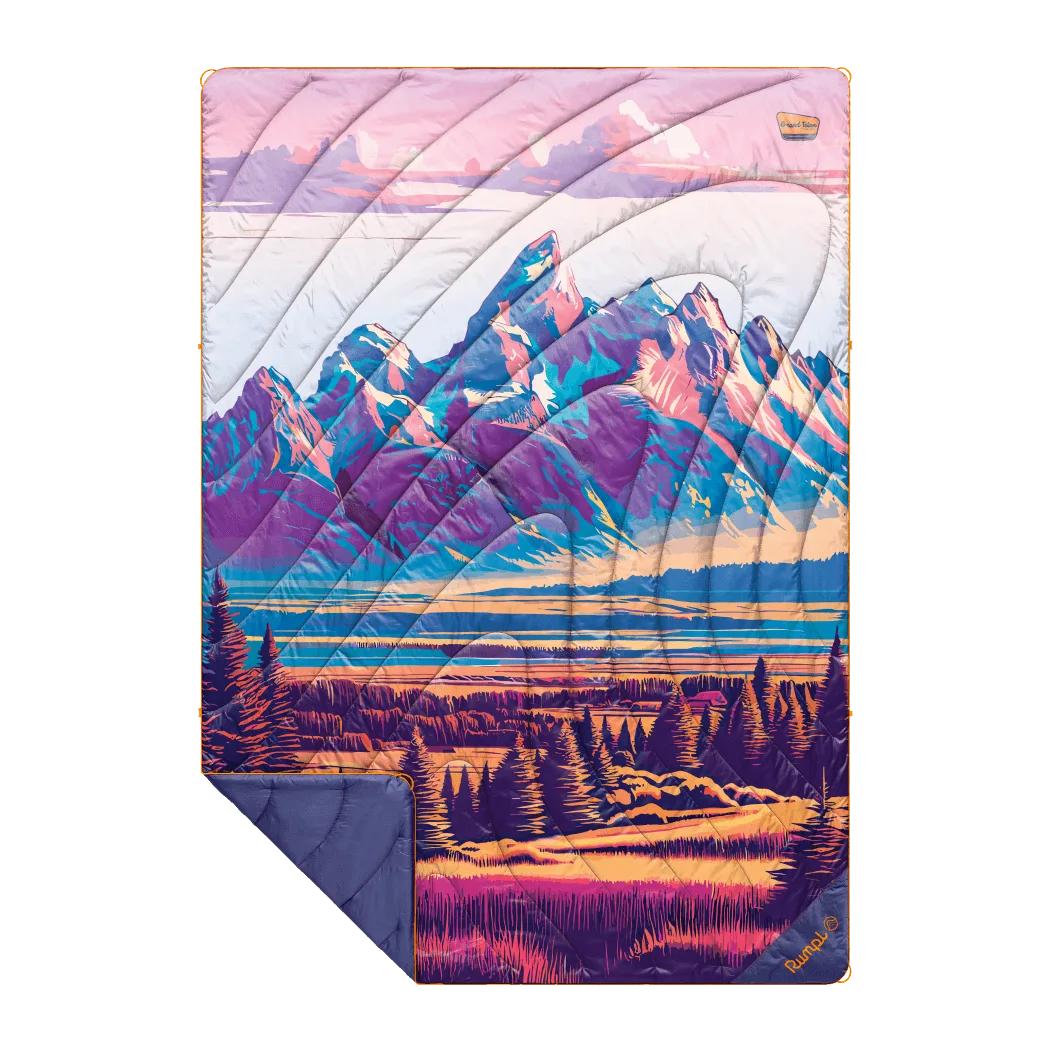
- Original Puffy Blanket - Grand Teton: Original Puffy Blanket - Grand Teton features a durable VersaWeave shell for debris and weather resistance, corner staking loops, and a hands-free Cape Clip. The weather-resistant shell helps shed light rain and tent condensation, while staking loops keep the blanket off wet ground and the Cape Clip lets you wear it hands-free around camp.
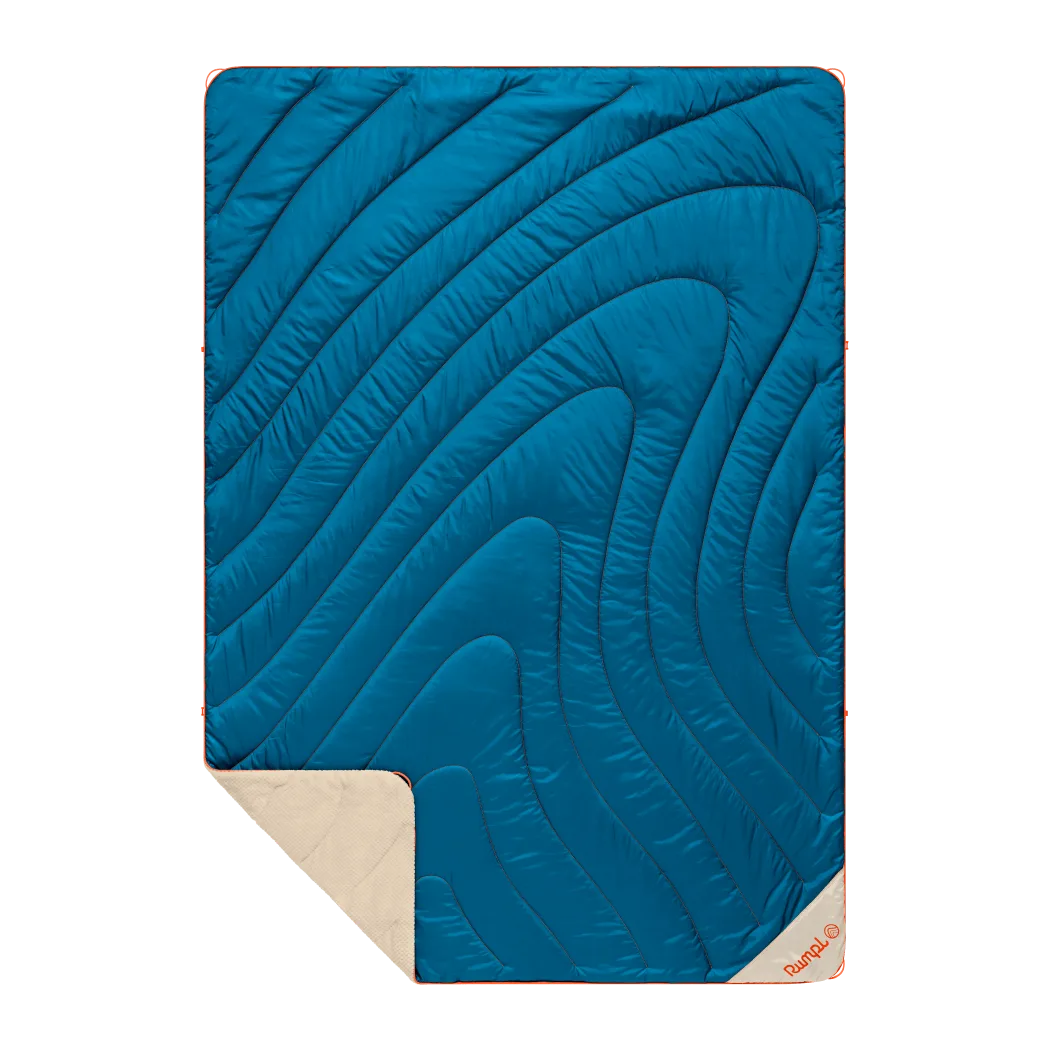
- Fleece Puffy Blanket - Seascape Cream: Fleece Puffy Blanket - Seascape Cream has a weather-resistant VersaWeave 30D ripstop shell, a buttery-soft fleece liner with anti-static and anti-microbial treatments, and RenewaLoft recycled insulation. The anti-microbial fleece liner resists odor and mildew growth in humid conditions, and the ripstop shell adds durability against abrasion from wet campsite surfaces.