Quick answer
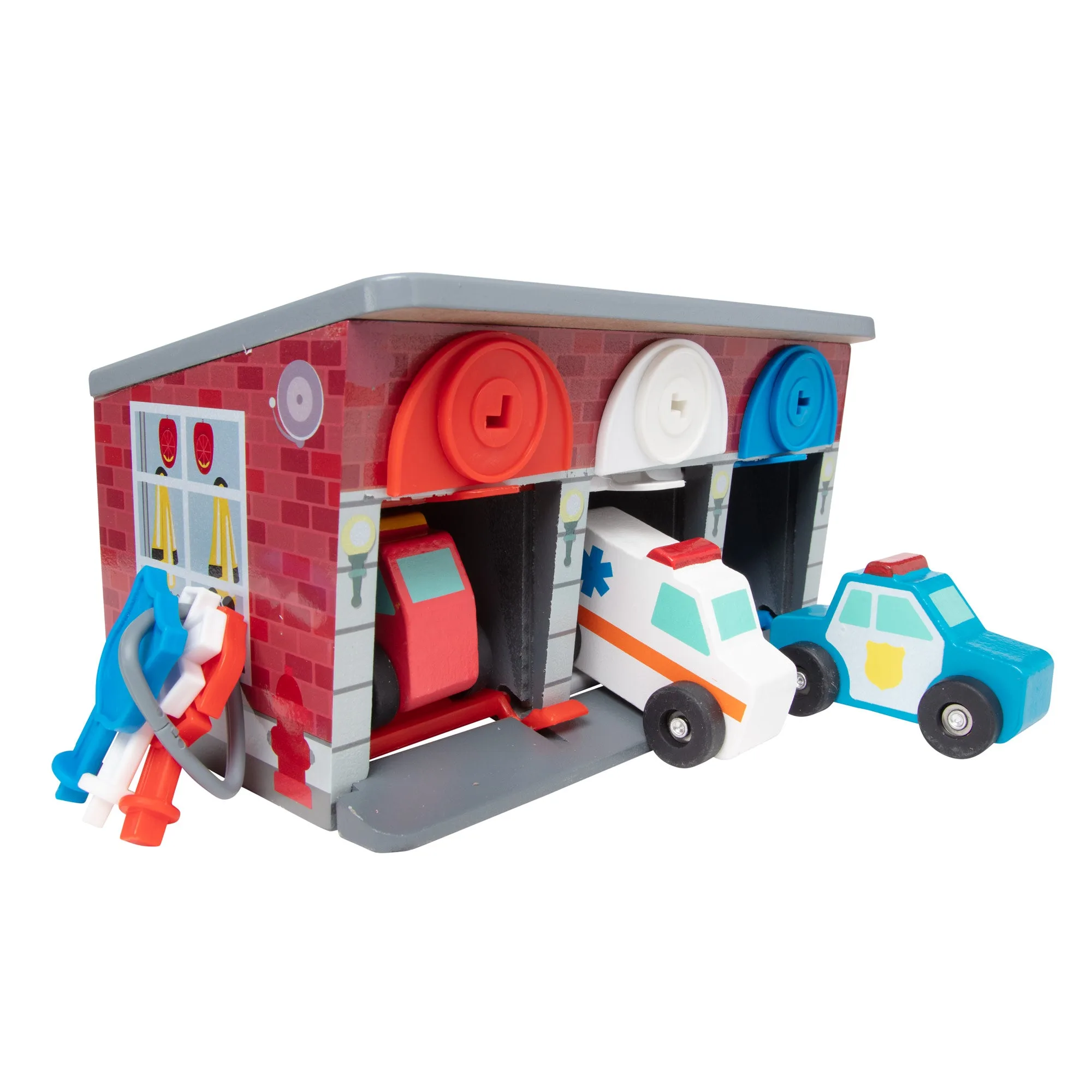
The Keys & Cars Rescue Garage is a compact wooden garage toy with three locked doors, color-matched keys, and three rescue vehicles inside. It suits pretend car play and fine-motor practice best when you treat the keys as the main event, not an accessory.
Why the keys matter more than the cars
Many toy garages put the vehicles first and the locks second. Here the reverse is true: matching a colored key to its door, turning it, and then pressing a button to drop the ramp gives a toddler a clear cause-and-effect sequence. That sequence is the part that keeps a 3-year-old engaged after the novelty of the cars fades.
The trade-off is pace. A child who wants to race cars immediately may find the unlocking slow at first. Expect the first few sessions to be about the keys, with racing coming later once the routine is familiar.
What it does not try to be
This is a take-along set, not a large track or a multi-level garage. The catalog describes it as a carry-handle set with three doors and three vehicles, so plan for solo or small-group play rather than a centerpiece for a full train-and-road layout. If your child already has a wooden vehicle playset with tracks, this works alongside it as a rescue station, not a replacement.
There is also no supplied information about optional expansions, extra vehicles, or replacement keys. Treat the three vehicles and keys in the box as the complete play set when you decide whether it fits your shelf.
Keys & Cars Rescue Garage FAQ
What ages is this garage toy best for?
It fits the preschool years best, roughly 3 to 5, when a child can match colors and turn a key with some control. Younger toddlers may enjoy opening the doors with help but will need an adult nearby for the smaller keys. Watch your child with the keys first; if matching colors is still frustrating, park the set for a few months.
How does the key-and-door system actually work?
Each door has a colored lock, and the matching key unlocks it. Once a door is open, a button releases the ramp so a vehicle can roll out. The sequence is match, unlock, open, release. Teach the sequence once, then let your child run it alone; repeating the steps is the point.
Can my child play with it without the keys?
Yes. The doors, ramp, and vehicles still work as a simple pretend car play set, and some children prefer to load and unload cars through open doors. The keys add a challenge layer rather than a requirement. Keep the keys in the set's storage area so they do not get lost when play shifts to cars only.
Is it easy to take to a restaurant or grandparents' house?
The sturdy handle and contained pieces make it a reasonable take-along toy, and the set stores its own vehicles. Count the keys before you leave, since a missing key removes one door from the game. Do a quick key count at the end of each outing.
How do I set up pretend rescue scenarios?
Give each vehicle a job: one responds to a stuck cat, one to a small fire, one to a flooded driveway. Have your child unlock only the door for the vehicle needed, then release the ramp and narrate the drive out. Rotate which vehicle answers the call so all three doors get used.
What should I check before buying?
Confirm your child is past mouthing toys, that you have shelf or bin space for a carry-handle set, and that you want a key-matching challenge rather than a large track. The catalog does not list extra vehicles or expansions, so buy it for the set as described. If you need a big buildable road system, choose a different wooden vehicle playset.
Product facts at a glance
-
Keys & Cars Rescue Garage: Three doors hide three rescue vehicles, and the set includes color-matched keys plus buttons that release a ramp. The key-and-button sequence gives toddlers a repeatable job to master, which supports motor-skills practice alongside pretend rescue play.
Keys & Cars Rescue Garage