Quick answer
If you want quick access and a low-profile carry, the KeySmart Pocket Clip is your best bet—it clips to any pocket and lets you grab your keys without digging. If you prefer keeping your keys off your pocket line and don't mind a bit more visibility, a belt clip style offers a more secure, stationary carry. Choose based on how often you need your keys and how much bulk you want on your waist.
Your key organizer is only as convenient as the way you carry it. The KeySmart Pocket Clip attaches to any pocket, letting you suspend your KeySmart partway in, so it's ready when you are. But not everyone wants a clip on their pocket—some prefer a belt-mounted setup that keeps keys out of the way.
This comparison breaks down the trade-offs between pocket clip and belt clip carry methods, so you can choose the one that fits your everyday routine. We'll look at accessibility, comfort, and how each method works with different KeySmart models.
Pocket Clip Carry: Quick Access and Low Profile
The KeySmart Pocket Clip is designed to clip your KeySmart to any pocket, making it readily accessible. Its no-snag design lets the KeySmart suspend partway into your pocket, so your keys stay put without catching on fabric. This is ideal for people who reach for their keys multiple times a day—like drivers, delivery workers, or anyone who frequently unlocks doors.
Because the clip keeps your keys at the top of your pocket, you don't have to fumble around. It also reduces the chance of scratching your phone or other items in your pocket, since the keys are held above them. The trade-off is that the clip adds a small profile to your pocket, and if you wear tight pants, it may be noticeable.
- Quick access: keys are always at the top of your pocket.
- No-snag design: reduces catching on fabric.
- Low-profile: keeps keys off the bottom of your pocket.
Belt Clip Carry: Secure and Out of the Way
A belt clip carry, often integrated into models like the KeySmart Rugged, attaches your organizer to your waistband or belt loop. This keeps your keys off your pocket line entirely, freeing up pocket space and preventing any bulk in your thighs. It's a popular choice for outdoor workers, hikers, or anyone who wants their keys fixed in one spot.
The main trade-off is access: you have to reach down to your waist, which can be less convenient than a pocket clip if you need your keys frequently. Also, a belt clip can be more visible and may catch on seat belts or backpack straps. However, for those who carry a lot of gear, the security and space savings often win out.
- Frees up pocket space: keys don't take up room in your pockets.
- Secure and stationary: no risk of keys slipping out.
- Visibility: may be more noticeable and can catch on straps.
Comparing Carry Methods: Trade-offs at a Glance
When choosing between pocket clip and belt clip, think about your daily activities. If you're constantly in and out of your car or office, the pocket clip's quick access is hard to beat. If you're on your feet all day or wear work pants with limited pocket space, a belt clip keeps your keys out of the way.
Consider the KeySmart model you own. The Pocket Clip is a standalone accessory that works with any KeySmart, while belt clip functionality is built into models like the KeySmart Rugged. If you already have a KeySmart, the Pocket Clip is an easy add-on. If you're buying new, the Rugged gives you the belt clip option plus extra durability.
- Pocket clip: best for frequent access and low-profile carry.
- Belt clip: best for freeing up pockets and secure carry.
- Compatibility: Pocket Clip works with existing KeySmart; Rugged has belt clip built-in.
The Trade-off: Quick Access vs. Out-of-the-Way Security
- Pocket Clip: Attaches to any pocket, suspending your KeySmart partway for easy reach. No-snag design prevents catching. Choose this if you need keys frequently and want minimal bulk.
- Belt Clip (via Rugged): Keeps keys off your pocket line, freeing up space and ensuring they stay put. Built-in loop can attach a car fob. Choose this if you prefer a stationary carry and have limited pocket space.
- Compatibility: Pocket Clip works with any KeySmart; belt clip is a feature of models like the Rugged. If you already own a KeySmart, the Pocket Clip is an easy upgrade. If buying new, consider the Rugged for belt carry.
KeySmart Carry Options in the Catalog
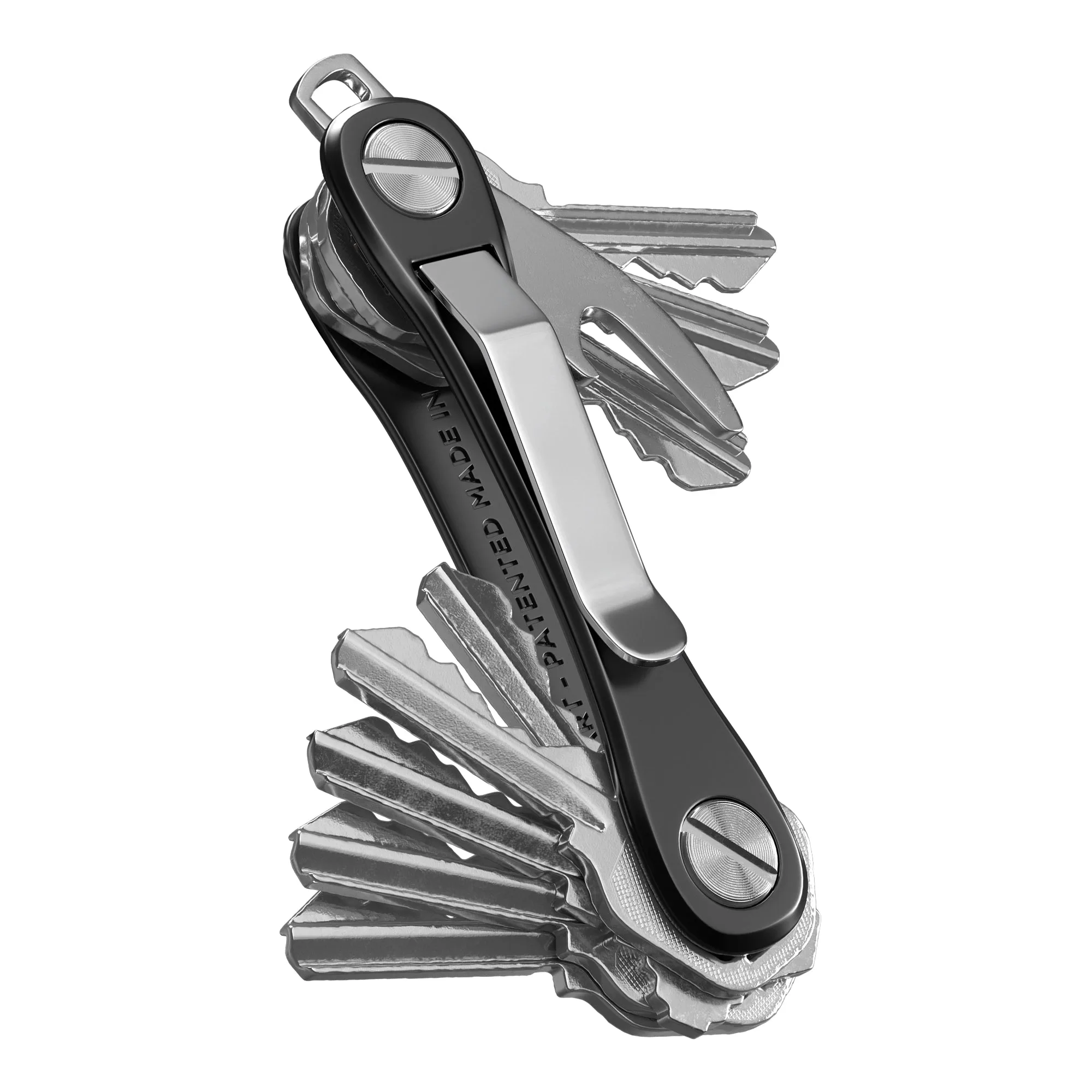
- Pocket Clip | Clip Your KeySmart® To Any Pocket or Purse: Clip your KeySmart® to any pocket to make it readily accessible. With its no-snag design, the pocket clip allows KeySmart to be suspended part way into your pocket. This clip turns any KeySmart into a quick-access tool, perfect for people who don't want to dig through their pockets.
- KeySmart® Rugged | Extra Durable Key Holder | Expandable To Hold Up to 14 Keys: KeySmart Rugged is the most durable key holder that makes your keys compact, quiet and comfortable to carry. Includes pocket clip and bottle opener. Saves pocket space. Attach your car fob using the built-in loop. Universal design fits your existing keys. Expandable from 2-8 keys (includes an extra set of screws to fit up to 14 keys). The Rugged offers a belt-clip-friendly design with a built-in loop and extra durability, making it a solid choice for heavy-duty carry.
Which Carry Method Fits You?
Best for
- People who access their keys multiple times an hour and want them at the top of a pocket.
- Those who prefer a low-profile carry that doesn't add bulk to their waistline.
Not for
- People who carry keys all day and want them completely out of the way—consider a belt clip or the KeySmart Rugged.
Both pocket clip and belt clip carry methods have their place. The Pocket Clip excels at quick, low-profile access, while a belt clip (like on the KeySmart Rugged) offers security and frees up your pockets. Assess your daily routine, and pick the one that makes your keys work for you, not the other way around.