The comparison starts with the child, not the label
Chewable probiotic wafers and capsules for children are not interchangeable by default. The form changes how a child takes the supplement, how you store it, and which label details matter most. A wafer may suit a child who resists swallowing pills; a capsule may suit a child who already takes capsules willingly. Neither form is automatically better.
The useful comparison is therefore narrower than a general 'which is best' question. You are comparing delivery format, ingredient disclosures, storage needs, and the age and swallowing ability of the child in front of you. The Kirkman Children's Chewable Pro-Bio Gold Chocolate Wafers record gives a concrete example of what one chewable option discloses, and it also shows where the record stops.
What you can compare between wafers and capsules
These are the decision points that matter when you place a chewable wafer next to a capsule alternative. The right column describes what to look for in any children's probiotic, not a claim about a specific capsule product.
- Form and swallowing: A chewable wafer is chewed, so it does not require pill swallowing. A capsule is swallowed whole, which may not suit every child. Match the form to the child's ability and willingness, not to a preference for one format.
- Strain disclosure: The Kirkman record states that each wafer contains six probiotic strains. For any capsule you consider, check whether the strains are named on the label. A strain count alone does not tell you which organisms are included.
- Potency wording: The Kirkman record describes a manufacturing process using cold and dehumidified conditions intended to protect delicate organisms. It does not state a CFU number in the supplied information. Do not assume a CFU figure for this product, and do not treat '5 billion CFU kids probiotic' as a verified specification here.
- Allergen and ingredient disclosures: The Kirkman record says the wafers are formulated without lactose, soy, grains, nuts, fish, and artificial flavors, and describes the formula as hypoallergenic. For a capsule alternative, read the full ingredient list rather than assuming similar exclusions.
- Storage: The Kirkman wafers come in a 90-count resealable bottle that the record says is meant to be refrigerated. Capsule storage instructions vary by product; check the specific label instead of applying the wafer rule to a capsule.
- Serving and age guidance: The supplied Kirkman record does not include a serving size, age range, or dosing schedule. The same information must come from the specific capsule label. Without it, you cannot complete a like-for-like serving comparison.
What the Kirkman Children's Pro-Bio Gold record confirms
-
Kirkman Children's Chewable Pro-Bio Gold Chocolate Wafers Tablets: Each wafer contains six probiotic strains. Strain count is one of the few potency-related details the record actually states, so it belongs in any comparison.
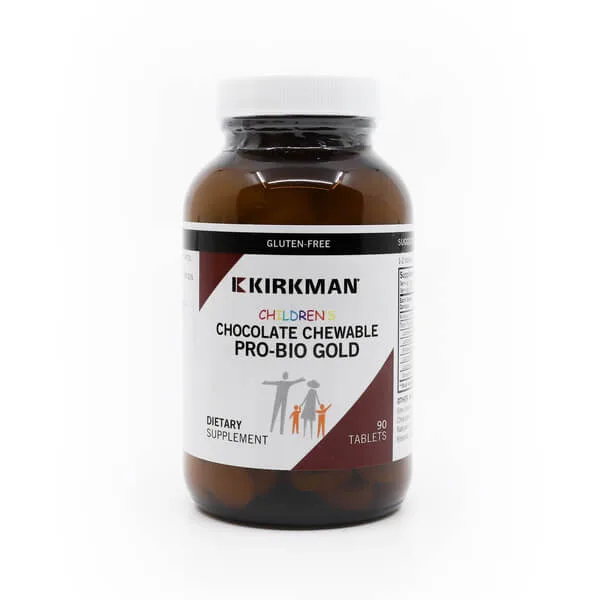
Kirkman Children's Chewable Pro-Bio Gold Chocolate Wafers Tablets
-
Kirkman Children's Chewable Pro-Bio Gold Chocolate Wafers Tablets: The formula is described as made without lactose, soy, grains, nuts, fish, and artificial flavors, and as hypoallergenic. These exclusions are the kind of detail parents compare first when a child has sensitive dietary needs.
-
Kirkman Children's Chewable Pro-Bio Gold Chocolate Wafers Tablets: The wafers come in a 90-count resealable bottle meant to be refrigerated. Storage affects whether a chewable fits your routine, especially if the refrigerator is not where supplements usually live.
-
Kirkman Children's Chewable Pro-Bio Gold Chocolate Wafers Tablets: The record says the formula is made using special cold and dehumidified conditions so each wafer delivers probiotic support. This explains why the manufacturer treats moisture and temperature as part of the product's design, not just a storage afterthought.
Where the Kirkman record leaves a gap
The supplied information does not include a CFU count, a serving size, an age range, or a dosing schedule for the Kirkman Children's Chewable Pro-Bio Gold Chocolate Wafers. That matters for a comparison article because these are exactly the numbers parents use to line up two products. Without them, you cannot say that one wafer delivers more or fewer organisms than a given capsule, or that one is appropriate for a particular age.
This is a limitation of the supplied record, not evidence that the manufacturer provides no such information elsewhere. Treat the missing details as questions to resolve from the product label or a healthcare practitioner before you buy, rather than as reasons to assume the product lacks them.
A practical way to choose between the two forms
Use this sequence to keep the decision grounded in what you can verify.
- Start with swallowing ability: If the child cannot or will not swallow a capsule, a chewable wafer is the more realistic format. If capsules are already part of the routine, compare on other grounds.
- Check the full ingredient list against known sensitivities: Use the Kirkman exclusions as a reference point for what a label can disclose, then read the capsule's own list. Do not transfer one product's exclusions to another.
- Confirm the serving and age guidance on the label: The Kirkman record does not supply these, so verify them directly. The same applies to any capsule alternative.
- Match storage to your household: The Kirkman wafers are meant to be refrigerated. If refrigeration is impractical where you keep supplements, that is a real constraint to weigh, not a minor detail.
- Ask a healthcare practitioner when the child is young or has a health condition: The Kirkman record notes review by a licensed clinical team at The Healthy Place Clinic, but that is not a substitute for advice about your own child.
What '5 billion CFU kids probiotic' does and does not tell you
A CFU number describes the quantity of viable organisms a label claims at a given point, but it is only useful when you know whether it refers to the amount at manufacture or at expiration, and which strains are counted. The Kirkman record does not state a CFU figure at all, so it cannot be placed on a 5 billion CFU scale from the supplied information. If a CFU count is central to your decision, look for it on the specific label and check what it is measured against.