Why a Real Knife for Kids Makes Sense
When a child is ready to help in the kitchen, the right tool makes all the difference. A kid's knife is not a toy or a butter knife — it's a real blade sized and designed for small hands. The goal is to let young cooks practice safe cutting techniques while building confidence and skill.
A proper children's kitchen knife is sharp enough to cut through soft fruits and vegetables without requiring excessive force, which actually reduces the risk of slipping. Safety-forward details, like a rounded tip and a comfortable grip, help the child maintain control.
What the Kid's Knife Offers
-
Kid's Knife: A real knife made for young cooks. Sharp enough for simple prep work, with safety-forward details for confident first cuts. This confirms the knife is a functional tool, not a dull replica. A genuinely sharp edge lets the child cut with less pressure, which is safer than forcing a dull blade through food.
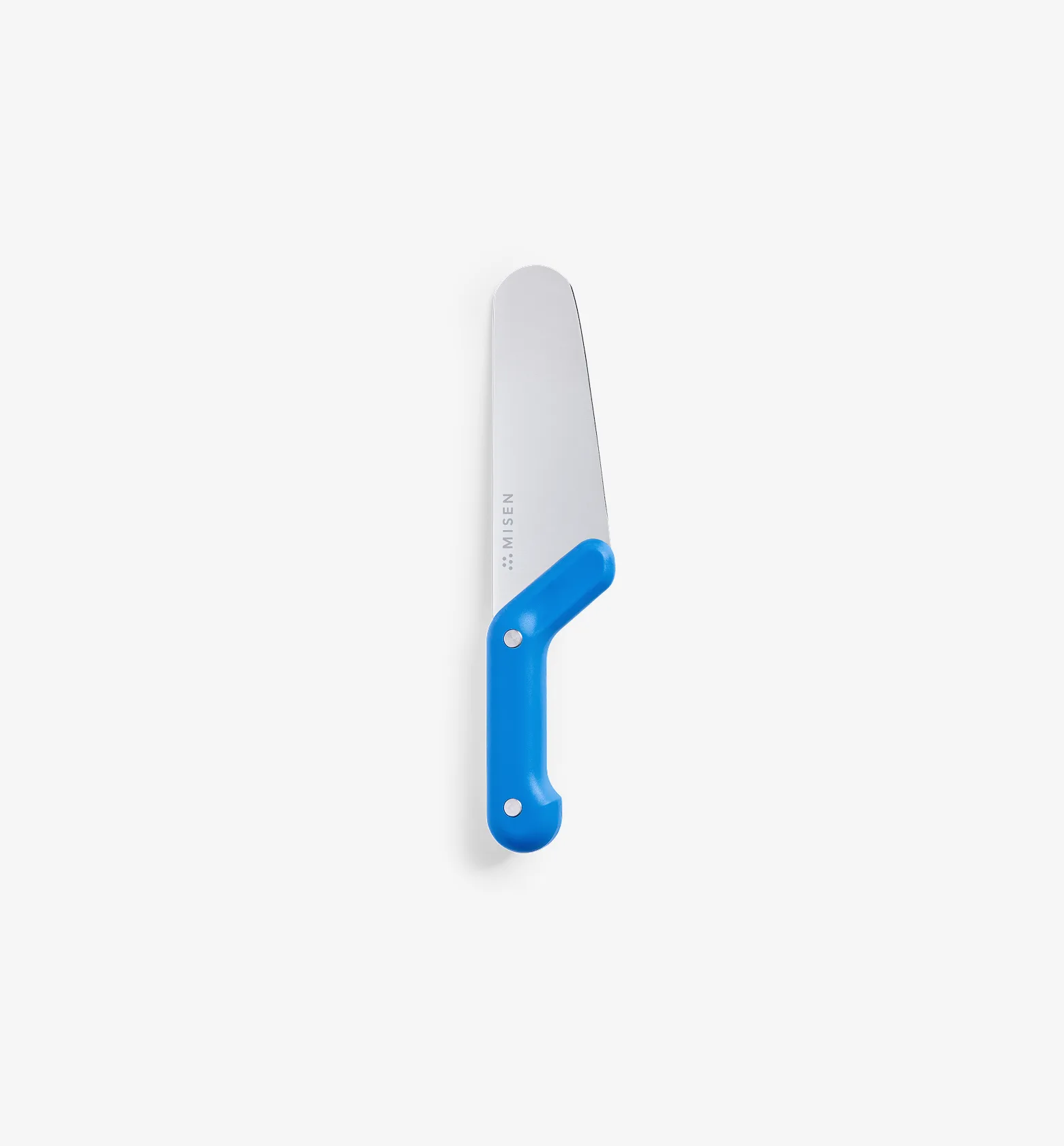
Kid's Knife
What to Look for in a Safe Knife for Kids
A safe kids cooking knife should have a blade that is sharp enough to cut produce but not so large that it's unwieldy. Look for a design with a rounded or blunt tip to minimize puncture risk. The handle should be easy for small hands to grip securely, even when slightly wet.
Size and weight matter. A knife that is too heavy or long will be hard for a child to control. A dedicated learning to cook knife is lighter and shorter than a standard chef's knife, allowing the child to focus on proper technique rather than struggling with the tool.
Choosing the Right Knife for Your Child
When selecting a children's kitchen knife, consider the age and experience of the child. A knife that is too advanced may frustrate or overwhelm a beginner. The Kid's Knife from Misen is designed for young cooks who are ready to move beyond plastic or play knives and start learning real knife skills.
The knife comes in two color options — Blueberry and Tomato — which can make the tool feel more personal and engaging for the child. A knife that feels like 'theirs' can encourage proper care and respect for the tool.
Teaching Safe Knife Habits Early
Introducing a kid's knife is also an opportunity to teach kitchen safety fundamentals: always cut away from the body, keep fingers curled under the guiding hand, and wash the knife after use. Starting with soft foods like bananas, cucumbers, or cooked potatoes lets the child practice without frustration.
With the right safe knife for kids and proper supervision, children can develop skills that build independence and a positive relationship with cooking.