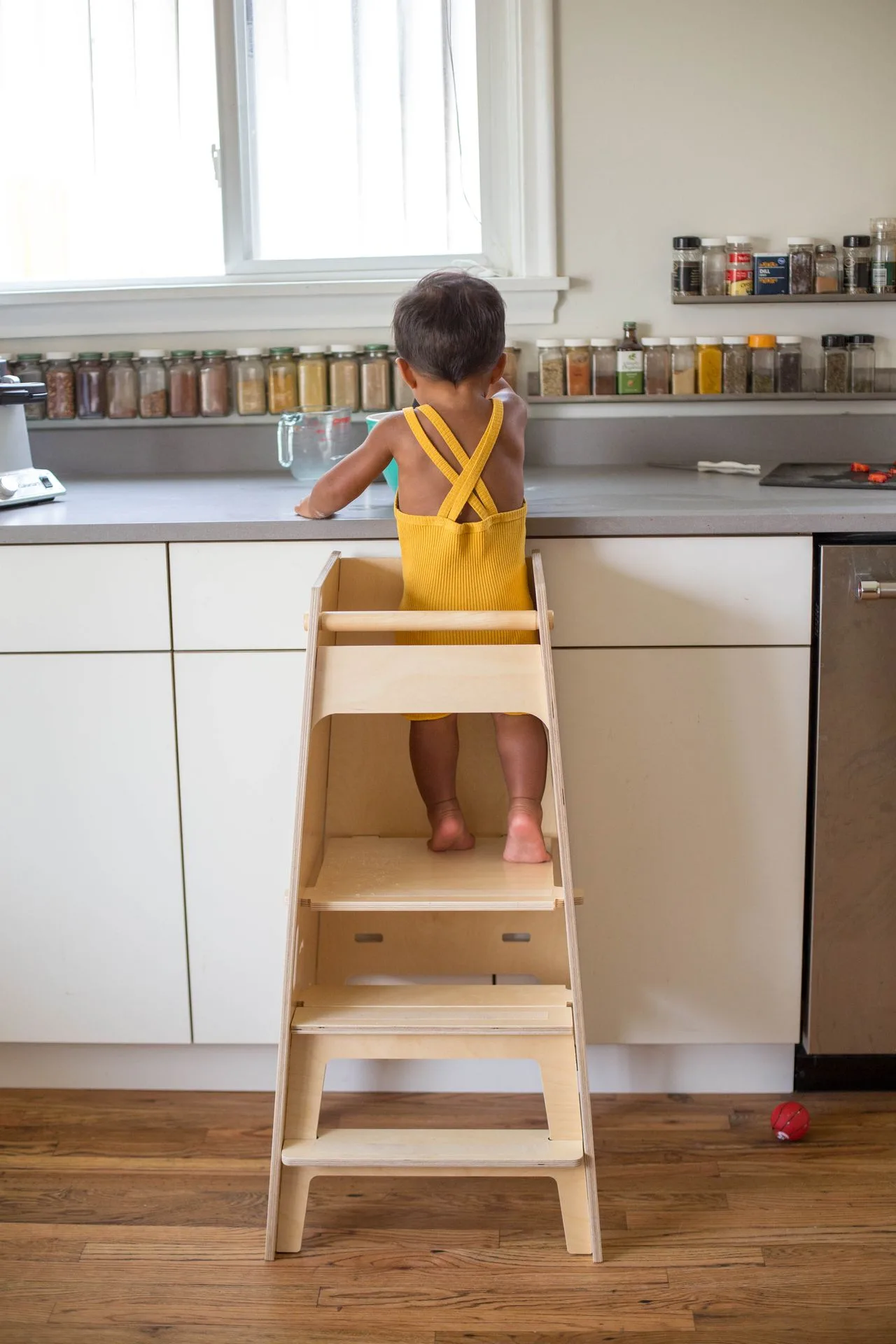
In Montessori homes and classrooms, one humble piece of furniture often makes the biggest difference in a child's daily life: the kids step stool. Far more than a simple platform, a well-designed step stool empowers toddlers to reach sinks, counters, and shelves safely, transforming everyday moments into opportunities for learning and independence. When children can wash their hands, grab a snack, or help set the table without waiting for an adult to lift them, they build confidence, coordination, and a sense of belonging in the family routine.
Practical life skills—pouring, wiping, dressing, and cleaning—are the foundation of Montessori education. A step stool bridges the gap between a child's size and the adult-sized world, making these activities accessible. Whether you are looking for a Montessori step stool for the kitchen, bathroom, or entryway, choosing the right one can support your child's development for years to come. This article explores why a step stool is essential, what features to look for, and how it encourages self-reliance from an early age.
What Are Practical Life Skills and Why Do They Matter?
Practical life skills are the everyday tasks that help children care for themselves, their environment, and others. These include pouring water, buttoning a shirt, sweeping the floor, preparing simple foods, and putting on shoes. In Montessori philosophy, these activities are not chores—they are purposeful work that develops fine motor control, concentration, order, and independence. When a child can successfully complete a task on their own, their self-esteem grows naturally.
A kids step stool is a key tool for making these tasks accessible. Without it, a toddler cannot reach the kitchen counter to help stir batter or the bathroom sink to brush their teeth. With a sturdy stool, they can participate in real, meaningful work alongside parents. This inclusion fosters a sense of capability and belonging that screen-based or toy-based activities cannot replicate.
- A step stool allows children to safely reach countertops, sinks, and shelves.
- Practical life activities strengthen hand-eye coordination and cognitive sequencing.
- Involving children in daily tasks reduces power struggles and builds cooperation.
Key Features to Look for in a Montessori Step Stool
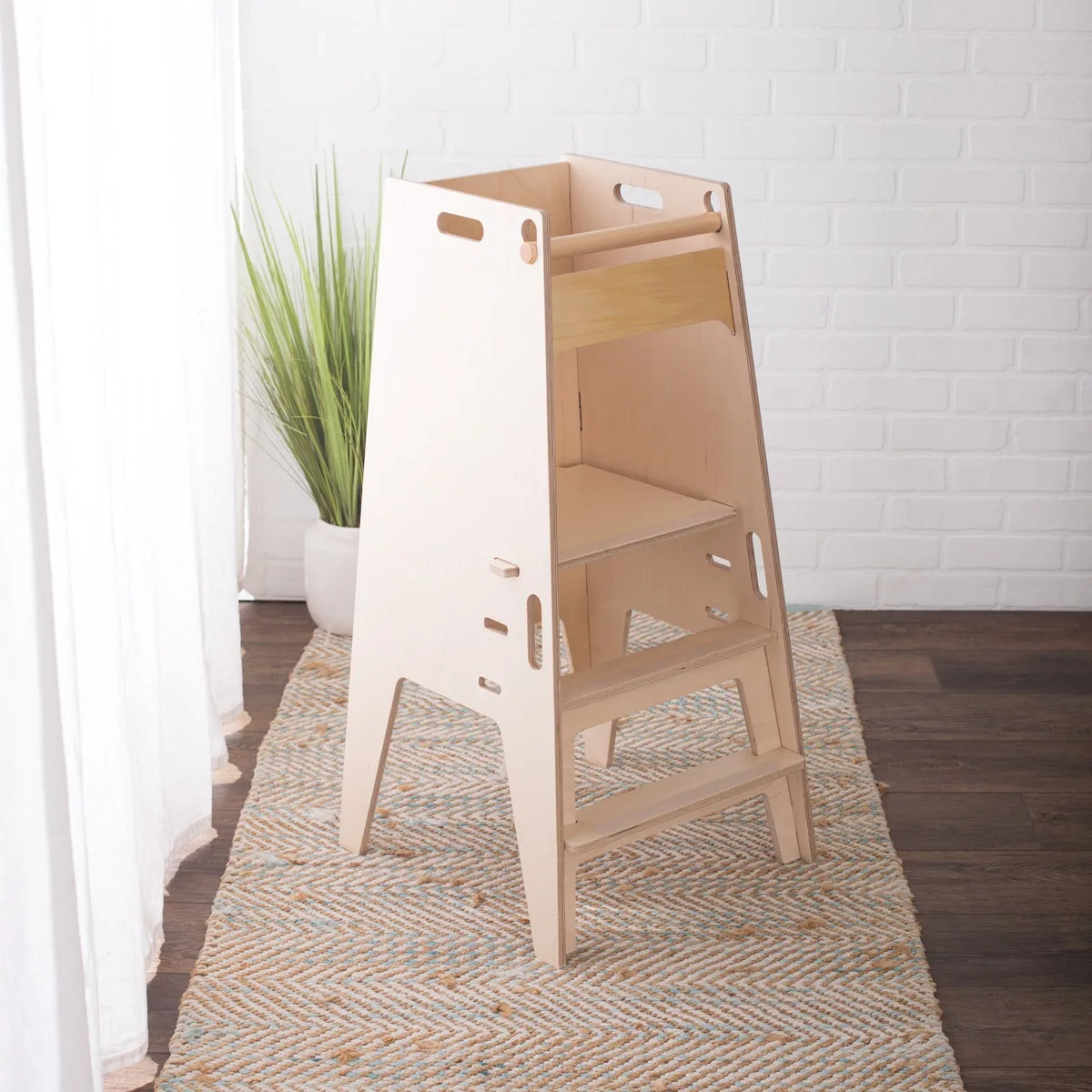
Not all step stools are created equal. A true Montessori step stool prioritizes safety, stability, and child-centered design. First and foremost, the stool should be low to the ground—typically 12 to 18 inches high—so even a young toddler can climb up and down without assistance. Wide, non-slip steps and a broad base prevent tipping, especially when the child leans forward to reach a counter. Materials matter: solid wood construction (like birch or beech) offers durability and a natural aesthetic that fits seamlessly into any home.
Another important feature is versatility. Many families prefer a stool that can serve multiple purposes—as a kitchen helper, a bathroom step, or even a seat for reading. Some designs include a foldable or convertible option, making them easy to store when not in use. Look for stools with rounded edges and a smooth finish to avoid splinters. For older toddlers, a taller stool with a safety rail may be appropriate, but for most children ages 18 months to 4 years, a simple, sturdy platform is ideal.
- Choose a stool with a low height (12–18 inches) for easy climbing.
- Opt for solid wood with a non-slip surface and wide base for stability.
- Consider a multi-purpose design that works in the kitchen, bathroom, and entryway.
How a Step Stool Supports Independence in Daily Routines
One of the most powerful gifts we can give our children is the ability to do things for themselves. A step stool transforms the kitchen into a learning lab where a toddler can wash fruits, pour water into a cup, or help mix ingredients. In the bathroom, it makes handwashing, toothbrushing, and toilet training accessible without constant adult lifting. Even in the entryway, a stool can help a child reach their shoe rack or hang their coat on a low hook.
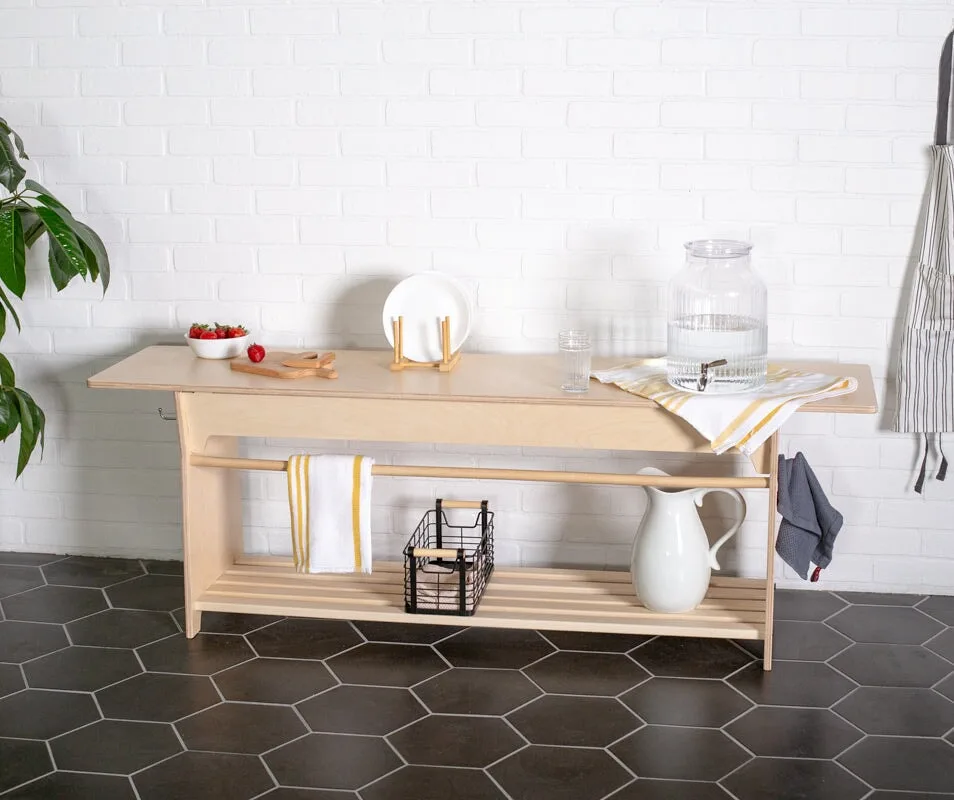
For example, pairing a step stool with a child-sized table and chair set creates a dedicated space for independent eating and crafting. Parents often find that when children can reach their own supplies, they are more likely to choose constructive play over passive entertainment. This autonomy extends to cleanup: a child can place their plate in the sink or put toys back on a low shelf. Over time, these small acts build habits of responsibility and self-discipline.
- Use a step stool in the kitchen for food preparation and pouring practice.
- Place one in the bathroom for independent hygiene routines like handwashing.
- Add a stool near the entryway to help children put on shoes and hang coats.
Choosing the Right Step Stool for Your Home and Child
When selecting a step stool, consider your child's age, height, and the areas where you need it most. For toddlers just beginning to walk, a very low, wide stool (around 6–8 inches) is safest. As they grow, a taller stool (12–16 inches) provides access to standard counter heights. If you have multiple children, a stool that can accommodate different heights or be adjusted is a smart investment.
Material and weight capacity matter too. A stool that is too light may slide on hard floors, while a heavy wooden stool stays put. Many Montessori families prefer stools made from sustainably sourced wood with a natural finish. Some stools come with a built-in handle or cutout for easy carrying. If you need a stool for both the kitchen and bathroom, look for one that is easy to wipe clean and resistant to moisture.
- For young toddlers, choose a very low stool (6–8 inches) with a wide base.
- For older children, a 12–16 inch stool works well for most counters and sinks.
- Select a stool made of solid wood with a non-toxic finish for durability and safety.
Integrating a Step Stool into a Montessori Home Environment
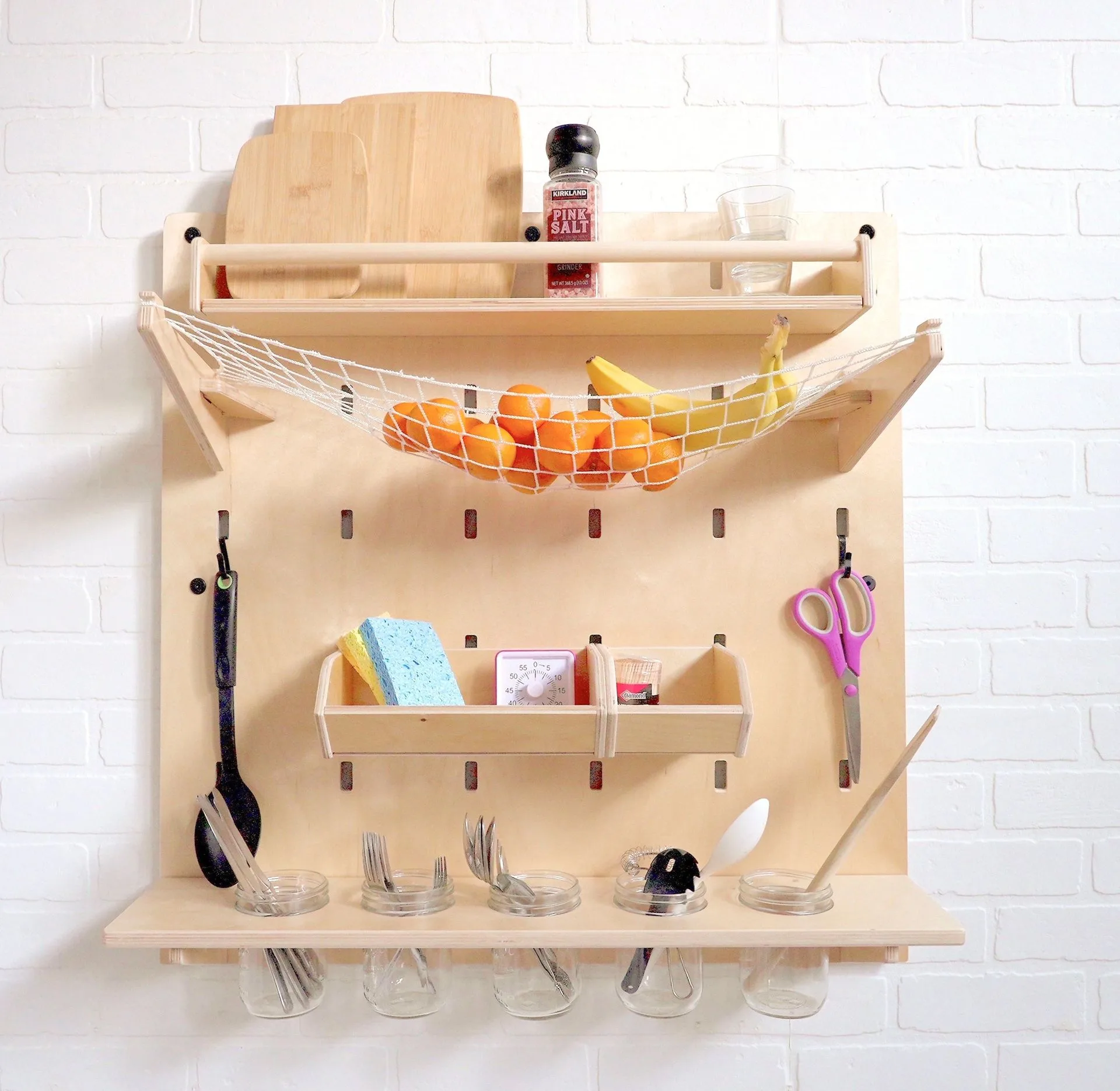
A Montessori home is prepared with the child in mind. This means placing everyday items at the child's level and providing tools that allow them to participate. A step stool is a cornerstone of this setup. In the kitchen, keep a stool near the counter so your child can help with meal prep. In the bathroom, leave it by the sink so they can wash hands independently. In the entryway, a stool paired with a low hook or shelf gives them a place to hang their backpack.
To maximize the benefits, involve your child in choosing and using the stool. Show them how to climb safely and where to place it. Encourage them to use it for real tasks, not just play. Over time, the stool becomes a natural part of their daily rhythm. Many parents find that a simple stool reduces frustration and whining because children no longer have to wait for help to reach basic necessities.
- Keep the step stool in a consistent, accessible location for each activity zone.
- Teach your child how to climb up and down safely, always facing the stool.
- Model practical life tasks and invite your child to join you using the stool.
A kids step stool is a small investment with a big return: it gives your child the freedom to learn, help, and grow at their own pace. By making everyday tasks accessible, you nurture practical life skills that will serve them for a lifetime. Explore our collection of sturdy, child-safe step stools designed to support your Montessori journey—find the perfect fit for your home and watch your little one thrive.