Start with the room, not the wardrobe
A cold bedroom doesn't automatically call for more layers. Before you add a vest or a second pair of socks, check the room itself: is the chill coming from a draft near the bed, a single-pane window, or a heating vent that clicks off overnight? Fixing the source is often simpler than dressing a child in clothing they'll kick off by midnight.
Once the room is as stable as you can make it, treat the pajama as your base layer and add only what the child can comfortably sleep in. The goal is warmth without bulk, and breathability without a chill. Kids winter jammies layering works best when each piece has a clear job.
A simple layering routine for cold nights
Use this sequence as a starting point, then adjust to your child's room and sleep habits.
- 1. Choose a breathable base: Start with a well-fitting pajama in a soft, breathable fabric. Organic cotton is a common choice for gentle comfort against the skin, and it lets you add warmth on top without trapping heat close to the body.
- 2. Add one thin middle layer if needed: A light long-sleeve tee or a thin pair of socks can take the edge off a cold room. Keep it fitted enough that it won't bunch up or twist during sleep.
- 3. Reserve the outer layer for the coldest nights: If the room still feels cold, add a sleep sack or a light wearable blanket rather than a heavy quilt. This keeps the extra warmth movable and reduces the chance of it ending up over your child's face.
- 4. Check for overheating before bed: Feel your child's chest or the back of the neck. If it's damp or very hot, remove a layer. If it's cool, add one thin layer. Hands and feet often feel cooler than the core, so don't judge by toes alone.
Why the pajama fit matters more than the layer count
A pajama that's too tight can restrict movement and feel uncomfortable, while one that's too loose can ride up and leave gaps at the ankles and wrists. For winter layering, a close but not compressive fit is ideal: it holds the base layer in place and leaves room for a thin middle layer without bunching.
If your child is between sizes, size up only when the next size still fits at the waist and doesn't swallow the hands and feet. Otherwise, stay with the current size and rely on the room and bedding for warmth. Toddler winter sleepwear tips often focus on fabric, but fit is what keeps the layers working together.
A base layer built for winter nights
-
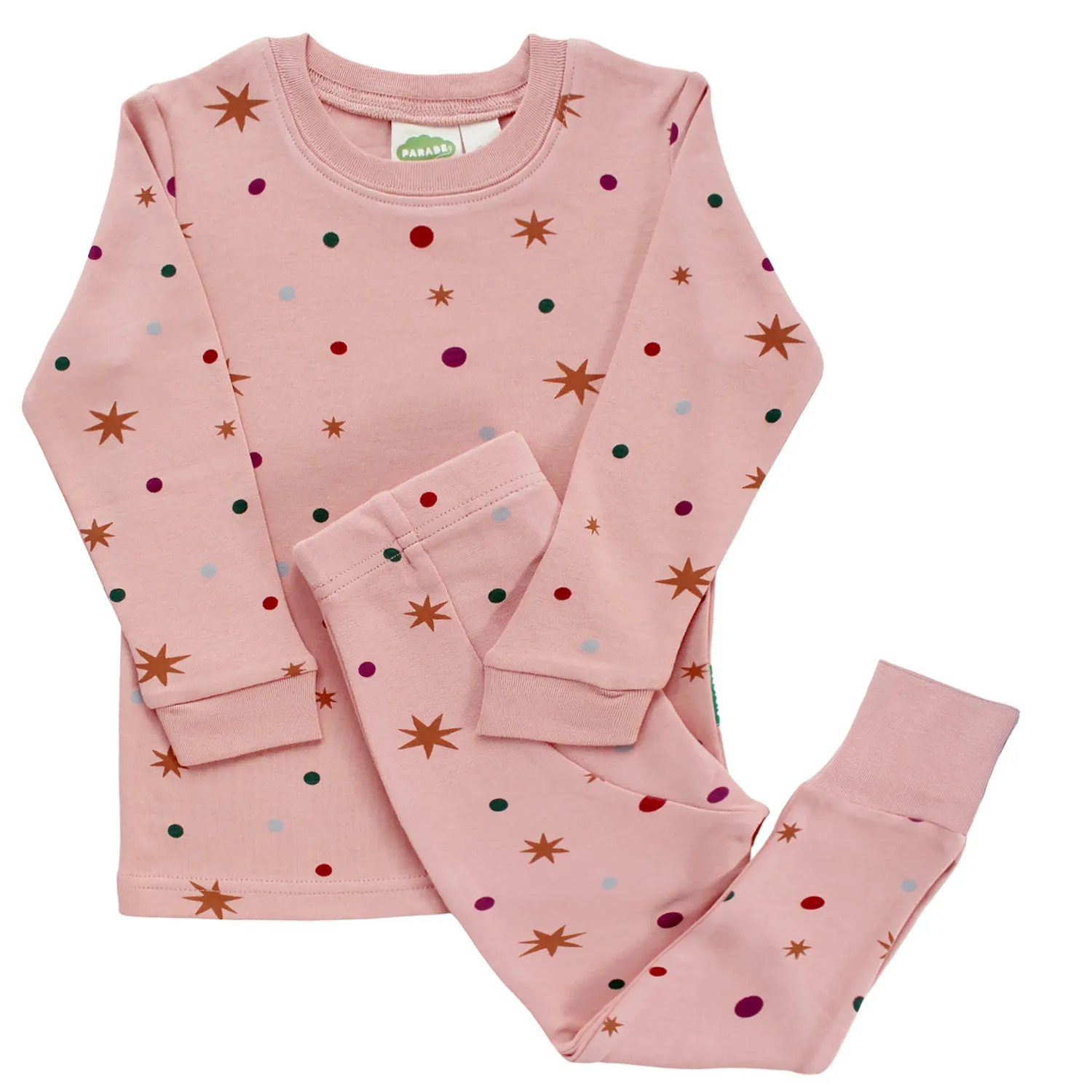
"My Jammies" Organic Kids' Pajamas - Winter: The "My Jammies" Organic Kids' Pajamas - Winter are made with soft, organic cotton for gentle comfort against your child's skin. A breathable cotton base gives you a reliable starting point for layering, so added warmth doesn't have to come from a bulky fabric.
"My Jammies" Organic Kids' Pajamas - Winter
-
"My Jammies" Organic Kids' Pajamas - Winter: They're offered in sizes 2T, 3/4 Years, and 5/6 Years. These size options let you match the base layer to your child's current fit, which matters more than the number of layers on a cold night.
-
"My Jammies" Organic Kids' Pajamas - Winter: The winter prints include Confetti, Winter Trees, and Candy Canes. Seasonal prints make the pajama feel like part of a winter routine, which can help younger kids settle into the layering habit without a battle.
When to size up your toddler's winter sleepwear
Watch for the signs that the base layer is getting too small: the cuffs leave marks on the wrists or ankles, the waistband digs in, or your child complains about the pajama pulling at the shoulders. Those are practical checkpoints, not a schedule. If you see them, move up a size before the coldest part of winter, because a too-small base layer makes every added layer feel tighter.
If the pajama still fits well, don't size up just because the room is cold. A well-fitting organic kids pajamas set plus one thin middle layer and a sleep sack is usually more comfortable than an oversized set that bunches under the covers.
Layering options and what each one does
Think of each layer as a tool. Use only the ones that solve a problem you actually have.
- Organic cotton pajama base: Breathable, soft against the skin, and the foundation of the outfit. Choose a close fit so it stays in place under other layers.
- Thin long-sleeve tee or socks: Adds warmth without much bulk. Best for rooms that are cool but not cold, or for kids who kick off heavier covers.
- Sleep sack or wearable blanket: Adds warmth that moves with your child and is harder to kick off. Use one that fits the child's size and allows free movement.
- Heavy quilt or adult blanket: Not a safe choice for young children, because it can end up over the face or trap too much heat. Keep bedding appropriate for the child's age and stage.
What to confirm before you buy a winter pajama
The supplied product information for the "My Jammies" Organic Kids' Pajamas - Winter lists the fabric and sizes but does not include specific care instructions, flammability information, or a temperature rating. That doesn't mean those details don't exist; it means you should confirm them on the label or with the seller before relying on the pajama for a particular sleep setup.
When you shop, check the size chart against your child's measurements rather than age alone, and look for a return policy that lets you test the fit before the first cold night. A pajama that fits well and a room that's set up sensibly will do more for comfort than piling on extra layers.