Quick answer
Start by offering the Kiki 11oz Sippy Bottle during a low-pressure time of day, keep the baby bottle available for comfort, and gradually swap one feeding at a time over two to three weeks.
Why the Kiki 11oz Sippy Bottle suits the transition
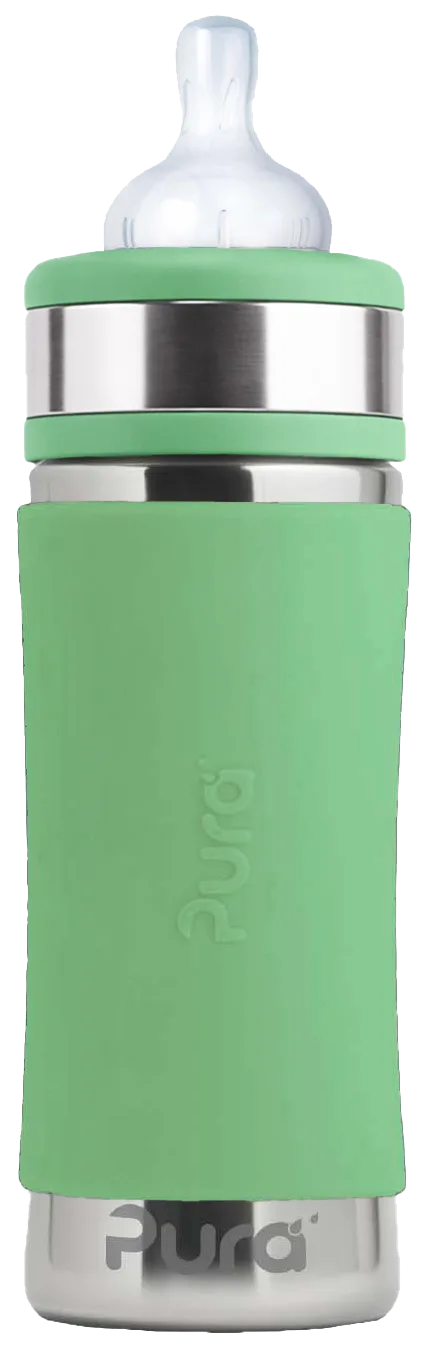
The Kiki 11oz Sippy Bottle is made entirely without plastic—bottle, sleeve, collar, spout, and travel cover—so you avoid plastic taste and potential chemical exposure as your baby takes more independent sips. Its single-wall 18/8 stainless steel body is lightweight and shatter-proof, which matters when a 12-month-old starts dropping or throwing the cup. The medical-grade silicone spout is softer than a hard spout, helping babies who are used to a bottle nipple accept the new feel. Because it is top-rack dishwasher safe, cleanup stays simple during the messy learning phase.
When to introduce a sippy bottle (and when to wait)
Most babies show readiness between 9 and 12 months: sitting with minimal support, showing interest in cups, and taking some liquids from a spoon or open cup. The American Academy of Pediatrics suggests phasing out the bottle around 12 months, so the Kiki 11oz size fits that window well. However, if your baby is still struggling with sitting balance or has feeding difficulties, wait and talk to your pediatrician. The Kiki 11oz Sippy Bottle is not a medical device, and it should not replace professional feeding advice.
Common mistakes that slow the transition
Two mistakes derail many transitions: going cold turkey and offering the sippy only when your baby is tired or hungry. Cold turkey can cause stress for both of you, and a tired baby is less likely to try a new skill. Another mistake is filling the sippy with a favorite drink only at first—if your baby learns the sippy always means juice, they may refuse it for milk or water later. Offer the same liquid you would put in the bottle, and keep the sippy available during calm, alert times.
Step-by-step transition plan
- Step 1: Pick a low-pressure time: Choose a time when your baby is alert and content—mid-morning or after a nap works well. Offer the Kiki 11oz Sippy Bottle with a small amount of water or milk, and let your baby explore it without pressure. Avoid offering the sippy when your baby is hungry or tired; those are times for the familiar bottle.
- Step 2: Swap one feeding at a time: Replace one bottle feeding with the sippy bottle every three to four days. Start with the midday feeding, which is often the easiest to change. Keep the morning and bedtime bottles for comfort longer. If your baby refuses the sippy at a feeding, go back to the bottle and try again in a few days.
- Step 3: Keep the bottle available for comfort: Don't remove all bottles at once. Keep the bottle for times when your baby is sick, teething, or very tired. The goal is to reduce bottle use gradually, not to eliminate comfort. A gradual approach reduces tears and helps your baby build confidence with the sippy.
- Step 4: Let your baby practice sipping: Show your baby how to tip the cup and sip. Expect spills and dribbles. The silicone spout on the Kiki 11oz Sippy Bottle is softer than a hard spout, which can make the first sips easier. Practice during playtime with a little water, not just at meals.
- Step 5: Phase out the bottle by 12–15 months: Aim to have your baby using the sippy bottle for all daytime feedings by 12–15 months. Keep the bedtime bottle last, and talk to your pediatrician if your baby resists for more than a few weeks. Every baby moves at their own pace; consistency matters more than speed.
Product facts
-
Kiki™ 11oz Sippy Bottle: 100% plastic-free construction, including the bottle, sleeve, collar, sippy spout, and travel cover. You can hand your baby a cup without worrying about plastic parts wearing down or affecting taste.
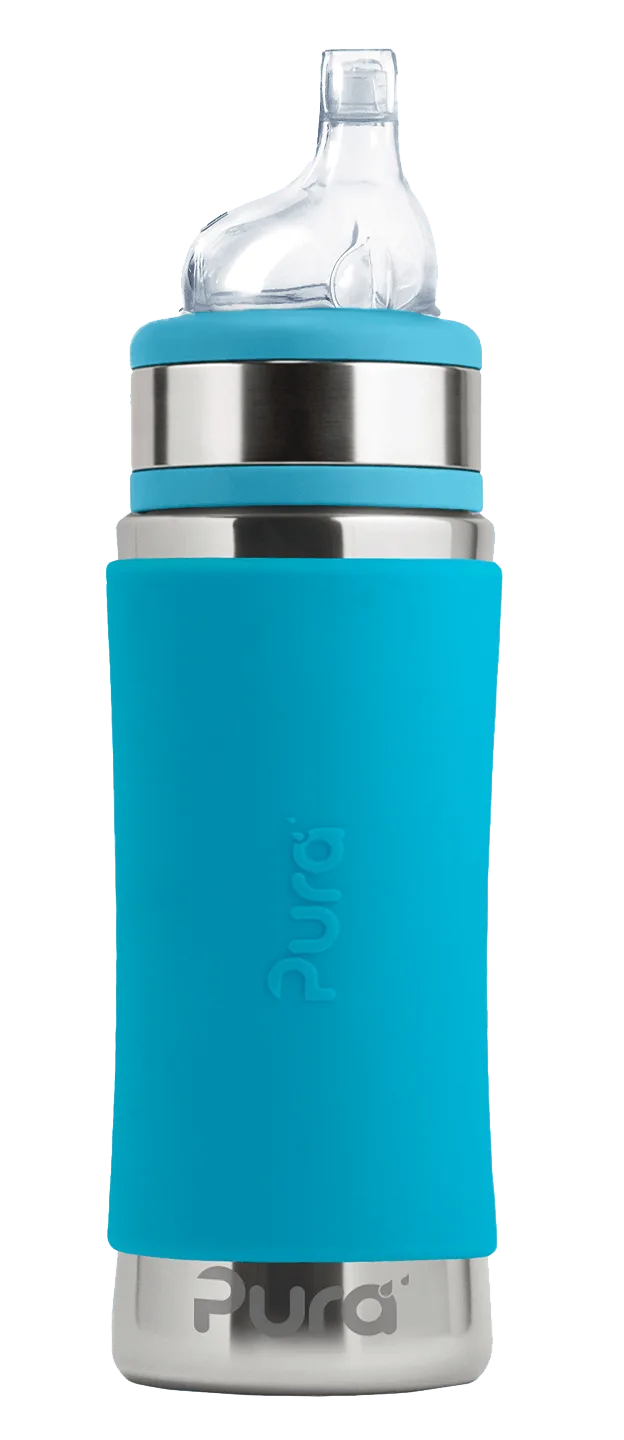
Kiki™ 11oz Sippy Bottle
-
Kiki™ 11oz Sippy Bottle: MadeSafe® Certified—the only sippy bottle to achieve this certification. This gives you a verified safety standard to check when comparing sippy cups.
-
Kiki™ 11oz Sippy Bottle: 18/8 food service-grade stainless steel, single-wall, lightweight, shatter-proof, lead-free, and top-rack dishwasher safe. It survives drops and daily washing without cracking, so it holds up during the learning phase.