Quick answer
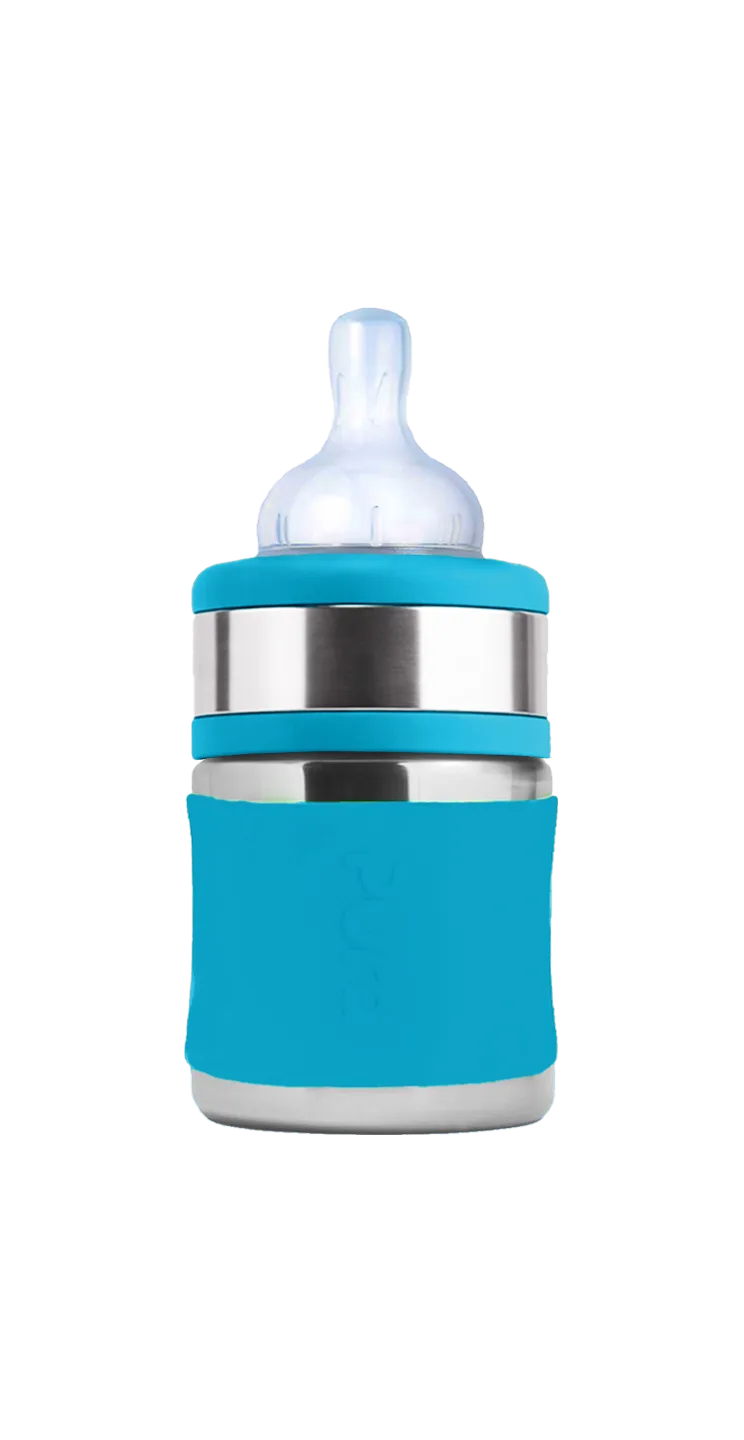
Buy the Kiki 5oz Infant Bottle if you want a small, plastic-free first bottle for a newborn or a baby taking smaller, more frequent feeds. Choose the Kiki 7oz Insulated Baby Bottle instead if your baby regularly drinks more than about 5 ounces per feed or you need cold milk to stay cold for longer stretches. The 5oz is the better starting size; the 7oz is the better long-term size.
What the 5oz size actually means day to day
Five ounces is a newborn-and-early-infancy size. It suits the weeks when feeds are small and frequent, and it keeps the bottle light enough to hold one-handed during a night feed. The trade-off is capacity: as your baby's appetite grows, a 5oz bottle fills up fast, and you may find yourself mixing a second bottle rather than topping up the first.
If you are combination feeding, pumping, or storing expressed milk, the 5oz works well as a single-serve container because it matches common pump and storage volumes. If your baby consistently finishes the bottle and still seems hungry, that is your signal to size up rather than to keep refilling.
Materials and cleaning: what you are paying for
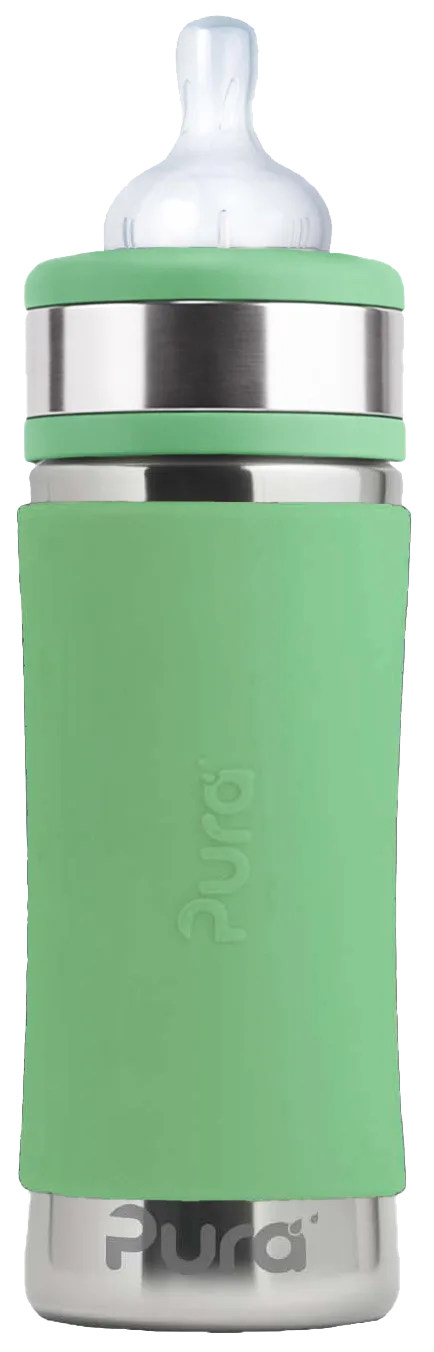
The Kiki 5oz is built around an 18/8 food service-grade stainless steel bottle with single-wall construction. That makes it lightweight and shatter-proof compared with glass, and it is top-rack dishwasher safe, which matters on days when hand-washing is not realistic. Because the bottle is single-wall, it does not insulate the way a double-wall bottle does, so it is not the right pick if you need milk to stay cold for hours.
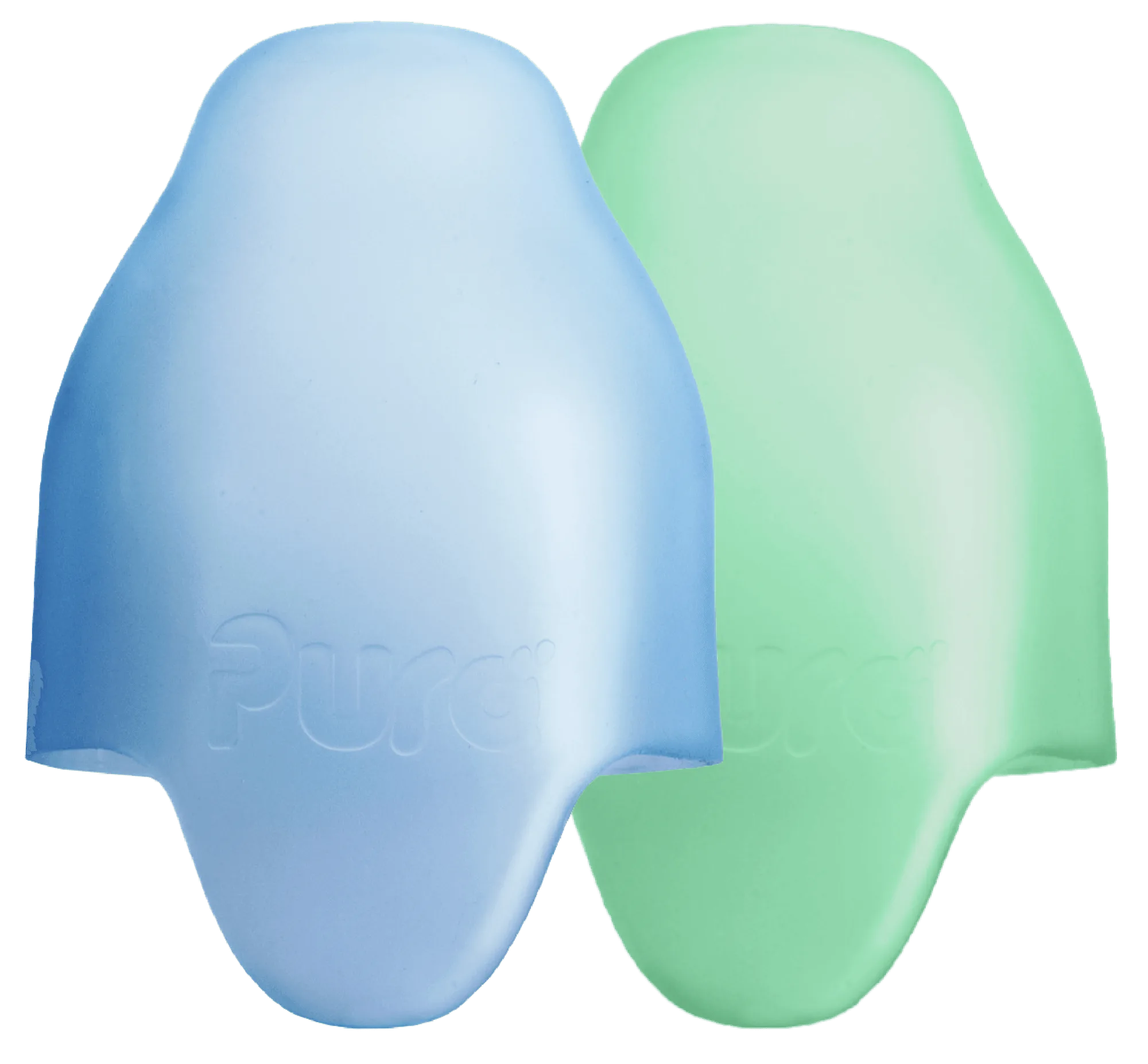
Pura states that the bottle, sleeve, collar, nipple, and travel cover all contain zero plastic, and that the bottle carries MadeSafe® certification. For parents trying to reduce plastic contact in feeding gear, that combination is the main reason to consider this bottle over a standard plastic one. Note that the catalog does not list every accessory or spare part, so check the product page for what is included before ordering.
Nipple and flow: the part parents underestimate
The Kiki 5oz uses a medical-grade, platinum-cured silicone infant nipple. Nipple flow rate, not bottle size, usually decides whether a feed goes well: a flow that is too fast for a newborn can cause gulping and spit-up, while a flow that is too slow leads to frustration and long feeds. If your baby is fussy at the bottle, change the nipple before you change the bottle.
Because the 5oz and 7oz Kiki bottles share the same feeding system, moving up in size does not mean relearning how to feed your baby. That consistency is a real advantage if you plan to keep using Pura bottles as your child grows.
When to choose the 7oz insulated version instead
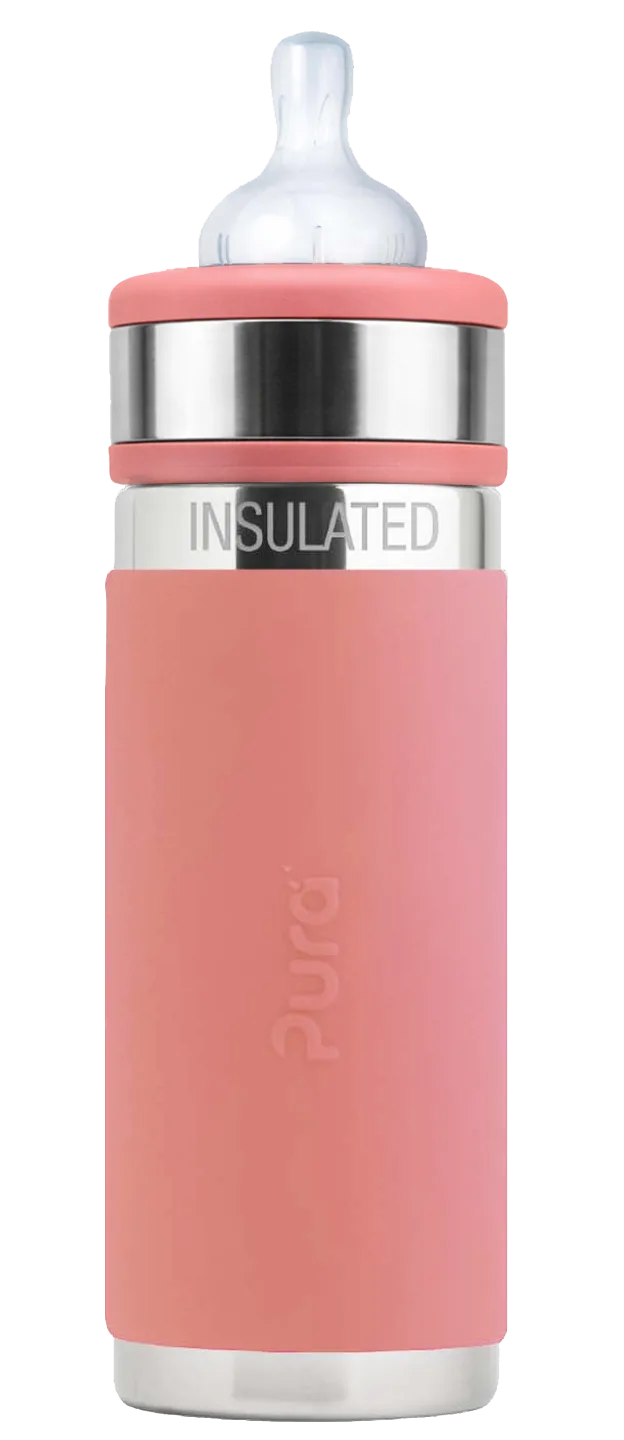
The Kiki 7oz Insulated Baby Bottle uses double-wall construction and, per the catalog, keeps liquids cold for up to 12 hours. It shares the same plastic-free build and MadeSafe® certification as the 5oz. The extra capacity and insulation make it the better choice for older babies, longer outings, and warm-weather days when a cold bottle needs to stay cold.
The honest trade-off is weight and bulk: a larger double-wall bottle is heavier in the diaper bag and takes more room. If your baby is still on small, frequent feeds, the 5oz is easier to handle and less wasteful when a full feed does not get finished.
Decision rules: 5oz or 7oz?
- Choose the 5oz if feeds are small and frequent: Newborns and younger babies typically take smaller volumes per feed, and a lighter bottle is easier to manage during night feeds. Start here for a first baby bottle.
- Size up to 7oz when the bottle is consistently emptied: If your baby finishes 5 ounces and still seems hungry, or you are mixing larger feeds, the 7oz reduces refills and mid-feed interruptions. Capacity, not age, is the real trigger.
- Pick insulated when cold matters: The 7oz insulated bottle keeps liquids cold for up to 12 hours, which the single-wall 5oz does not do. If you are out for long stretches or in warm weather, insulation is worth the extra weight. Insulation is a use-case decision, not an upgrade.
- Fix the nipple before replacing the bottle: Flow rate drives most feeding problems. Adjust the nipple flow first, then reconsider bottle size only if volume is the issue. One change at a time makes it easier to tell what worked.
Product facts at a glance
- Kiki™ 5oz Infant Bottle: 100% plastic-free construction: bottle, sleeve, collar, nipple, and travel cover contain zero plastic, and the bottle is MadeSafe® certified. Useful if reducing plastic contact in feeding gear is a priority for your family.
- Kiki™ 5oz Infant Bottle: 18/8 food service-grade stainless steel with single-wall construction; lightweight, shatter-proof, lead-free, and top-rack dishwasher safe. Durable and easy to clean, but single-wall means it does not insulate, so it is not built for keeping milk cold for hours.
- Kiki™ 7oz Insulated Baby Bottle: Double-wall insulated design that keeps liquids cold for up to 12 hours, with the same plastic-free build and MadeSafe® certification. The better pick for older babies, longer outings, and warm days when cold milk needs to stay cold.
Who the Kiki 5oz fits
Best for
- Newborns and younger babies taking smaller, more frequent feeds
- Parents who want a plastic-free first bottle with a stainless steel body
- Combination feeding or single-serve expressed milk portions
- Anyone who wants a lightweight bottle for night feeds
Not for
- Babies who regularly drink more than about 5 ounces per feed
- Parents who need milk to stay cold for hours without a cooler bag
- Families looking for a bottle that will still fit their baby's appetite at 6 months and beyond
If you are unsure, buy the 5oz first and treat the 7oz insulated bottle as your next purchase once feeds grow past 5 ounces or you start spending longer stretches away from home.