What the Kiki 7oz insulation is built to do
The Kiki 7oz Insulated Baby Bottle is double-wall stainless steel, and the supplied product information describes it as keeping liquids cold for up to 12 hours when iced. That is the performance claim you can plan around: it is a cold-holding bottle. The same information does not state a warm-holding time, so treat warmth as something you manage with packing and timing rather than a number printed on the bottle.
That distinction matters on a cold-weather outing. You can still carry warm milk in the Kiki, but the bottle is not marketed with a warm-hold rating, and no preparation or operating instructions for warming are included in the supplied records. Build your routine around a shorter window and check the milk before feeding rather than assuming an all-day warm hold.
The specs that shape a winter packing plan
-
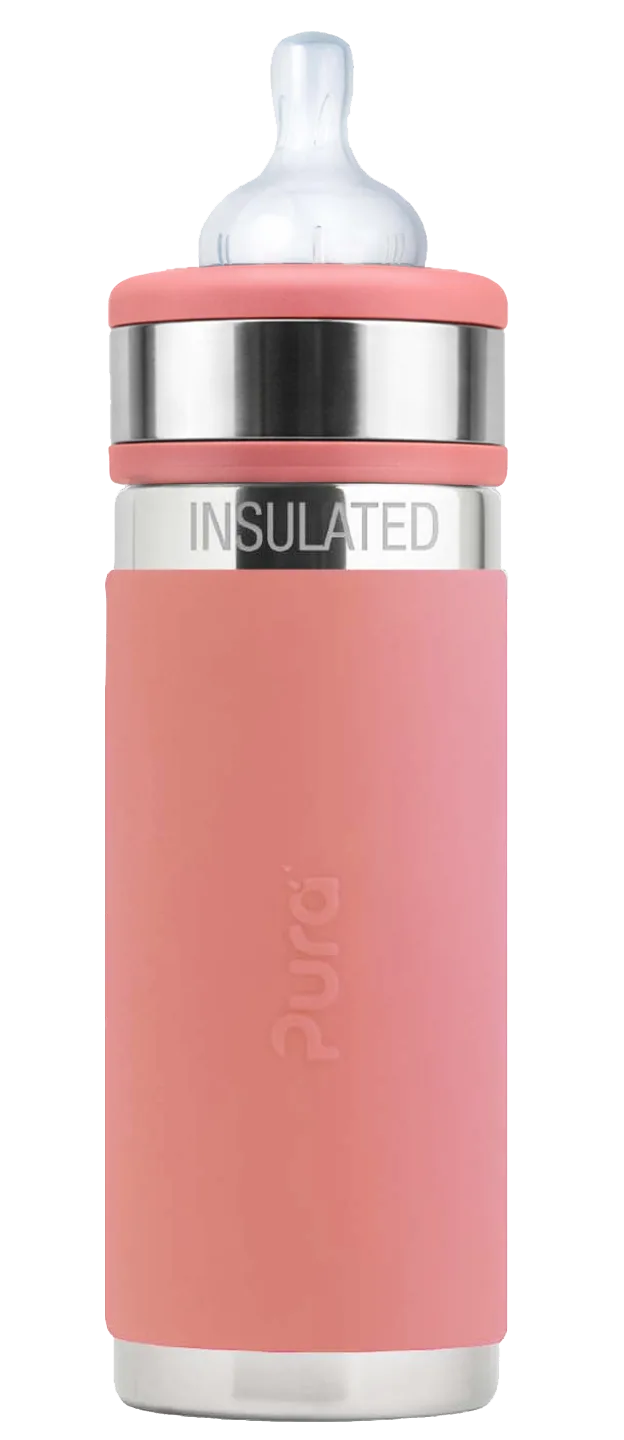
Kiki™ 7oz Insulated Baby Bottle: Insulated Design: Keeps liquids cold for up to 12 hours (iced). This is the only hold-time claim in the supplied information. It tells you the bottle is engineered for cold, so warm milk needs a tighter timeline.
Kiki™ 7oz Insulated Baby Bottle
-
Kiki™ 7oz Insulated Baby Bottle: 18/8 Food Service-Grade Stainless Steel Bottle: Double-wall construction that's lightweight, shatter-proof, lead-free, and top-rack dishwasher safe. Double-wall steel is what separates this from a single-wall bottle in a cold bag, and top-rack dishwasher safe care keeps cleanup simple after an outing.
-
Kiki™ 7oz Insulated Baby Bottle: 7oz Wide-Mouth Design: Easy to fill, easy to clean, yet easy for baby to hold. The 7oz capacity and wide mouth make it practical to fill with the amount you will actually use on a shorter winter trip.
A cold-day packing routine for warm milk
The supplied records do not include warming instructions, so these steps focus on packing and timing rather than how to heat the bottle. Follow your own feeding guidance for preparing the milk itself.
- Fill only what the outing needs: The 7oz capacity suits a shorter trip. Carrying less milk means less to keep warm and less to bring home.
- Keep the travel cover on until feeding: Each pack includes a Kiki Silicone Travel Cover, and the supplied information describes the lid as leak resistant. Use it in transit.
- Pack the bottle where it stays insulated, not against the cold: The double-wall body slows heat transfer, but the supplied information gives no warm-hold time. Keep the bottle out of an exposed outer pocket and check the milk sooner than you would on a mild day.
- Check temperature before the feed: Because no warm-hold rating is supplied, test the milk yourself before offering it rather than relying on elapsed time.
- Use the volume markings to track what is left: Internal volume markings let you glance inside the wide mouth and see how much remains, which helps you plan the next feed.
Why the nipple and collar matter on a cold outing
The included Kiki Natural Vent Medium Flow Nipple is medical-grade, platinum-cured silicone and rated for 3 months and up, with two holes for a medium flow. The collar is stainless steel and silicone rather than plastic, and the supplied information describes its venting as improved and its surface as soft on little faces, lips, and gums. In cold weather, a silicone nipple stays softer than a firm material, which can make a feed on a park bench less fiddly.
The bottle is also part of the Pura System: every Pura lid fits every Pura bottle, so the same body can move to a sippy spout, sport straw, sport top, or flat lid as your child grows. If your winter outing is really a toddler trip, that interchangeability means you are not buying a separate warm-drink vessel.
Materials and safety details worth knowing before you pack
- Kiki™ 7oz Insulated Baby Bottle: 100% Plastic-Free: The bottle, sleeve, collar, nipple, and travel cover all contain zero plastic. Every part that touches milk or your child is plastic-free, which is the main reason many parents choose this bottle for daily feeds.
- Kiki™ 7oz Insulated Baby Bottle: MadeSafe® Certified: The only baby bottle on the planet to achieve this eco and health focused safety certification. This is a supplied certification claim, not a temperature claim. It speaks to material safety, not to how long warm milk stays warm.
- Kiki™ 7oz Insulated Baby Bottle: Paint-free: No chipping bottles or flakes of dangerous chemicals in your baby’s milk. A paint-free exterior means no coating to worry about as the bottle gets knocked around in a winter bag.
Cold-weather tradeoffs to accept
- No stated warm-hold time: The supplied information gives a cold-hold figure of up to 12 hours iced but no equivalent for warm milk. Plan shorter warm-milk trips and check before feeding.
- No warming instructions supplied: The records do not describe how to warm the bottle or its contents. Use your own established feeding method rather than improvising from this article.
- Age range starts at 3 months: The included medium-flow nipple is rated 3 months and up. Do not treat this bottle as a newborn feeding solution without checking with your own guidance.
- Cold performance is the headline, not heat: If your priority is a bottle that holds heat for hours, the supplied evidence does not support that expectation. The Kiki is strongest for cold drinks and for shorter warm-milk windows.
Cleaning and care after a winter outing
The stainless steel bottle is top-rack dishwasher safe, and the stainless steel components carry a limited lifetime warranty. The silicone parts, including the nipple, sleeve, collar, and travel cover, are supplied as 100% silicone or medical-grade platinum-cured silicone, but the records do not give separate dishwasher instructions for them. Wash the silicone parts according to the care guidance that came with your bottle, and check the nipple for wear as you would with any silicone nipple.
The bottle is available in Moss and Rose, so if you are packing for two children or want a spare body for the Pura System, color is the only option to choose. Whichever you pick, the warm-milk routine is the same: fill what you need, keep the cover on, and check the temperature before the feed.