The real comparison: sitting versus standing kilt legs
When you are planning a kilted miniature unit, the legs you choose decide more than the pose. Sitting legs change how a torso sits, where the kilt falls, and what base or vehicle the figure can occupy. The Kilt Legs Sitting x2 set gives you two pairs of seated legs in heroic 28mm scale, hand cast in resin. The natural comparison is not against a different brand but against the standing kilt legs you would use for the rest of the squad.
This article compares those two roles using only the supplied product information. Where a detail is not confirmed, I say so rather than guess.
What the sitting set actually gives you
-
Kilt Legs; Sitting x2: 2 pairs of kilt legs sitting to suit heroic scale 28mm troops. Two pairs means you can build a small seated group, such as a vehicle crew, without buying multiple packs.
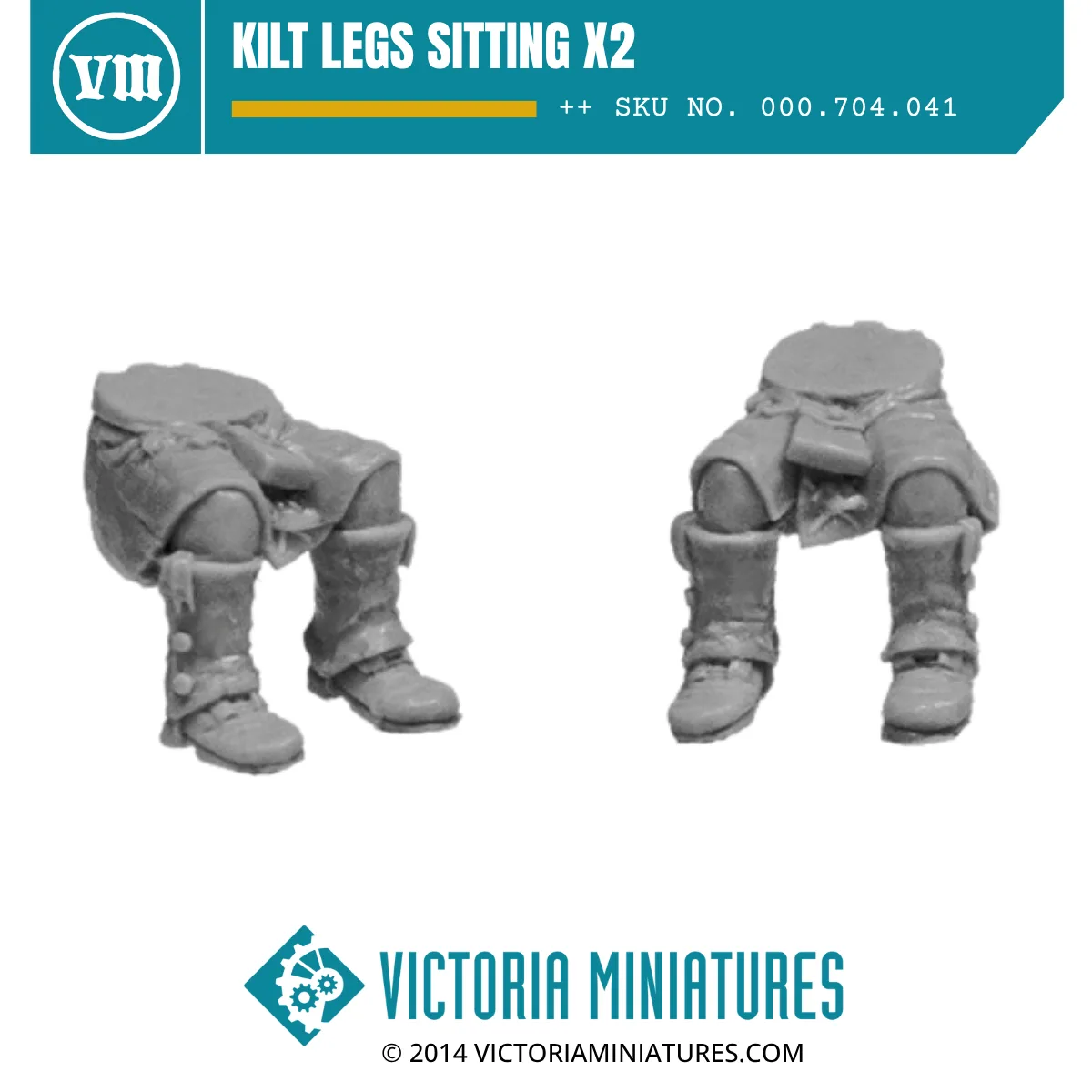
Kilt Legs; Sitting x2
-
Kilt Legs; Sitting x2: Compatible with Victoria Miniatures and popular plastic guard. This is the main compatibility claim to plan around: the legs are intended to mate with those torso ranges, not with every 28mm kit on the market.
-
Kilt Legs; Sitting x2: Ideal for vehicle crew, drivers, tank riders and any troops who want to sit down for a breather. The set is designed around seated roles, so it solves a problem that standing legs cannot: figures that need to occupy a seat, hatch or vehicle interior.
-
Kilt Legs; Sitting x2: Hand cast in high quality resin. Resin is the expected material for this kind of detail bit, but the supplied information does not include preparation or care instructions, so treat cleanup as a standard resin task you already know.
Where each leg style earns its place
The table below compares the sitting set with standing kilt legs in general terms. The standing legs are not a specific product in this record, so the comparison is about role, not a named alternative.
- Seated kilt legs (Kilt Legs Sitting x2): Best for vehicle crew, drivers, tank riders and resting figures. The seated pose is the point: it lets a figure sit inside a transport or on a tank hull without cutting and reposing standing legs.
- Standing kilt legs: Best for marching infantry, sentries and any figure that needs a full-height silhouette. Standing legs are the default for a rank-and-file squad, but they cannot sit a figure down without conversion work.
- Torso compatibility: The sitting set is confirmed compatible with Victoria Miniatures and popular plastic guard torsos. For other torso ranges, dry-fit before committing glue; the supplied record does not list every compatible body.
- Pose planning: Seated legs limit the angle of the torso and the position of the arms. Plan the whole figure, including where the hands rest, before you glue the legs to the torso.
Torso compatibility: what is confirmed and what is not
The product record states compatibility with Victoria Miniatures and popular plastic guard. That is a strong starting point for a kilted guard army, but it is not a universal guarantee. If you are mixing in torsos from another manufacturer, the honest approach is to dry-fit the legs against the torso before any glue. Check that the waist join sits flush and that the kilt does not foul the bottom of the torso.
The record does not list specific torso models or a waist measurement, so I cannot give you a number to check against. Treat the compatibility line as a guide and test your own parts.
A dry-fit sequence for seated kilt conversions
This sequence assumes you have the sitting legs and a torso you believe is compatible. It does not replace any manufacturer instructions, which are not supplied with this record.
- 1. Clean the resin legs: Remove any casting remnants from the waist and seat areas. The record does not include specific cleanup instructions, so use your normal resin preparation routine.
- 2. Test the torso join: Press the torso onto the legs without glue. Check for a flush fit at the waist and that the kilt falls naturally over the top of the legs.
- 3. Check the seated angle: Sit the figure in or on its intended destination, such as a vehicle seat or tank hull. Adjust the torso angle before gluing so the figure looks relaxed rather than rigid.
- 4. Plan the arms and head: Seated figures often need arms that rest on knees or a weapon. The record does not include arms, so choose arms that suit the pose and test them at the same time.
- 5. Glue and base: Once the dry fit is clean, glue the legs to the torso, then attach the figure to its base or vehicle. The record does not specify a base size, so match the base to the vehicle or scene.
When the sitting set is the right buy
Use these decision rules to choose between the sitting set and standing legs for your next project.
- Choose Kilt Legs Sitting x2 if: You are building vehicle crew, drivers, tank riders or resting figures, and you want two pairs so a small group shares the same seated pose.
- Choose standing kilt legs if: You need a full squad of marching or standing infantry. The sitting set is not a substitute for a rank of standing troops.
- Buy both if: You want a kilted force with a mix of standing infantry and seated vehicle crew. The two roles complement each other rather than compete.
The honest limitation: sparse instructions
The supplied record for Kilt Legs Sitting x2 does not include preparation, safety or operating instructions. That does not mean the full manufacturer documentation lacks them; it means this comparison cannot quote them. If you are new to resin, ask the store or check the packaging before you start cleaning and gluing. For experienced converters, the lack of instructions is unlikely to be a barrier, but it is worth knowing before you buy.