Quick answer
Start Kit 3 Practice Feeding Skills once your toddler can sit upright, bring food to their mouth, and show interest in utensils, usually between 12 and 24 months. If they still swipe food off the tray or gag on every textured bite, wait and practice with fingers first.
Why the 12-24 month window is a range, not a deadline
Toddlers develop self-feeding skills at different rates. The 12-24 month range reflects when most children begin scooping, piercing, and sipping, but a child who is 14 months and not yet scooping is not behind. Readiness signs matter more than the birthday.
A toddler who can sit unsupported, bring a spoon to their mouth, and hold a cup with two hands is practicing the same motor patterns Kit 3 is designed for. A toddler still learning to sit steadily or who tires quickly at meals may need more time with finger foods before adding utensils.
What Kit 3 actually asks your toddler to do
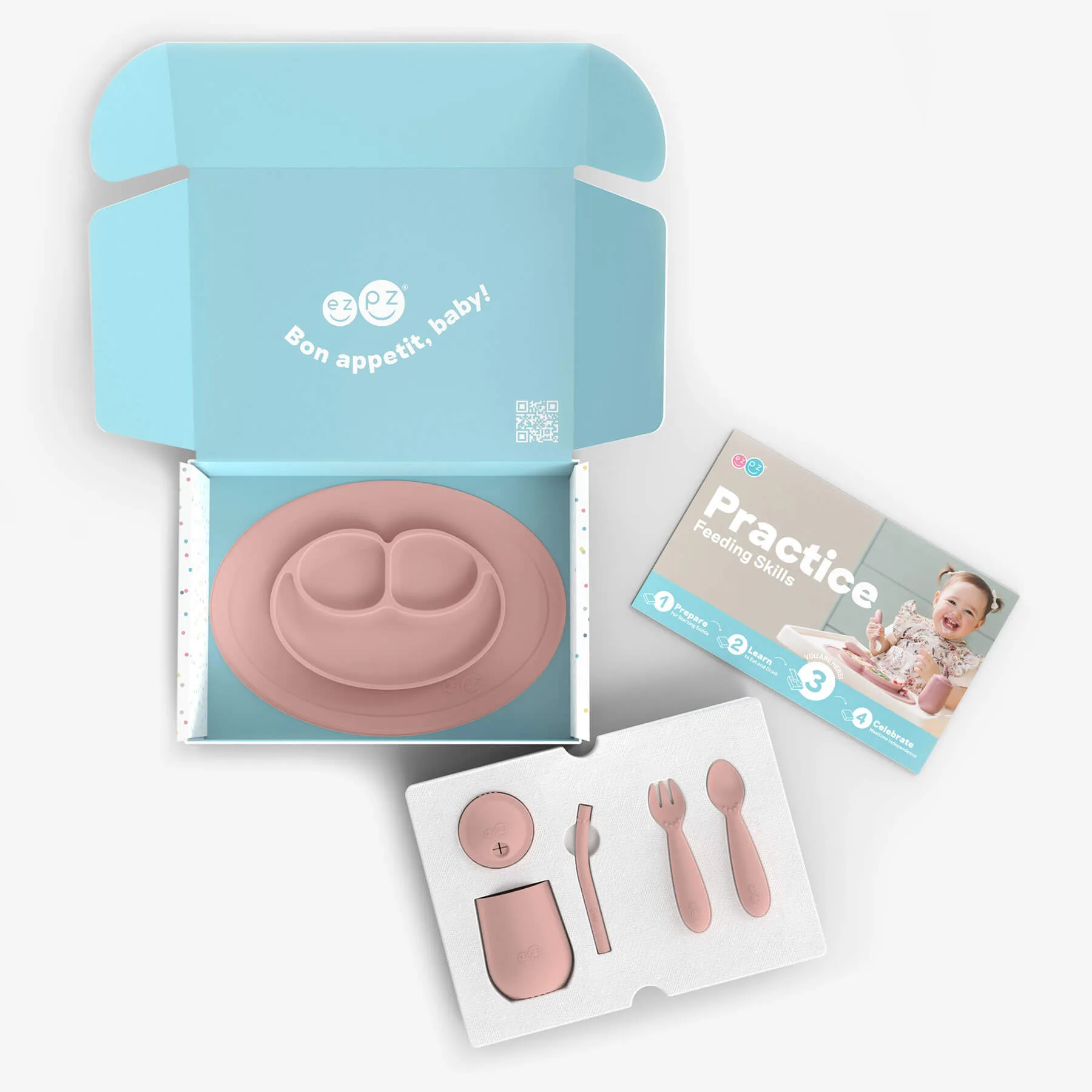
Kit 3 includes Mini Utensils, a Mini Mat, and a Mini Cup + Straw Training System. Together these tools target scooping with a spoon, piercing with a fork, self-feeding from a suction plate, and sipping from a straw cup.
That is a lot of new skills at once. Introduce one tool at a time so your toddler can focus on a single motion, such as scooping, before adding the straw cup or fork. If you put all three on the tray on day one, expect more play than eating.
When to wait a little longer
Hold off on Kit 3 if your toddler still throws food repeatedly, cannot sit upright without support, or gags on soft lumps. These are signs to keep practicing finger foods and seated mealtime routines first.
Also wait if your toddler is teething heavily or ill. A uncomfortable toddler is not ready to learn a new utensil skill, and pushing it can make mealtimes stressful. Resume when they are well and interested again.
Steps to decide if your toddler is ready for Kit 3
- Check seated stability first: Watch your toddler during a meal. They should sit upright in a high chair without slumping or needing constant repositioning. If they slide down or lean to one side, work on seated posture before adding utensils. A stable seat is the base for every utensil skill.
- Look for hand-to-mouth control: Offer a soft finger food and see if your toddler brings it to their mouth most of the time rather than dropping it or smearing it. This hand-to-mouth loop is the same motion they will use with a spoon. If food rarely reaches the mouth, keep practicing finger foods.
- Test interest in utensils: Place a toddler spoon on the tray with a familiar food. If your toddler picks it up, mouths it, or tries to dip it, that curiosity is a green light. If they ignore it or throw it every time, wait a week and try again. Interest is a better signal than age alone.
- Start with one tool, not the whole kit: Begin with the Mini Mat and a pre-loaded spoon. Put a small amount of thick food, like yogurt or mashed potato, on the mat and let your toddler practice scooping. Keep the fork and straw cup in the cupboard for now. One new tool at a time prevents mealtime overwhelm.
- Add the fork once scooping is familiar: When your toddler can get some food onto the spoon and to their mouth, introduce the fork with soft, pierceable food such as ripe banana or cooked pasta. Show them how to stab, not scoop, and expect misses. Fork skills build on the same hand control as scooping.
- Introduce the straw cup last: Offer the Mini Cup + Straw Training System with water at a calm moment, not when your toddler is hungry or tired. Model sipping yourself and let them explore. If they bite the straw or tip the cup, that is normal experimentation. Straw sipping is a separate skill; teach it when hands are not busy with food.
- Expect a messy learning curve: Scooping and piercing take weeks of practice. Keep portions small, use a suction plate to reduce sliding, and resist taking over. If your toddler gets frustrated, pause and return to finger foods for that meal. Progress is uneven; short, low-pressure practice works better than long sessions.
Kit 3 at a glance
-
Kit 3 - Practice Feeding Skills: Kit 3 includes Mini Utensils, Mini Mat, and Mini Cup + Straw Training System, designed for scooping, piercing, self-feeding from a suction plate, and straw sipping. One kit covers the core 12-24 month self-feeding skills, so you can introduce each tool as your toddler is ready rather than buying separate pieces.
Kit 3 - Practice Feeding Skills