Quick answer
Choose the KKF #5 two-way open-end zipper for jackets, duffel bags, and backpacks that need to separate and open from both ends; choose the KKF #3 closed-end invisible zipper for skirts, dresses, and slacks where the zipper should disappear into a seam. The #5 is heavier and functional; the #3 is lighter and concealed. They are not interchangeable.
What #5 and #3 actually mean for your sewing
In zipper sizing, the number refers to the width of the teeth in millimeters when the zipper is closed. A #5 zipper has 5 mm-wide teeth, making it a medium-to-heavyweight option that resists pulling and handles stress. A #3 zipper has 3 mm-wide teeth, making it lightweight and flexible, ideal for garments where bulk must stay minimal. This size difference directly affects needle choice, presser foot, and seam allowance: a #5 zipper needs a wider seam allowance and a zipper foot that can clear thicker teeth, while a #3 invisible zipper typically requires an invisible zipper foot to roll the coils under the fabric edge.
Separating vs. non-separating: the function that decides the project
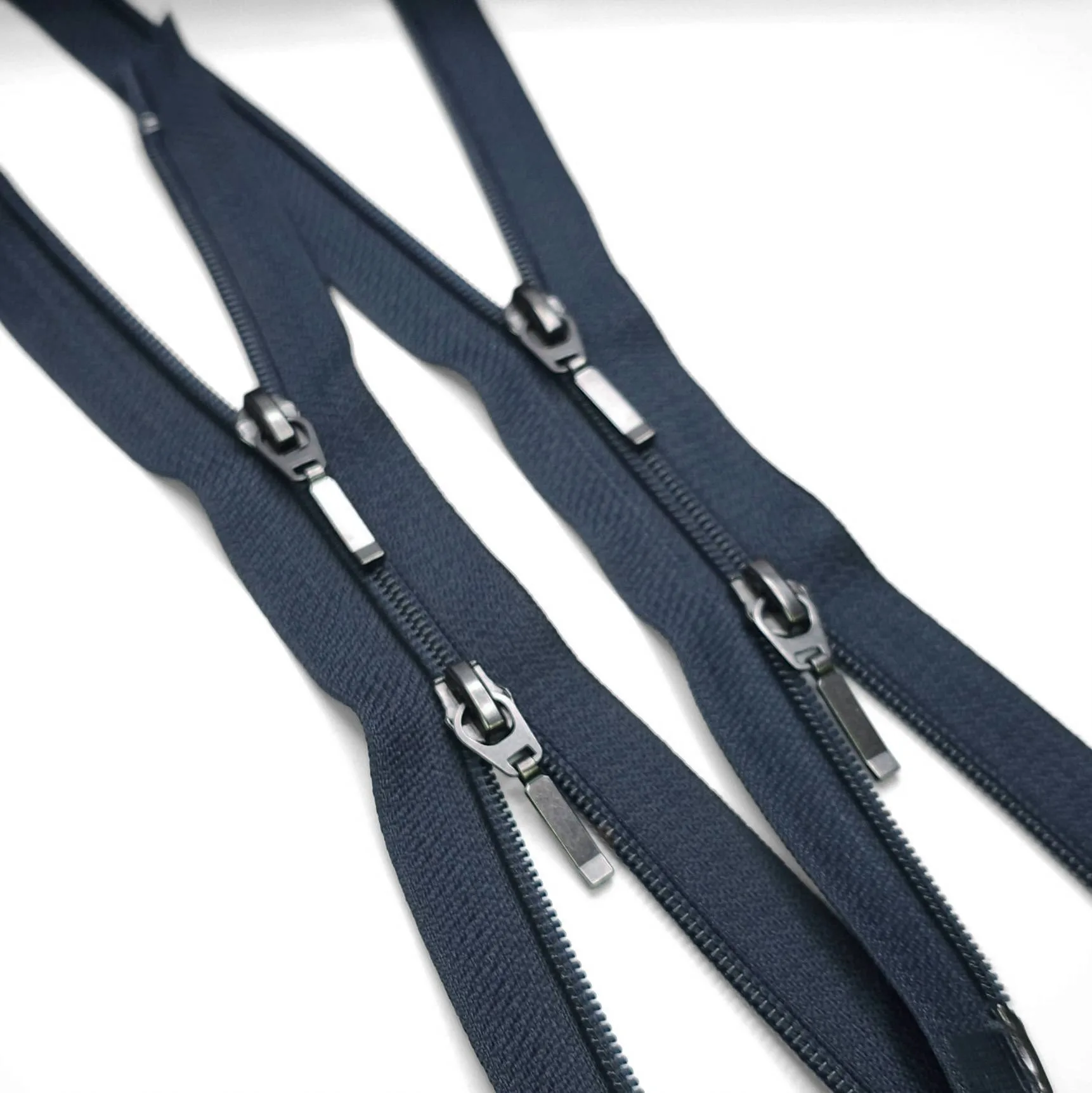
The KKF #5 open-end zipper is a separating zipper, meaning the two halves come completely apart at the bottom. That makes it the correct choice for anything that opens fully like a jacket, cardigan, or bag flap. It also has two sliders, so you can open it from the top, the bottom, or both. The KKF #3 invisible zipper is non-separating (closed-end), so the bottom is permanently joined. This is what you want for skirts, dresses, and pants where the zipper only needs to open from the top and the bottom stays closed. If you try to force a separating zipper into a dress, the bottom will pull apart; if you use a closed-end zipper on a jacket, you cannot fully open the front.
Fabric weight and garment structure
Match the zipper weight to the fabric. The #5 nylon coil zipper is a good fit for medium to heavy fabrics such as denim, canvas, corduroy, and coated cottons used in jackets and bags. Its nylon coil teeth are flexible and less likely to break if stepped on or bent. The #3 invisible zipper is designed for lightweight to medium fabrics like crepe, challis, linen blends, and suiting where a visible zipper would interrupt the line of the garment. Because the teeth are hidden when zipped, it works best in seams that can accommodate a small roll of fabric. If you use a #3 invisible zipper on a heavy fabric, the zipper may be too weak and the seam too bulky.
Installation differences that affect your finish
The #5 open-end zipper is usually installed with a standard zipper foot, topstitched on both sides, and the two sliders need space to park at the top and bottom. The #3 invisible zipper is installed before the seam is sewn, with the coils rolled back and stitched close to the teeth using an invisible zipper foot. After installation, the fabric closes over the zipper so only the pull is visible. If you are new to invisible zippers, practice on scrap fabric first because the placement of the stitching line determines whether the zipper disappears or peeks out. For the #5, the main risk is a wavy seam if the fabric stretches; stabilize with interfacing or stay tape.
Trade-offs at a glance
- Function: The #5 open-end zipper separates completely and has two sliders for flexible opening. The #3 invisible zipper is closed-end and opens only from the top. Choose separation for jackets and bags; choose closed-end for skirts, dresses, and pants.
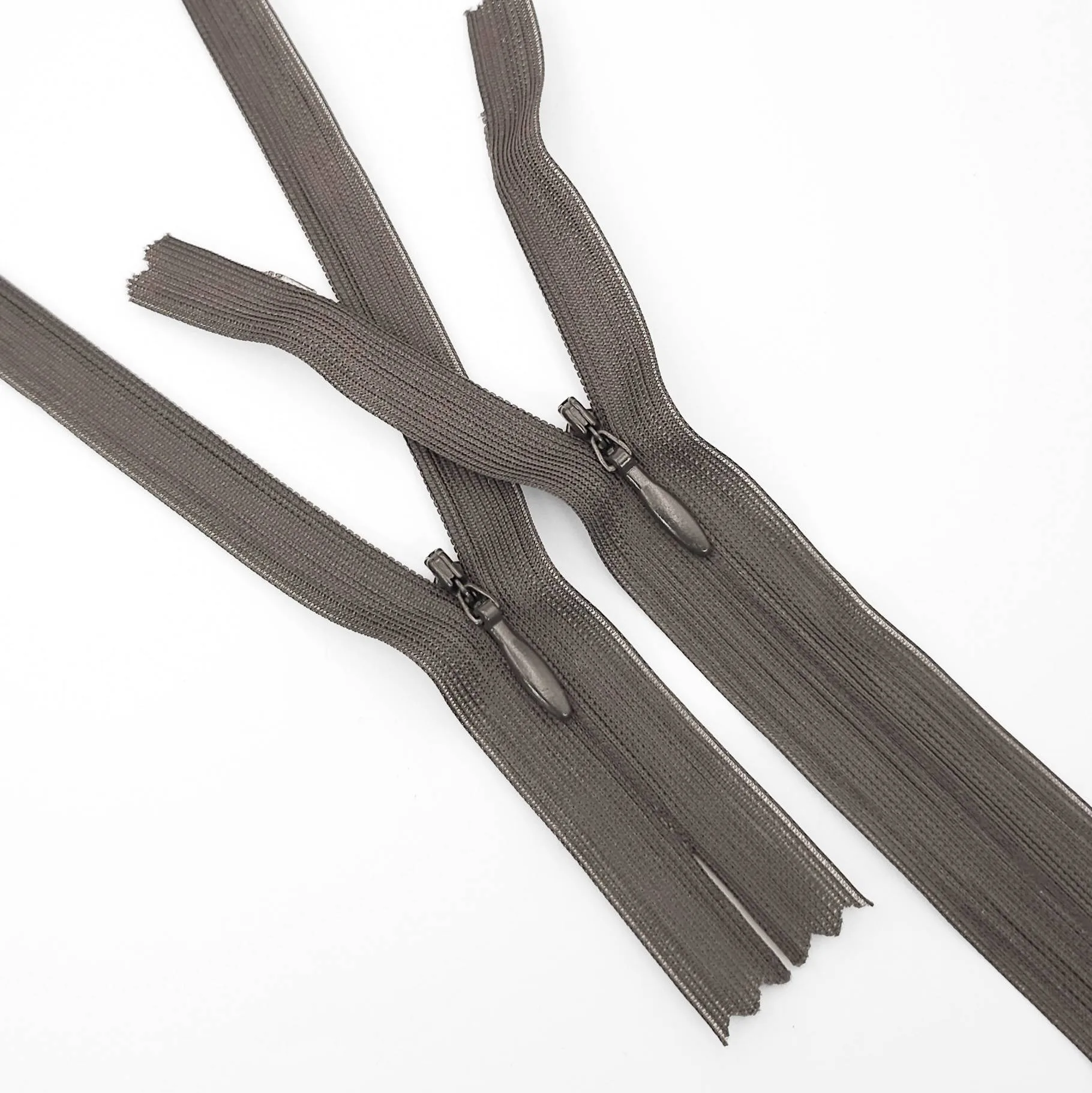
- Visibility: The #5 zipper is meant to be seen, with exposed nylon coil teeth. The #3 invisible zipper hides its teeth under the fabric edge. If you want a clean, uninterrupted seam, the #3 is the only option here.
- Weight and durability: The #5 has wider, heavier teeth that resist pulling and suit medium-to-heavy fabrics. The #3 has finer teeth for lightweight fabrics and will not support heavy loads. Match zipper weight to fabric weight; a #3 on heavy denim will fail, and a #5 on silk will pucker.
Product facts
- KKF | 2 Ways Open-End Zipper | Nylon Coil | Navy | #5 | 24'' - 61 cm: KKF | 2 Ways Open-End Zipper | Nylon Coil | Navy | #5 | 24'' - 61 cm. Separating (open-end) zipper, nylon coil, #5 teeth, two sliders. Ideal for jackets, duffel bags, purses, backpacks. The two-way slider lets you open from either end, which is useful for jackets worn open at the bottom and for bag openings that need wide access.
- KKF | Closed End Invisible Zipper | #3 | Gray | 13'' - 33 cm | ZIP1104: KKF | Closed End Invisible Zipper | #3 | Gray | 13'' - 33 cm | ZIP1104. Non-separating (closed-end) zipper, concealed teeth, nylon teeth match zipper tape. Ideal for slacks, skirts, and dresses. The teeth are hidden when zipped, so the zipper becomes nearly invisible in a seam, giving a clean finish on lightweight garments.
Which one should you use?
Best for
- Jackets, cardigans, and coats that need to open completely
- Duffel bags, backpacks, and purses where a two-way zipper adds access
- Medium to heavy fabrics like denim, canvas, and corduroy
- Projects where the zipper is a visible design feature
Not for
- Skirts, dresses, and slacks where the zipper should be hidden
- Lightweight or delicate fabrics that need a fine, flexible zipper
- Garments that only open from the top and stay closed at the bottom