Two Tools, Two Jobs
A knife sharpener and a honing steel both help maintain a blade, but they do different things. A sharpener removes metal to create a new edge, while a honing steel realigns the existing edge without removing material. Understanding this difference is the key to keeping knives sharp longer.
Many home cooks reach for a honing steel daily and a sharpener only when the blade no longer cuts cleanly. That sequence works—provided you use the right tool at the right time.
What a Honing Steel Does
A honing steel is a rod made of steel or ceramic. It does not sharpen in the abrasive sense. Instead, it pushes the microscopic edge of the blade back into alignment after normal use. Over time, the edge bends slightly to one side, making the knife feel dull. A few passes on a steel straightens it.
Use a honing steel every few uses to maintain the edge. It works best on knives that are still sharp but have lost their bite from routine cutting. It will not restore a truly dull or damaged blade.
What a Knife Sharpener Does
A knife sharpener uses abrasive surfaces—wheels, stones, or diamond plates—to grind away a thin layer of metal, forming a new edge. This is necessary when honing no longer helps, or after the blade has been chipped or worn down.
Sharpening removes a small amount of steel each time, so it should be done only when needed. Over-sharpening shortens the knife's lifespan. A good sharpener gives a consistent angle and removes just enough metal to restore a cutting edge.
Key Differences at a Glance
Here is how the two methods compare for everyday knife maintenance.
- Purpose: Honing realigns the edge; sharpening removes metal to create a new edge.
- Frequency: Honing can be done after every few uses. Sharpening is needed only when the blade no longer cuts well.
- Effect on blade life: Honing does not wear down the blade. Sharpening gradually reduces blade thickness over time.
- Skill required: Honing requires consistent angle and light pressure. Sharpening requires care to avoid damaging the blade or removing too much metal.
- Result: Honing restores a sharp feel temporarily. Sharpening provides a longer-lasting cutting edge.
Product Evidence: Swiss-Made Knife Care
-
Set ICED Cuchillos + bloque 6 pzs: The Set ICED Cuchillos + bloque 6 pzs is a Swiss-made knife set from Kuhn Rikon, a brand known for kitchen tools. Swiss-made knives typically use high-carbon stainless steel that holds an edge well. A honing steel is ideal for maintaining such blades between sharpenings.
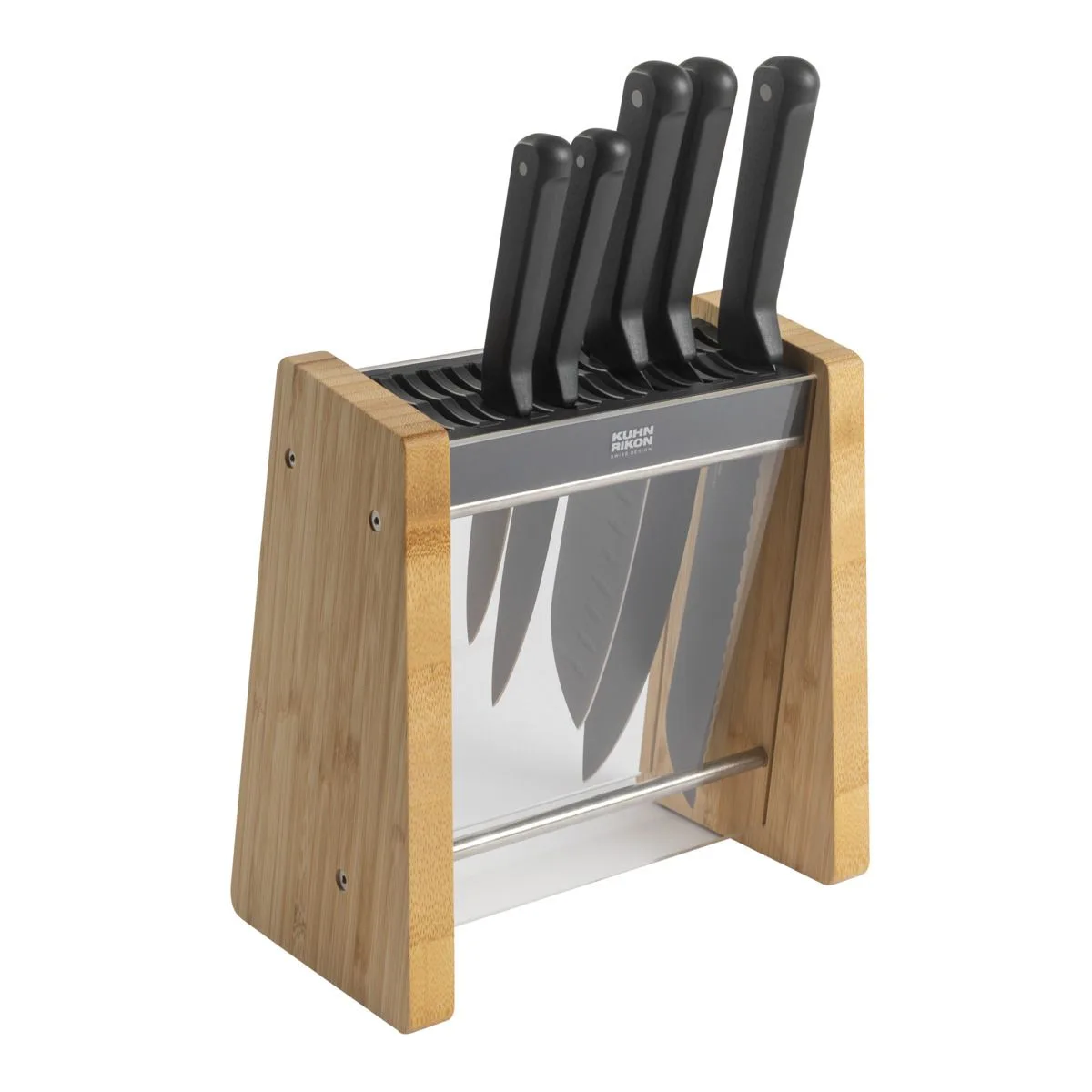
Set ICED Cuchillos + bloque 6 pzs
Practical Advice for Home Cooks
If your knife still cuts a tomato skin without squashing it, honing is likely enough. If it struggles to slice through a ripe tomato or feels rough on the cutting board, it is time to sharpen.
For most home kitchens, a honing steel used weekly and a sharpener used every few months keeps knives in good shape. The exact interval depends on how often you cook, what you cut, and the hardness of your blade.
Always follow the manufacturer's guidance for your specific knife. Some blades are too hard for certain sharpeners, and some steels are too soft to benefit from honing.