Quick Answer
A knob extender changes how much effort a shift takes by adding leverage; a short shifter changes how far the lever travels by shortening the throw. They solve different problems, and the right pick depends on whether you want easier, closer-reach shifts or faster, more mechanical ones. Many drivers end up wanting the short shifter for performance and the extender for comfort, but rarely both on the same car.
Two of the most common shifter upgrades sound like opposites, and in a way they are. A knob extender raises and lengthens the lever so your hand sits closer to the wheel and each shift needs less muscle. A short shifter reduces the lever's travel so each gear change happens in a shorter, snappier motion.
Neither is automatically better. They change different parts of the shifting equation, and the one that feels right depends on your transmission, your driving position, and what you actually dislike about the car now. This comparison breaks down what each one does, where each one wins, and how to decide before you buy.
What a Knob Extender Actually Changes
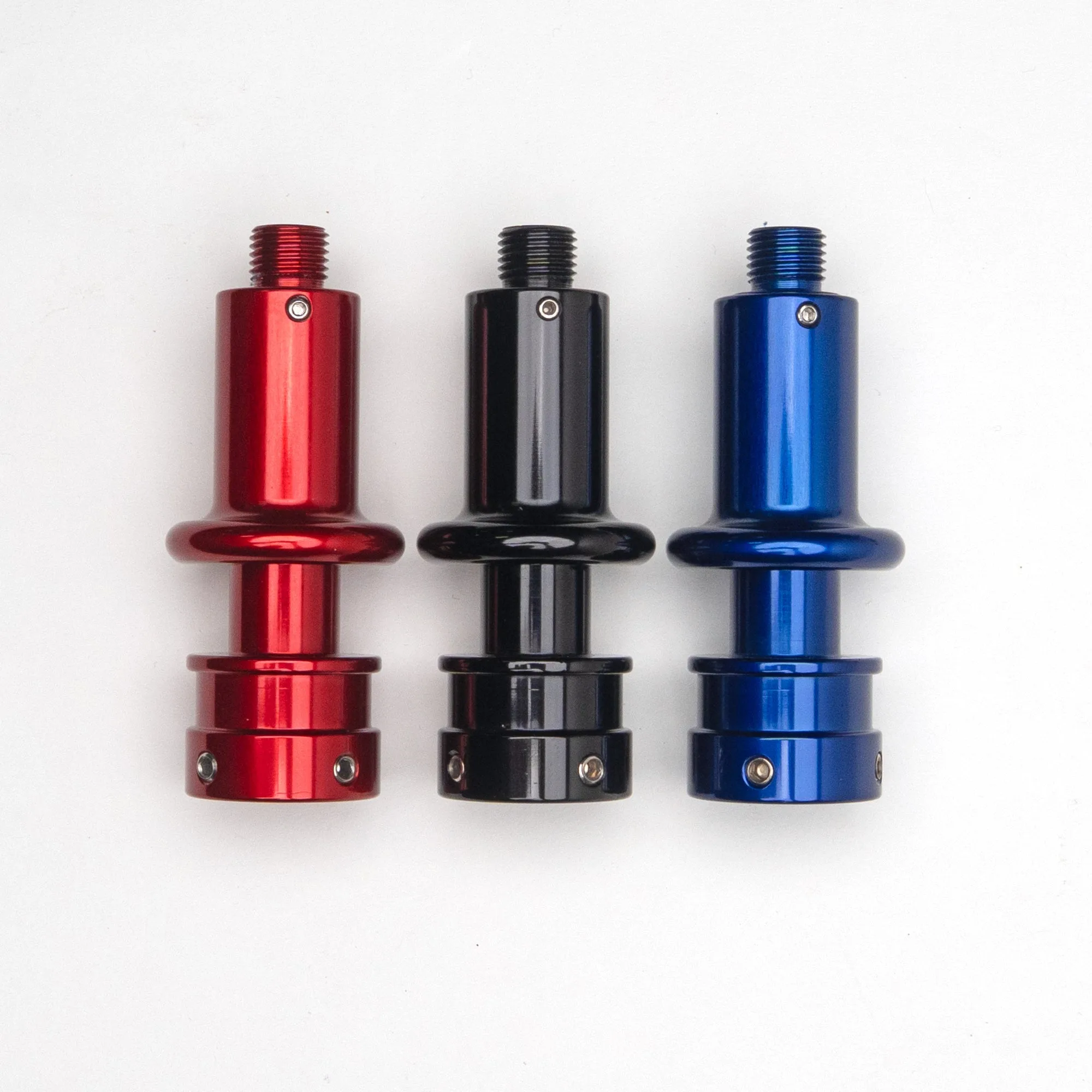
A shift knob extender sits between the lever and the knob, moving the knob higher and farther from the pivot point. That extra distance is leverage. With more leverage, the same gear engagement takes less force from your hand, which is why shift knob extender benefits show up most in heavy or notchy transmissions and in cars where the shifter sits low or far from the driver.
The trade-off is travel. Because the knob now moves through a longer arc, the distance your hand covers between gears increases. Shifts feel longer and more relaxed rather than quick. For a daily driver with a stiff clutch or an awkward reach, that can be a genuine comfort win. For someone chasing lap times, it moves feel in the wrong direction.
- Best felt on cars with a low or far-forward shifter position
- Reduces effort but increases the distance your hand travels per shift
What a Short Shifter Actually Changes
A short shifter reduces the throw, meaning the lever travels a shorter distance between gears. The mechanism varies by design, but the result is the same: quicker, more direct gear changes with less hand movement. This is the upgrade most drivers mean when they talk about a shifter feeling mechanical or precise.
The trade-off is effort and noise. A shorter throw usually means more force per shift and less isolation from transmission noise and vibration. Some drivers love that connected feel; others find it tiring in traffic. It also tends to be a more involved install than a knob extender, and it can expose worn bushings or mounts you did not notice before.
- Shorter hand travel and a more direct, mechanical feel
- Expect more effort per shift and more transmitted noise
Shifter Throw Comparison: The Real Difference
The clearest way to think about it is that a knob extender trades throw for leverage, while a short shifter trades leverage for throw. One makes each shift easier but longer; the other makes each shift shorter but heavier. They push the same variables in opposite directions, which is why installing both rarely gives you a neutral result.
If your complaint is that shifting feels like work, the extender addresses that directly. If your complaint is that shifts feel vague or slow, the short shifter addresses that. If your complaint is both, the honest answer is that you are asking one part to fix two problems, and you will need to decide which matters more.
- Extender: easier effort, longer travel
- Short shifter: shorter travel, heavier effort
Fitment and Install Reality
A knob extender is usually the simpler path. It threads or adapts onto the existing lever, and the main fitment questions are thread pitch, adapter compatibility, and whether the taller knob still clears your console, boot, and your hand at full reach. It is largely reversible and easy to undo if you do not like it.
A short shifter is a more serious install. It often replaces or modifies the shifter assembly itself, so you need to confirm it fits your specific transmission and chassis, and you may need supporting parts like bushings, a shifter stop, or an install kit to get the best result. Budget for more time and check whether the kit includes everything required.
- Confirm thread pitch and adapter type before buying an extender
- Verify transmission and chassis fitment before buying a short shifter
Which One Matches Your Driving
For a daily driver, especially one with a heavy clutch or a shifter that sits low, the extender often delivers the bigger day-to-day improvement because it reduces fatigue. For a car used for spirited driving, autocross, or track days, the short shifter usually delivers the bigger improvement because it cuts hand movement and sharpens response.
There is also a middle path. Some drivers keep the factory throw and add a weighted or differently shaped knob to change feel without changing geometry at all. That is worth considering if you are unsure, because it lets you learn what you actually dislike before committing to a geometry change.
- Daily comfort and reach: extender
- Performance and quicker shifts: short shifter
Trade-Offs at a Glance
- Effort vs. travel: An extender lowers shift effort but lengthens the distance your hand travels. A short shifter shortens travel but raises effort. Pick based on which one bothers you more today.
- Comfort vs. response: Extenders favor comfort and reach; short shifters favor speed and a mechanical feel. Daily driving usually points to the extender, performance driving to the short shifter.
- Install complexity: An extender is typically a simple, reversible add-on. A short shifter is a more involved install that may need bushings, a shifter stop, or an install kit. Check fitment and included parts before you commit.
- Automatic transmissions: Neither a manual short shifter nor a manual extender applies to most automatics. For an automatic, look at a dedicated adapter like the Billetworkz unit instead.
Relevant Products and What They Tell You
- Billetworkz Automatic Shift Knob Adapter - Dodge Challenger / Charger (2015-2023): This CNC-machined aluminum adapter replaces the factory shift knob button with a fixed-position lockout system for auto Dodge Challenger or Charger models from 2015-2023. On automatic cars, the lever is not a manual shifter, so a short shifter or extender is not the right conversation. This adapter is the correct path when you want a cleaner, more stable automatic setup.
- https://billetworkzoi.com/products/shift-knob-hoodie-billetworkz-e7ad00eece9e615e6d05d24b-2706171Shift Knob Hoodie - Billetworkz: Shift Knob Hoodies come in a wide array of colors and patterns, and are designed to address a shift knob that gets hot in summer or cold in winter. A hoodie does not change throw or leverage, but it changes how the knob feels in your hand. If temperature is your real complaint, this is the cheaper, simpler fix before you touch shifter geometry.
How to Decide
Choose a knob extender if you want
- Easier shifts with less effort on a heavy or notchy transmission
- A shifter that sits closer to your hand and the steering wheel
- A simple, reversible change you can undo if you do not like it
Choose a short shifter if you want
- Quicker shifts with less hand travel and a more mechanical feel
- A performance-focused change and you accept more effort and noise
- You are willing to verify transmission fitment and possibly add bushings or an install kit
A knob extender and a short shifter are not competing versions of the same upgrade; they change opposite sides of the shifting equation. Decide whether your real complaint is effort or travel, confirm fitment for your specific car, and choose the one that fixes the problem you actually have.