Two bright-light films, different strengths
If you're shooting 35mm film in bright sunlight, Kodak Pro Image 100 and Portra 400 both deliver excellent color and skin tones, but they serve different needs. The biggest choice is ISO: 100 vs 400. That one number affects your aperture, shutter speed, grain, and the look of your final images. Here's how to decide which roll to load.
ISO 100 vs 400: what it means for bright light
ISO 100 film is slower, meaning it needs more light. In bright sun, that's an advantage: you can use wider apertures for shallow depth of field or slower shutter speeds for motion blur, all without overexposing. ISO 400 is twice as sensitive, so you get a faster shutter speed or smaller aperture in the same light, which helps freeze action or increase depth of field. Both are daylight-balanced, so they handle noon sun without a color cast.
- Kodak Pro Image 100 (ISO 100): Medium-speed, fine-grain film. In bright light, you can shoot at f/2.8 and 1/500s and still have room to stop down if needed. The slower speed also means less visible grain.
- Kodak Professional Portra 400 (ISO 400): High-speed film with very fine grain for its speed. In bright sun, you'll typically use a smaller aperture (f/8-f/11) or a faster shutter speed (1/1000s+). The extra speed gives you flexibility if clouds roll in or you move into shade.
Color and skin tone comparison
-
Kodak Pro Image 100 Color Negative Film - 35mm Roll Film, Single Roll, 36 Exposures (ISO 100): Kodak Pro Image 100 offers high color saturation along with realistic color balance and accurate skin tone rendering, making it well suited for portraiture and social applications. If you want punchy, saturated colors with natural skin tones in bright conditions, Pro Image 100 is a strong choice. The high saturation can make sunlit scenes pop without looking unnatural.
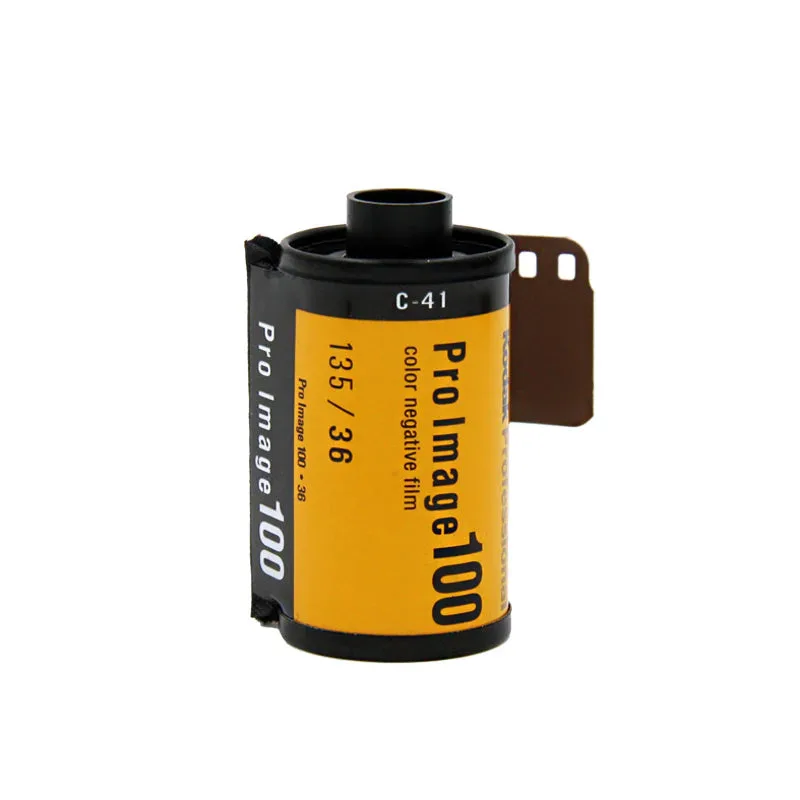
Kodak Pro Image 100 Color Negative Film - 35mm Roll Film, Single Roll, 36 Exposures (ISO 100)
-
Kodak Professional Portra 400 Color Negative Film - 35mm Roll Film, 36 Exposures, Single Roll (ISO 400): Kodak Professional Portra 400 offers a smooth and natural color palette balanced with vivid saturation and low contrast for accurate skin tones and consistent results. Portra 400's lower contrast preserves detail in both highlights and shadows, which is helpful in harsh midday sun. The vivid but natural palette keeps skin tones accurate even when the light is strong.
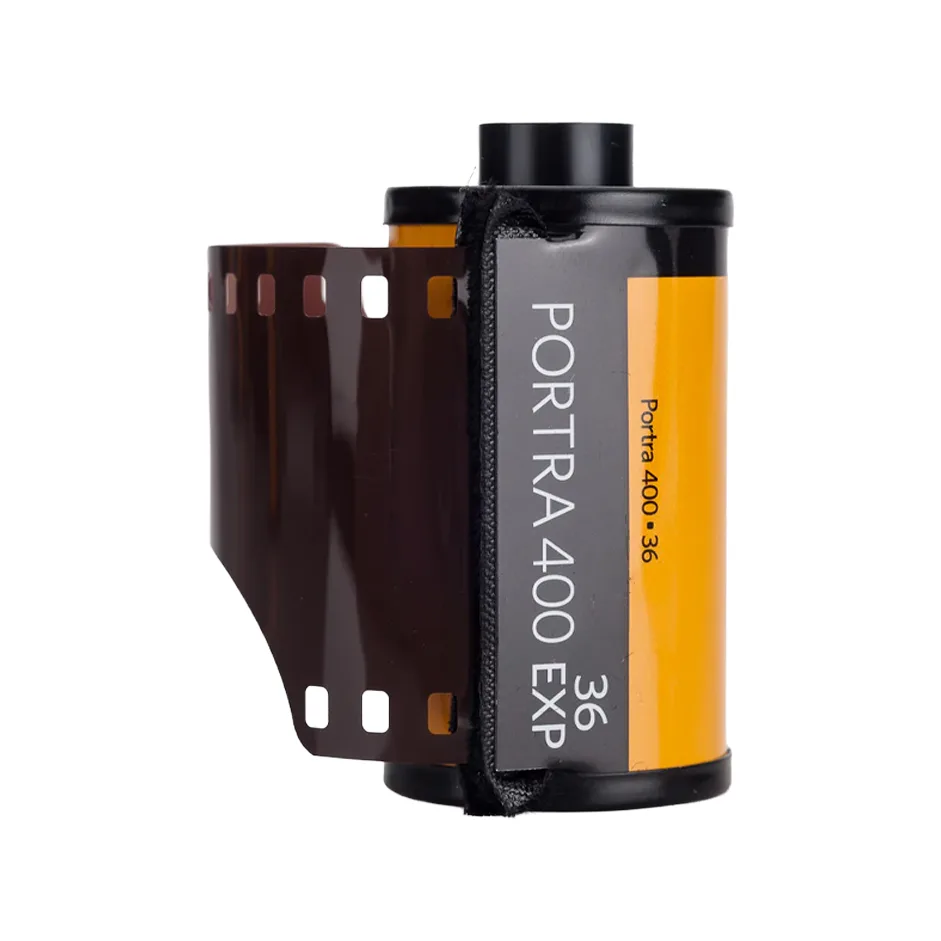
Kodak Professional Portra 400 Color Negative Film - 35mm Roll Film, 36 Exposures, Single Roll (ISO 400)
Grain and sharpness: what the film stock gives you
Pro Image 100 is a traditional grain film, so at ISO 100 you get very fine, tight grain. Portra 400 uses Kodak's VISION Film Technology and T-GRAIN emulsion, which delivers very fine grain for an ISO 400 film plus high sharpness and fine edge detail. In practice, both films look clean in bright light, but if you plan to enlarge or scan aggressively, the slower film has a slight edge in smoothness. Portra 400's grain is still remarkably subtle for its speed.
Which one should you choose?
Pick Kodak Pro Image 100 when you want maximum saturation, the finest possible grain, and you'll be shooting in consistently bright conditions. It's ideal for portraits, street photography, or any scene where you want colors to really sing. Choose Portra 400 when you need the extra stop of speed for action, variable light, or when you want lower contrast to handle harsh shadows. Portra 400 is also better if you plan to shoot in mixed lighting throughout the day. Both films process in standard C-41 chemistry, so any lab can develop them.