What T-Max 100 in 120 is built to do
Kodak Professional T-Max 100 is a 100-speed black-and-white negative film sold here as 120 roll film. The catalog describes it as the world's finest-grained 100-speed black-and-white film, with extremely high sharpness, very high resolving power, and suitability for enlargement.
That combination is the reason to load it in a medium format camera rather than treat it as a general-purpose roll. The film's stated strengths are image quality and enlargement, so the practical question is not whether you can shoot it, but how to expose it so those strengths survive into the final print or scan.
The catalog facts that shape your shooting plan
-
Kodak Professional T-Max 100 Black and White Negative Film - 120 Roll Film: Kodak Professional T-Max 100 black-and-white negative film, 120 roll format. Confirms the format and film type before you load a medium format back.
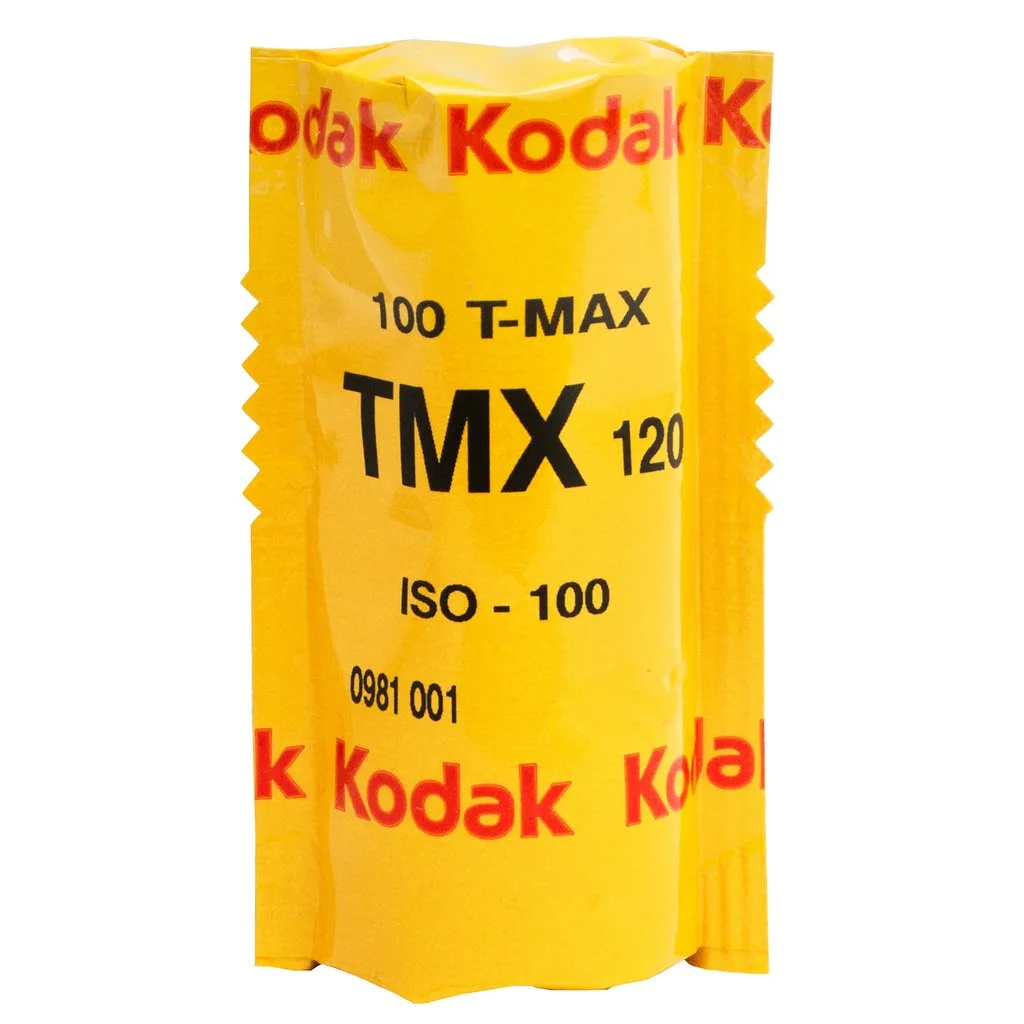
Kodak Professional T-Max 100 Black and White Negative Film - 120 Roll Film
-
Kodak Professional T-Max 100 Black and White Negative Film - 120 Roll Film: Rated at ISO 100. Sets the baseline exposure your meter should use unless you deliberately change it.
-
Kodak Professional T-Max 100 Black and White Negative Film - 120 Roll Film: Described as the world's finest-grained 100-speed black-and-white film. Explains why this roll suits detail-focused work and large enlargements.
-
Kodak Professional T-Max 100 Black and White Negative Film - 120 Roll Film: Extremely high sharpness and very high resolving power, optimal for enlargement. Tells you the film is intended to hold fine detail when you print or scan big.
A simple exposure approach for a 120 roll
The catalog does not supply a metering method, so treat these as sensible starting points rather than manufacturer instructions. Adjust to your camera and meter.
- Set your meter to ISO 100: T-Max 100 is a 100-speed film. Start at that rating so your first roll reflects the film as cataloged.
- Meter for the detail you care about: Because the film is promoted for sharpness and resolving power, take a reading on the area where you want fine detail rather than letting a bright sky dominate the meter.
- Keep notes per frame: Record your exposure choices on the roll. With no supplied development data, your own notes are the only reliable way to compare results later.
- Finish the roll before changing plans: Decide on any push or pull before you load, not mid-roll, because the whole roll receives the same development.
What fine grain means when you enlarge
The catalog's claim is specific: T-Max 100 is the world's finest-grained 100-speed black-and-white film, and it is described as optimal for enlargement. In practice, that means the film is designed so that grain stays nearly invisible as you increase print size, and sharpness and resolving power hold up.
This is where the 120 format matters. A larger negative gives you more room to enlarge before the film's own structure becomes the limiting factor. If your goal is a detailed black-and-white print or a high-resolution scan, T-Max 100 in 120 is aimed squarely at that use.
The honest limit: the supplied record makes no claim about grain at pushed speeds, and it gives no measured grain or resolution figures. Treat the fine-grain description as the film's rated behavior, not as a guarantee for every exposure choice.
Push processing: what you can and cannot plan from this record
The catalog describes T-Max 100 at its rated ISO 100 speed. It does not supply development times, developer recommendations, temperature data, or a stated push range. That absence is a real planning limitation, not a hidden instruction.
So before you decide to rate the film above ISO 100, confirm the development recipe with your lab or your own verified documentation. Do not assume a push time from another film, another format, or another ISO. The roll is the same throughout, so an exposure decision made at frame one applies to the whole roll.
If you want the fine-grain and enlargement qualities the catalog describes, the safest approach is to expose at the rated speed and keep push experiments separate until you have confirmed a development plan.
When T-Max 100 in 120 fits, and when to reconsider
- Choose it for detail-focused black-and-white work: The catalog's emphasis on fine grain, sharpness, and resolving power points to subjects where texture and fine structure matter.
- Choose it when you plan to enlarge: The film is described as optimal for enlargement, so large prints and detailed scans are its stated territory.
- Reconsider if you need a faster film: At ISO 100 it is a slower film. The supplied record gives no supported push guidance, so low-light work may call for a different approach.
- Reconsider if you need confirmed development data: No developing times or chemistry details are supplied here. If you need those before buying, source them separately.
Before you load the roll
Check that your camera or back is set for 120 film, set your meter to ISO 100, and decide your exposure approach for the whole roll before frame one. Keep a note of your choices so you can judge the results against the film's stated strengths in grain, sharpness, and enlargement.
Kodak Professional T-Max 100 120 roll film is available at Austin Camera. If your plan depends on a specific push time or developer, confirm that information first; the catalog record here does not provide it.