Start with what this camera actually is
The Kodak Tri-X 400 35mm One-Time-Use Disposable Camera is a ready-to-shoot black-and-white film camera. It comes preloaded with ISO 400 film and gives you 27 exposures. There is no setup, no battery to charge, and no lens to attach. You simply shoot the roll and send the camera to a lab for processing.
That makes it a low-pressure way to try black-and-white film. You get the classic Tri-X look without buying a reusable camera or loading film yourself. The tradeoff is that you have one roll, 27 frames, and no second chances on a shot.
The specs that shape how you shoot
-
Kodak Tri-X 400 35mm One-Time-Use Disposable Camera - 27 Exp.: Kodak Tri-X 400 35mm One-Time-Use Disposable Camera with 27 exposures and ISO 400 speed. ISO 400 is a flexible speed for daylight and indoor flash use, and 27 frames means you should plan your shots rather than spray and pray.
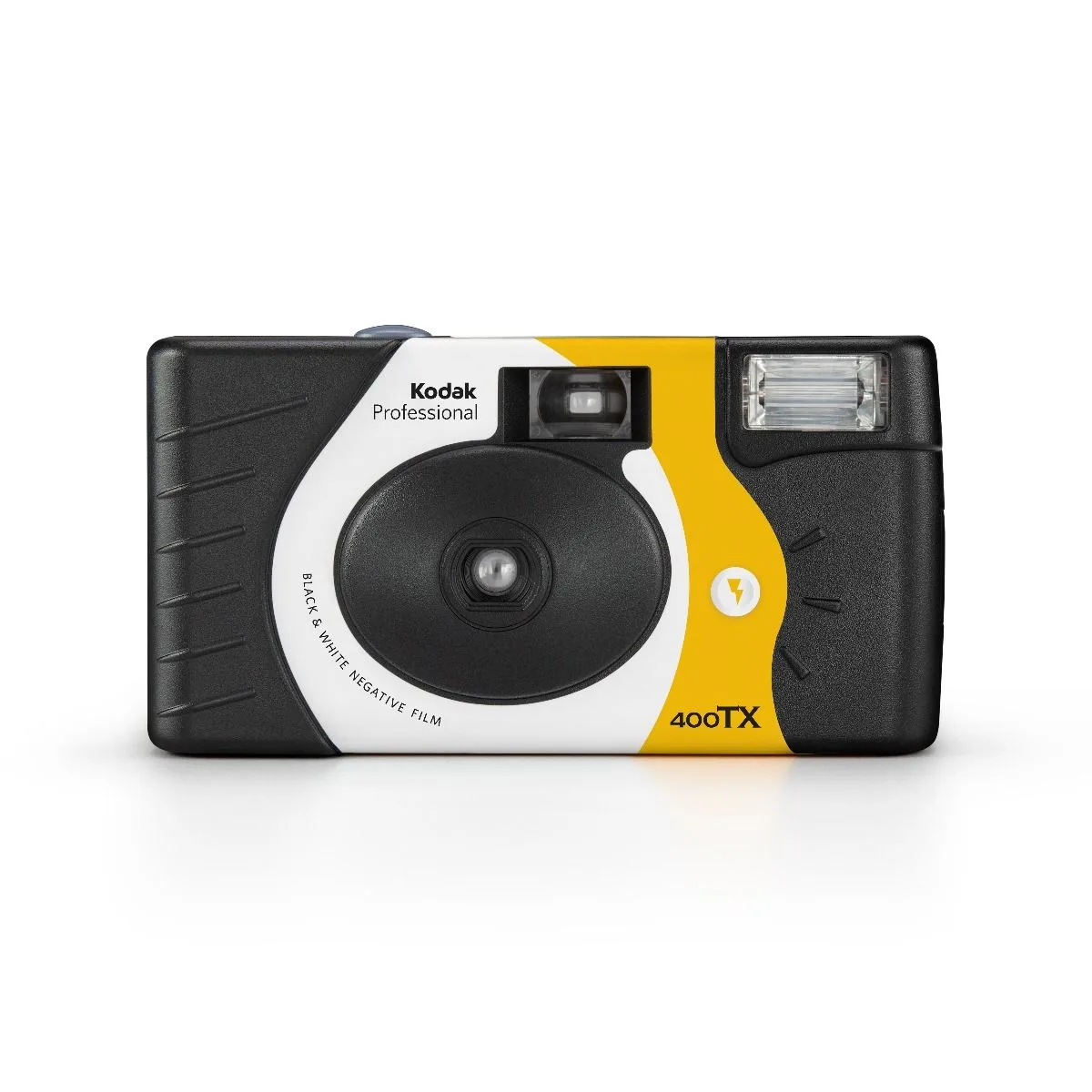
Kodak Tri-X 400 35mm One-Time-Use Disposable Camera - 27 Exp.
-
Kodak Tri-X 400 35mm One-Time-Use Disposable Camera - 27 Exp.: Delivers classic black-and-white film photography in a convenient, ready-to-shoot format. You are committing to black-and-white, so think in terms of contrast, texture, and light rather than color.
-
Kodak Tri-X 400 35mm One-Time-Use Disposable Camera - 27 Exp.: Simply shoot and send to a lab for processing. There is no developing step at home. Your job ends when the roll is finished; the lab handles the rest.
How to shoot your 27 exposures
- 1. Check the frame counter: Before you start, look at the exposure counter. It should show 27 or the starting position. If it does not, the camera may have been used or advanced. The supplied information does not include a reset procedure, so treat an odd counter as a reason to ask the seller before shooting.
- 2. Advance only when you are ready: Most one-time-use cameras require you to advance the film after each shot. Do not advance until you are about to take the next picture. Advancing early wastes frames.
- 3. Frame with a little room: These cameras have a simple viewfinder. For close subjects, keep a small margin around your subject. The exact framing accuracy is not specified in the supplied information, so leaving a little room is a safe habit.
- 4. Press the shutter smoothly: Press the shutter button with a steady, gentle motion. A hard jab can shift the camera. There is no image stabilization mentioned, so hold the camera with both hands and keep your elbows close.
- 5. Advance after the shot: After the shutter fires, advance the film for the next frame. The camera should resist when the roll is finished. Do not force it.
Using the flash without guessing
The supplied product information does not confirm whether this camera has a built-in flash, what its range is, or how to turn it on. That is a real limitation. Before you rely on flash indoors, check the camera body or the packaging for a flash switch or a flash-ready light. If there is no flash, plan for daylight or very bright indoor conditions.
If the camera does have a flash, the general rule for any ISO 400 point-and-shoot is to stay within a few meters of your subject. But without a confirmed guide number or range, do not assume a specific distance. Test one frame indoors at a comfortable distance, then adjust for the rest of the roll. For a black-and-white disposable camera, flash is often most useful for filling in shadows rather than lighting a whole room.
27 exposure disposable camera tips that actually help
- Plan your 27 frames: Twenty-seven exposures goes quickly at an event. Decide on a few themes or moments you want to capture, and resist shooting the same thing twice.
- Use the light you have: ISO 400 film is happiest in decent light. Outdoors on a bright or overcast day is straightforward. Deep shade and dim interiors are where you will need flash or a steady hand.
- Keep the camera dry and clean: The supplied information does not include weather sealing or care instructions. Treat it like any simple film camera: keep it out of rain, avoid sand and dust, and wipe the lens with a soft cloth if it gets smudged.
- Do not open the camera: The film is preloaded. Opening the back will expose the roll and ruin your images. There is no reason to open it before processing.
- Finish the roll before processing: Send the whole camera to the lab only after you have used all 27 exposures or decided to stop. The lab will handle film removal.
What to expect from black-and-white Tri-X 400
Tri-X 400 is known for a classic black-and-white look with visible grain and good contrast. In a disposable camera, you are working with a fixed lens and a fixed exposure strategy, so the results will be more about light and composition than technical precision. Bright scenes with strong shapes and textures tend to work well. Flat, even light can look muddy.
Because the camera is one-time-use, you cannot change the film speed or push the development. The lab will process it normally. If you want a specific look, talk to your lab before dropping it off. The supplied information does not include development recommendations, so the lab is your best source for processing choices.
Where this camera fits
- Kodak Tri-X 400 35mm One-Time-Use Disposable Camera - 27 Exp.: Ideal for events, travel, or anyone exploring film without equipment investment. It is a low-cost way to try black-and-white film without buying a reusable camera, lens, or light meter.
- Kodak Tri-X 400 35mm One-Time-Use Disposable Camera - 27 Exp.: Perfect for nostalgic aesthetics and learning film fundamentals. The limited frame count and fixed settings force you to think about light and composition, which are the basics of film photography.
The honest limits of this guide
The supplied product record does not include a manual, flash specifications, care instructions, or development times. This guide sticks to what is confirmed: 27 exposures, ISO 400 black-and-white film, a one-time-use format, and lab processing. For anything else, such as flash range, battery type, or exact framing, check the camera itself or ask the retailer. Do not assume features that are not confirmed.
If you are new to film, that is okay. The camera is designed to be simple. Load nothing, charge nothing, and send it to a lab when you are done. The main skill you need is patience with your 27 frames.