Why Sieve Size Matters for Your Brew
Coffee bean sieves let you separate ground coffee by particle size, giving you control over extraction. The right mesh size can reduce fines, improve consistency, and help you dial in a brew method. KRUVE BEAN Sieves are designed for this task, with a range of micron openings to match different grind sizes.
Choosing a sieve size isn't about picking one universal number. It depends on your brewing method, your grinder, and whether you want to remove fines, separate boulders, or both.
What the KRUVE BEAN Sieves Offer
-
BEAN Sieves – KRUVE: The PRO Pack contains six sieves: 250µm, 350µm, 500µm, 700µm, 900µm, and 1100µm. This range covers fine espresso particles up to coarse cold brew chunks, making it a versatile upgrade for anyone who already owns a SIFTER SIX base.
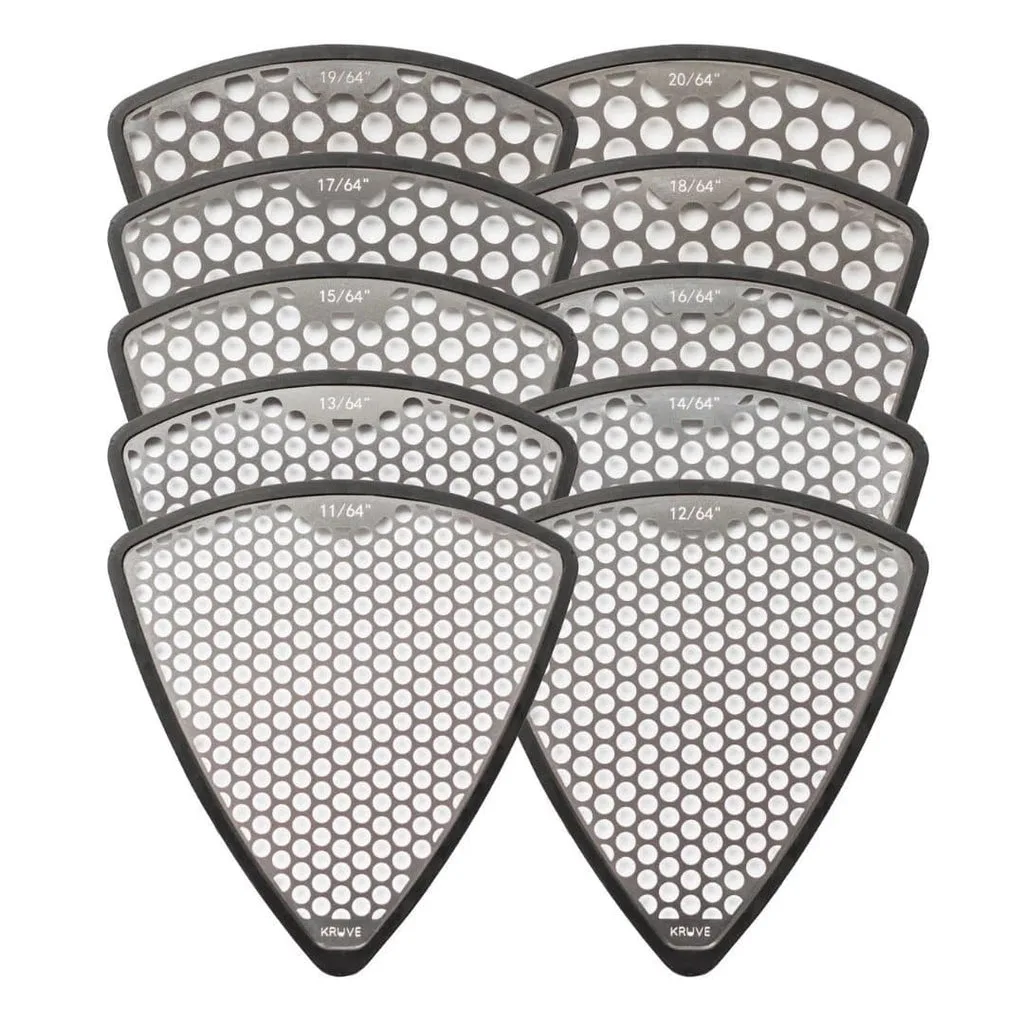
BEAN Sieves – KRUVE
Matching Mesh to Brewing Method
For espresso, you typically want a narrow band of particles around 250–500µm. A 250µm sieve catches the finest particles, while a 350µm or 500µm sieve helps you remove larger boulders that cause channeling. If you use a SIFTER SIX, the PRO Pack adds the 250µm and 350µm sieves that are essential for espresso tuning.
For pour-over and drip coffee, the sweet spot is often 500–900µm. A 500µm sieve removes fines that over-extract and cause bitterness, while a 700µm or 900µm sieve helps you isolate the main particle range for even extraction. The PRO Pack includes all three sizes, so you can experiment with different cuts.
For French press or cold brew, coarser particles around 900–1100µm work best. The 1100µm sieve in the PRO Pack lets you remove dust and fines from coarse grounds, resulting in a cleaner cup with less sediment.
The Trade-Off: More Sieves, More Control, More Steps
Adding more sieve sizes gives you finer control over particle distribution. The PRO Pack's six sieves let you create custom blends or isolate a single size range. However, each additional sieve means more sifting time and more pieces to clean. If you only brew one method, a smaller set may be enough. If you switch between espresso and cold brew regularly, the PRO Pack's range is worth the extra effort.
Also note that sieving removes some coffee mass—fines and boulders you discard. You'll need to grind slightly more coffee to compensate. The trade-off is a more uniform extraction and a better tasting cup.
Quick Size Guide
- 250µm: Catches very fine particles. Use for espresso to remove the finest dust after grinding.
- 350µm: Good for fine espresso and Aeropress. Helps tighten the particle range.
- 500µm: Versatile for espresso and pour-over. Removes both fines and small boulders.
- 700µm: Ideal for pour-over and drip. Separates the main extraction particles from coarse chunks.
- 900µm: Works for pour-over and French press. Removes medium-coarse boulders.
- 1100µm: Best for French press and cold brew. Cleans coarse grounds of dust and fines.
Making Your Choice
If you already own a KRUVE SIFTER SIX and want to expand your range for espresso or cold brew, the PRO Pack is a logical upgrade. It adds the critical fine and coarse sizes that the base set lacks. If you are new to sieving, consider starting with a smaller set that matches your primary brew method, then add the PRO Pack later as your curiosity grows.
The key is to match the sieve size to the grind size your method needs. Use the guide above to pick one or two sieves that address your biggest issue—too many fines, uneven extraction, or sediment in the cup.