What This Game Asks You to Do
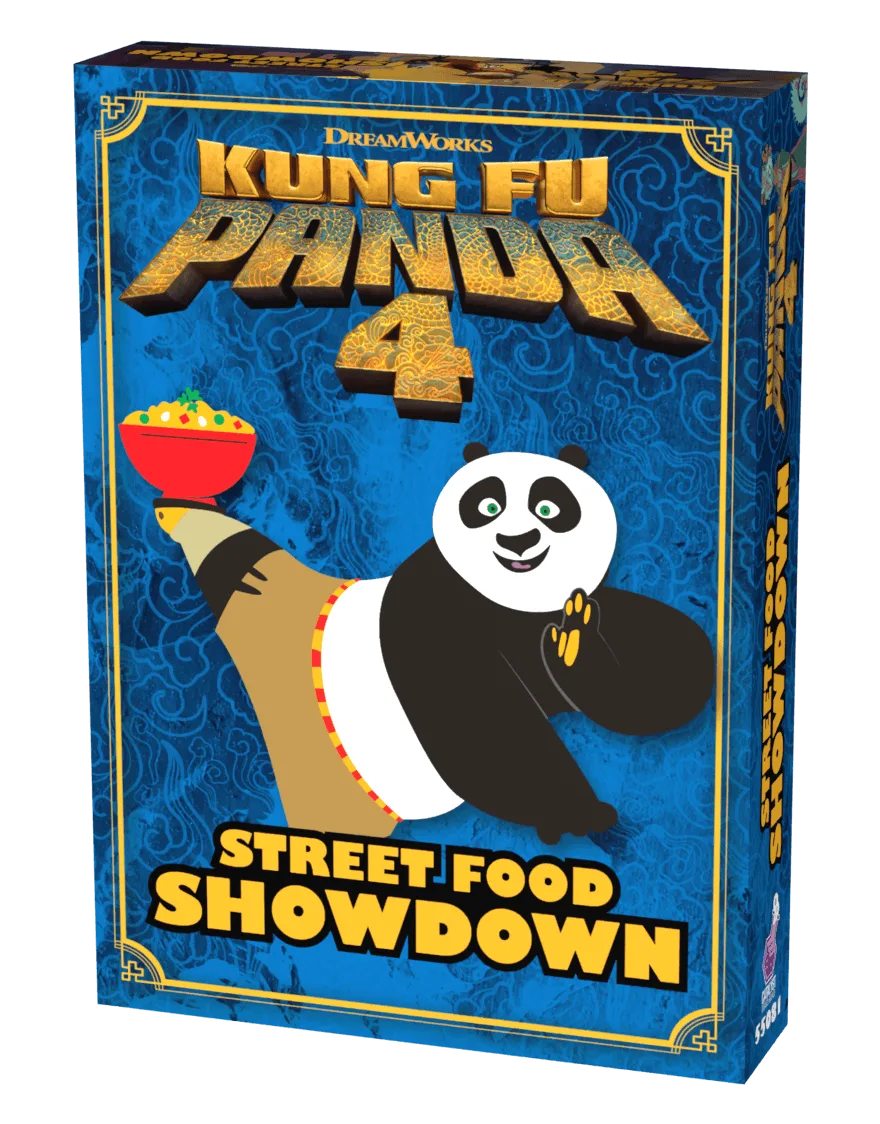
Kung Fu Panda: Street Food Showdown casts you as a helper to Po, the Dragon Warrior, who has arrived in Juniper City and wants to try every food in sight. The catalog description frames the goal clearly: build the biggest and best Combo Bowls the streets have to offer. That means your decisions during play revolve around collecting and combining food items into bowls that score well.
The listing does not include a rulebook, component list, player count, or play time. So this guide focuses on what the product description actually says and how to approach the game once you have it in hand. For exact turn order, hand limits, and end-game triggers, you will need the printed rules that come with the game.
What the Catalog Confirms
-
Kung Fu Panda: Street Food Showdown: The game is set in Juniper City, where Po wants to try everything the street food scene offers. This establishes the theme and the central activity: sampling and combining street food.
Kung Fu Panda: Street Food Showdown
-
Kung Fu Panda: Street Food Showdown: Players help Po by building the biggest and best Combo Bowls. The objective is to create high-scoring bowls, so your strategy should focus on bowl composition.
A Practical Approach to Setup
Because the catalog does not list components or setup steps, use these general steps as a framework. Adjust them to match the actual rulebook once you open the box.
- Unpack and sort: Separate cards, tokens, or bowls by type. The listing doesn't specify components, so sort whatever is included into logical groups.
- Read the rulebook first: The product page does not include rules, so the printed rulebook is your only authoritative source for setup and play.
- Set up the food supply: Place the shared food items where all players can reach them. The catalog doesn't describe the supply, so follow the rulebook's diagram.
- Give each player their bowl: If the game includes personal bowls or boards, hand one to each player. Again, check the rulebook for exact counts.
- Choose a starting player: The rules will specify who goes first. If not, use a simple method like youngest player or a random draw.
How Scoring Likely Works
The catalog emphasizes building the biggest and best Combo Bowls, which suggests that scoring is tied to the size and quality of your bowl. Without the rulebook, we can't give exact point values or combo rules. But you can expect that certain food combinations or larger bowls will earn more points. When you play, pay attention to how the rulebook defines a 'combo' and what makes a bowl 'best'—that will be your scoring target.
If you are playing with younger children, you might simplify scoring for the first game by counting only the number of food items in each bowl. That is a house rule, not an official variant, but it can help everyone learn the flow before adding the full scoring system.
What the Listing Doesn't Tell You
The product page does not include player count, recommended age, play time, or a component list. It also does not provide the full rules. Before buying, check the box or the publisher's page for those details if they matter to your group. The catalog does confirm the theme and the goal, so you can judge whether the premise appeals to your family. For everything else, the rulebook is the place to look.