Myth 1: A cleanser can't exfoliate because it rinses off
The L-Lactic Cleanser's supplied benefits state that chemical exfoliation promotes epidermal shedding and cell turnover, helping to decongest skin and enhance its ability to absorb active ingredients. That is the exfoliation claim in its own words: a supported benefit of the formula, not a promise that every wash delivers a peel-strength result.
The practical point is that this is a rinse-off step with a short contact time. The instructions say to lather for no more than 30 seconds before rinsing, so treat the exfoliation as part of a cleansing routine rather than a replacement for a dedicated exfoliating treatment. The record does not specify a percentage of lactic acid or a comparison with leave-on exfoliants, so avoid assuming equivalence.
Myth 2: Stronger exfoliation always means better skin
More is not automatically better, and the product's own directions build in a gentler option. The supplied guidance says to use it morning and night, but adds that if you have more sensitive skin, use it only once a day and alternate with Gentle Cleanser. That is a manufacturer instruction to reduce frequency, not a suggestion that the formula is weak.
The record also describes the blend as high-performing yet mild enough for dry and delicate skin. Those two statements sit together: the cleanser is positioned as effective exfoliation that still has a lower-frequency path for reactive skin.
What the label actually supports
-
L-Lactic Cleanser: Chemical exfoliation promotes epidermal shedding and cell turnover, helping to decongest and enhance skin's ability to absorb active ingredients, leaving it deeply hydrated and nourished. This is the supported exfoliation benefit, so you can judge the claim against the label rather than a general idea about acids.
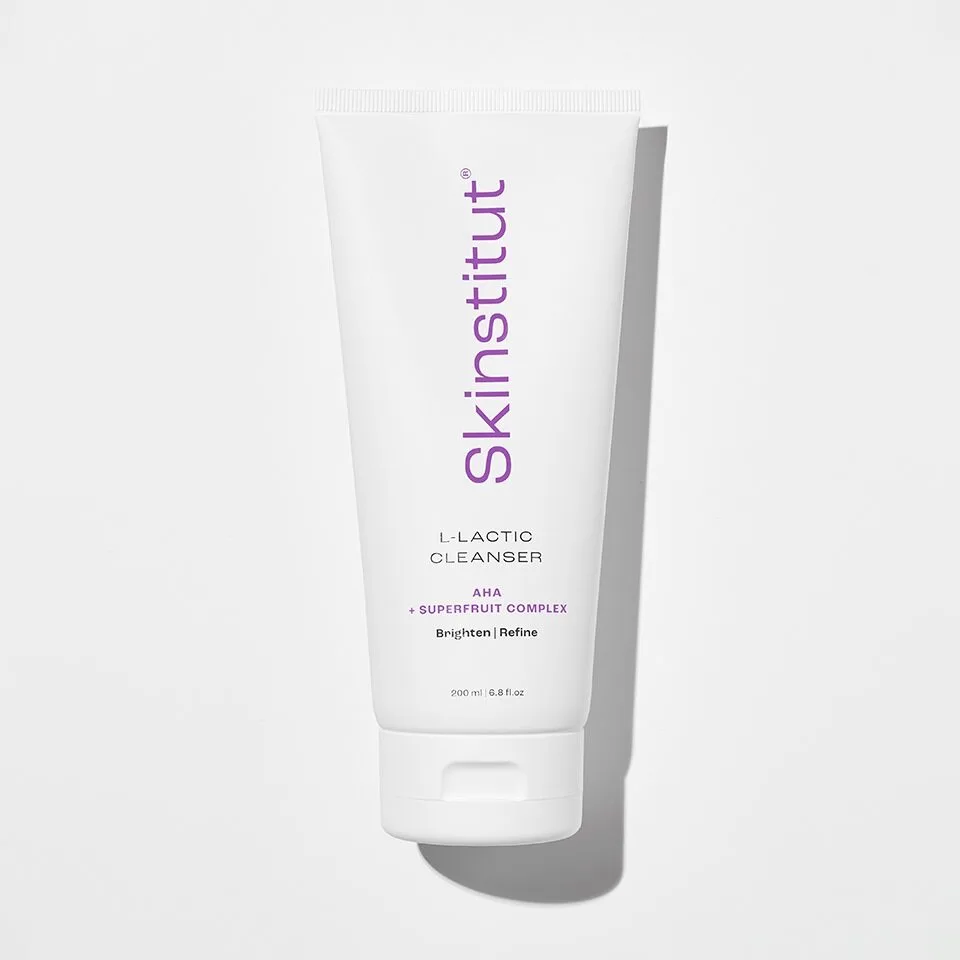
L-Lactic Cleanser
-
L-Lactic Cleanser: Morning and night, no matter how tired you are. If you have more sensitive skin, we would suggest using only once a day and alternating with Gentle Cleanser. The frequency instruction answers the everyday-use question directly and gives sensitive skin a clear adjustment.
-
L-Lactic Cleanser: Work a pea-sized amount between wet hands and lather over face for no more than 30 seconds while avoiding the eye area. The short contact time and pea-sized amount are the practical limits that keep a rinse-off exfoliant in the cleanser category.
Myth 3: You can leave it on longer for a deeper exfoliation
The directions are specific: lather over the face for no more than 30 seconds, avoid the eye area, then rinse thoroughly with warm water and pat dry before moving on to serum and/or moisturiser. Extending the time is not supported by the supplied instructions, and the eye-area caution is part of the same step.
If you want more exfoliation than a 30-second cleanse provides, the honest answer from this record is that the product does not document a longer-contact method. A separate exfoliating product, used as directed, is the clearer route, but check that product's own instructions rather than stretching this one.
Myth 4: Lactic acid cleansers are only for oily or congested skin
The record supports a wider fit than that. It says the blend is mild enough for dry and delicate skin, and the benefits mention leaving skin deeply hydrated and nourished alongside decongesting. So the intended use is not limited to oily skin, even though decongestion is one stated benefit.
The sensitive-skin instruction is the real dividing line: once-daily use alternating with Gentle Cleanser. If your skin is dry or delicate, that is the documented starting point rather than a reason to avoid the product altogether.
Myth 5: The ingredient list tells you everything about strength
The full ingredient list includes Aqua, Glycerin, Ammonium Lauryl Sulfate, Lactic Acid, Decyl Glucoside, Sodium Hydroxide, Xanthan Gum and others, plus a Superfruit Complex described as delivering protective antioxidants. Reading it confirms lactic acid is present, but the supplied record does not give a percentage or pH, so the list alone cannot tell you how strong the exfoliation is.
That is a decision limitation, not a flaw. Use the stated frequency, contact time and sensitive-skin adjustment as your guide, and treat any claim about exact strength as unconfirmed by this information.
L-Lactic Cleanser tips that follow the label
- Keep the lather brief: Use a pea-sized amount between wet hands and lather for no more than 30 seconds, avoiding the eye area.
- Rinse warm, then pat dry: Rinse thoroughly with warm water and gently pat dry before serum and/or moisturiser.
- Scale back for sensitive skin: Use once a day and alternate with Gentle Cleanser rather than pushing through twice-daily use.
- Don't judge strength from the ingredient list: The record confirms lactic acid is present but does not state a percentage or pH, so the label's usage directions are the reliable guide.