What this guide is built around
The La Primo, la Mezzo ou l'Excel Teacher's Guide accompanies the book La Primo, la Mezzo ou l'Excel from the Bons comptes, bons amis collection. The collection's premise is stated plainly in the catalog: one story, many school subjects. The guide is designed as a turnkey tool, so the planning work is meant to be lighter than building a unit from scratch.
That matters for a French math teacher guide because the guide is not a standalone math workbook. It works through a story, and the catalog describes a multidisciplinary approach: literacy and numeracy outcomes, plus financial literacy and citizenship education. If you are using La Primo, la Mezzo ou l'Excel in a French immersion or French-language classroom, the guide is the planning layer that connects the story to those outcomes.
Confirmed details before you plan
-
La Primo, la Mezzo ou l'Excel - Teacher's Guide: The guide accompanies the book La Primo, la Mezzo ou l'Excel from the Bons comptes, bons amis collection. You need the matching story book to run the activities as intended; the guide is not a replacement for it.
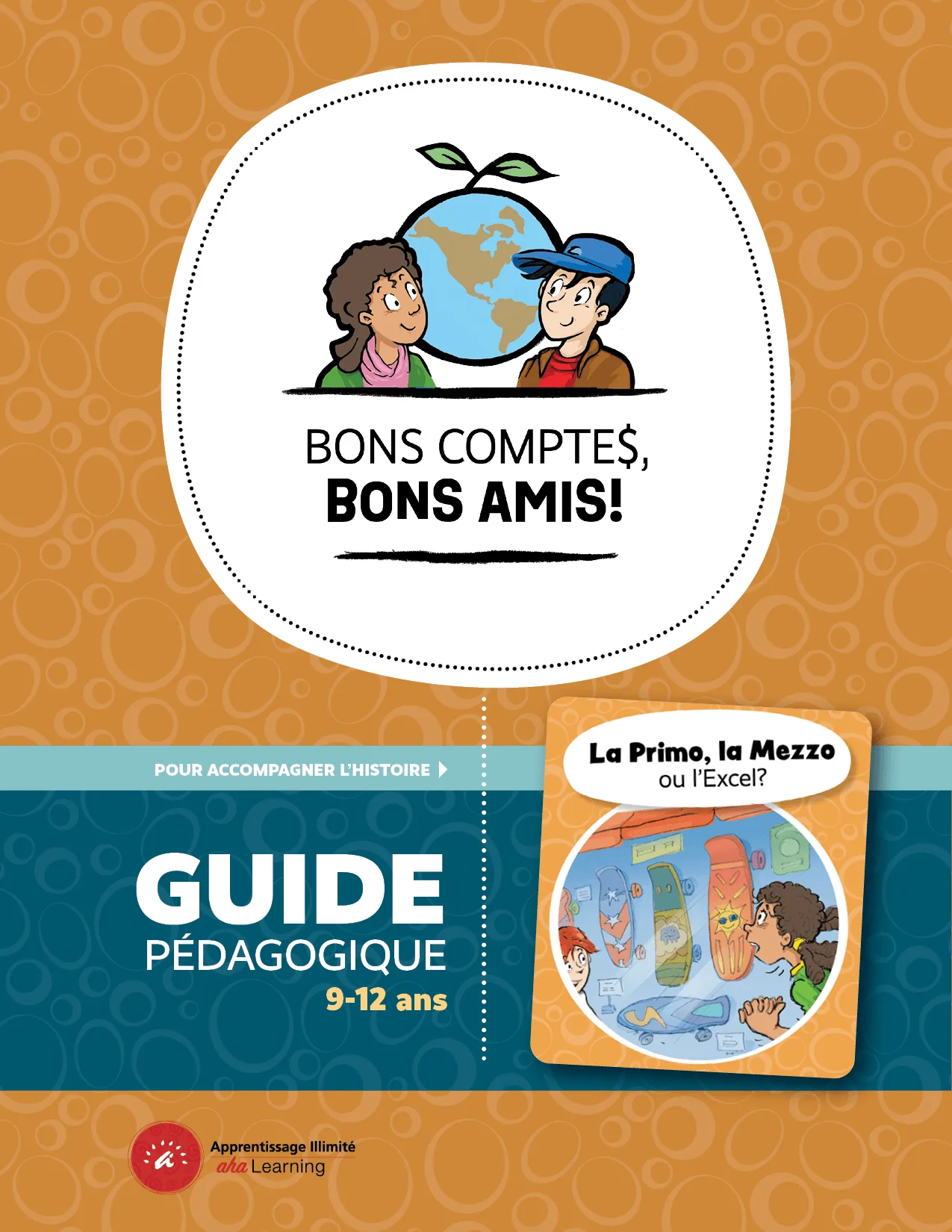
La Primo, la Mezzo ou l'Excel - Teacher's Guide
-
La Primo, la Mezzo ou l'Excel - Teacher's Guide: The collection uses a multidisciplinary approach, addressing literacy and numeracy outcomes as well as financial literacy and citizenship education. This tells you which subject areas the guide is meant to serve, so you can decide where it fits in your program.
-
La Primo, la Mezzo ou l'Excel - Teacher's Guide: The activities engage students through reading, fun activities, oral vocabulary development, discussion, finding solutions, and application. These six activity types are the practical backbone of a lesson sequence, and they are the only activity categories the supplied catalog confirms.
A workable sequence for one story
- Start with the reading: Read La Primo, la Mezzo ou l'Excel with the class first. The catalog lists reading as the opening activity type, and the rest of the sequence depends on students knowing the story.
- Pull out the oral vocabulary: Use the oral vocabulary development activities to surface the words students need before discussion and problem-solving. Keep this oral and quick; it is preparation, not a separate vocabulary unit.
- Run a short fun activity: The catalog names fun activities as a distinct engagement type. Place one here to keep momentum before the more demanding discussion work.
- Move into discussion: Discussion is listed separately from vocabulary and application. Use it to let students talk through the story's money and decision situations before they write or calculate anything.
- Work on finding solutions: Finding solutions is its own activity type in the catalog. This is where the numeracy and financial literacy outcomes come together: students propose and compare answers rather than only recalling the story.
- Finish with application: Application closes the sequence. Ask students to use what they discussed and solved in a new but related task, so the lesson ends with transfer rather than review.
Where the math and financial literacy fit
The guide's title names three characters or levels, but the supplied catalog does not explain what Primo, Mezzo and Excel refer to. Do not assume they are math levels or reading levels; the catalog does not confirm that. Treat the title as the book's title and plan from the confirmed outcomes instead.
The confirmed outcomes are literacy, numeracy, financial literacy and citizenship education. In practice, that means the same story can carry a reading comprehension goal, a number goal, a money-decision goal and a citizenship goal. The guide is described as a turnkey tool meant to save teaching time and add scope and depth to learning, so the efficient move is to pick two or three of those outcomes for a given lesson rather than trying to hit all four every time.
What the guide does and does not settle for you
The catalog is clear about the guide's purpose and activity types. It is less specific about lesson timing, grade levels, and page-by-page instructions. Plan around what is confirmed and check the physical guide for the rest.
- Confirmed by the catalog: The companion book, the Bons comptes, bons amis collection, the multidisciplinary outcomes, the six activity types, and the turnkey intent.
- Not confirmed by the supplied information: Grade level, lesson duration, number of lessons, assessment tools, and whether the guide includes reproducible student pages. The catalog does not state these, so verify them in the guide itself or with the publisher before you build a long unit around it.
Planning checkpoints before you teach
Before the first lesson, confirm you have the matching La Primo, la Mezzo ou l'Excel story book, since the guide is built to accompany it. Skim the guide's activity pages and mark which of the six activity types you will actually use in your available time. Decide in advance which outcomes you are assessing, because the guide's multidisciplinary scope is broad enough that trying to assess everything at once will slow you down.
If you teach French immersion, check that the vocabulary you plan to pre-teach matches the language level of your group. The catalog lists oral vocabulary development as an activity type but does not provide a word list, so the selection is yours. Finally, set aside one application task per story cycle; the catalog treats application as a distinct step, and it is the step most likely to be dropped when time runs short.
Catalog price context
- La Primo, la Mezzo ou l'Excel - Teacher's Guide: The catalog lists the guide at USD 21.29, with a comparison price of USD 29.99. If you are deciding between this guide and building your own unit, the listed price is the reference point; check the current price on the product page before ordering.