Labradorite, with its mesmerizing play of colors, is a favorite among crystal enthusiasts. Whether you're drawn to its raw, earthy appearance or the smooth, glossy finish of polished pieces, both forms offer unique benefits. But when it comes to display and energy work, which one is truly better? The answer depends on your intentions, aesthetic preferences, and how you plan to use the stone.
In this comparison, we'll explore the characteristics of labradorite rough and polished, their pros and cons for display and energy practices, and provide guidance to help you make an informed choice. We'll also highlight some related crystals from our collection to inspire your next addition.
Understanding Labradorite: Rough vs. Polished
Labradorite is a feldspar mineral known for its iridescent effect, called labradorescence. This optical phenomenon occurs when light interacts with internal layers, producing flashes of blue, green, gold, and sometimes purple. Both rough and polished labradorite exhibit this effect, but the way they display it differs significantly.
Rough labradorite, also known as raw or natural, is unaltered by human hands. It retains its original shape, often with a rugged, organic texture. Polished labradorite, on the other hand, has been tumbled, cut, or shaped to enhance its smoothness and highlight its color play. Each form has its own aesthetic and energetic qualities.
- Rough labradorite: natural, earthy, with a more subdued labradorescence.
- Polished labradorite: smooth, glossy, with vibrant, easily visible flashes.
Display Considerations: Aesthetics and Space
When it comes to display, the choice between rough and polished labradorite often boils down to personal taste and the ambiance you want to create. Rough pieces, with their raw, unrefined look, add a natural, grounding element to any space. They work well in bohemian or rustic decors, on shelves, or as part of a crystal grid. Their irregular shapes make them interesting conversation pieces.
Polished labradorite, such as spheres, pyramids, or tumbled stones, offers a more refined and elegant appearance. The smooth surface catches light beautifully, making the labradorescence more pronounced. Polished pieces are versatile and can be displayed on desks, coffee tables, or in meditation spaces. For a striking centerpiece, consider a polished sphere or a natural pyramid.
If you're looking for a polished piece to enhance your display, our Clear Apophyllite Natural Pyramids (India) are a beautiful complement to labradorite, though they are not labradorite themselves. For labradorite specifically, you might explore our selection of tumbled stones or spheres to find the perfect polished form.
- Rough: best for natural, earthy aesthetics.
- Polished: ideal for modern, elegant spaces.
- Consider the size and shape of the piece relative to your display area.
Energy Work: How Form Affects Vibration
In energy work, crystals are often chosen for their metaphysical properties. Labradorite is renowned for its protective and transformative energies, believed to shield the aura and enhance intuition. The form of the stone can influence how these energies are perceived and utilized.
Rough labradorite is often considered more 'raw' in energy, making it excellent for deep meditation, shadow work, and connecting with the earth. Its unpolished surface is thought to have a more grounding, primal vibration. Many practitioners prefer rough pieces for grid work or for placing in spaces where a strong, unrefined energy is desired.
Polished labradorite, with its smooth surface, is believed to project energy more evenly and gently. It is often used in crystal healing layouts, worn as jewelry, or placed on the body during meditation. The polished form is also easier to hold, making it a popular choice for carrying with you throughout the day.
For those interested in specimens with a powerful presence, our Stibnite Natural Clusters (China) offer a different but intense energy, while our Moldavite Crystals (Czech Republic) are known for their high-vibrational properties. However, for labradorite specifically, consider both rough and polished to see which resonates more with your energy.
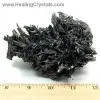
Stibnite Natural Clusters (China)
- Rough: grounding, primal, ideal for deep meditation.
- Polished: gentle, even, suitable for daily carry and healing layouts.
Pros and Cons: Quick Comparison
To help you decide, here's a quick breakdown of the advantages and disadvantages of each form.
Rough labradorite is often more affordable and unique, as no two pieces are alike. It is durable and requires minimal care. However, its rough surface may be less visually striking in terms of labradorescence, and it can be harder to clean.
Polished labradorite showcases the stone's beauty to its fullest, with vibrant flashes that are easily visible. It is smooth and pleasant to touch, making it ideal for handling during meditation. On the downside, polished pieces can be more expensive, and the polishing process may reduce the stone's natural energetic intensity for some users.
- Rough: affordable, unique, durable, but less flashy.
- Polished: beautiful, smooth, easy to handle, but costlier.
Making Your Choice: Practical Tips
When choosing between labradorite rough and polished, consider your primary purpose. If you intend to use the stone for display and want a visually stunning piece, polished is likely your best bet. If you're more focused on energy work and prefer a raw, earthy connection, rough may be more suitable.
It's also worth considering the specific shape of polished pieces. Spheres are excellent for energy flow, pyramids focus energy upward, and tumbled stones are convenient for carrying. For a versatile addition to your collection, you might also explore other stones like our Tumbled Yellow Aventurine (India) or Amethyst Natural Chunks (Bolivia), which offer their own unique energies.
Ultimately, the best choice is the one that feels right to you. Trust your intuition when selecting a crystal, as you'll be drawn to the form that aligns with your needs.
- Define your primary use: display or energy work.
- Consider the specific shape and size.
- Trust your intuition when choosing.
Both labradorite rough and polished have their merits, and the 'better' option depends on your personal preferences and goals. Whether you're drawn to the raw, natural energy of rough stones or the refined beauty of polished pieces, labradorite is a powerful ally for both display and energy work. Explore our collection to find the perfect labradorite for you, and don't forget to check out our other crystals to enhance your space and practice.