Start with the room, not the screen
A privacy screen only works as well as the space around it. Before you position a 4-panel screen, walk the room and identify the door, the chair, the pump station, and any shared traffic path. The screen's job is to block sightlines, not to replace a locked door or a clear room policy.
In a workplace lactation space, the most useful setup keeps the pumping chair inside the screen's coverage while leaving a clear entry and exit. That usually means placing the screen parallel to the wall or at a slight angle, rather than diagonally across the middle of the room.
What the 4-panel screen gives you to work with
-
4 Panel Lactation Room Privacy Screen: Four connected panels provide a freestanding privacy barrier, with each panel measuring 16.75 inches wide and an overall width of 67 inches. The 67-inch overall width is the key number for layout: it tells you how much sightline the screen can block in one straight or angled run.
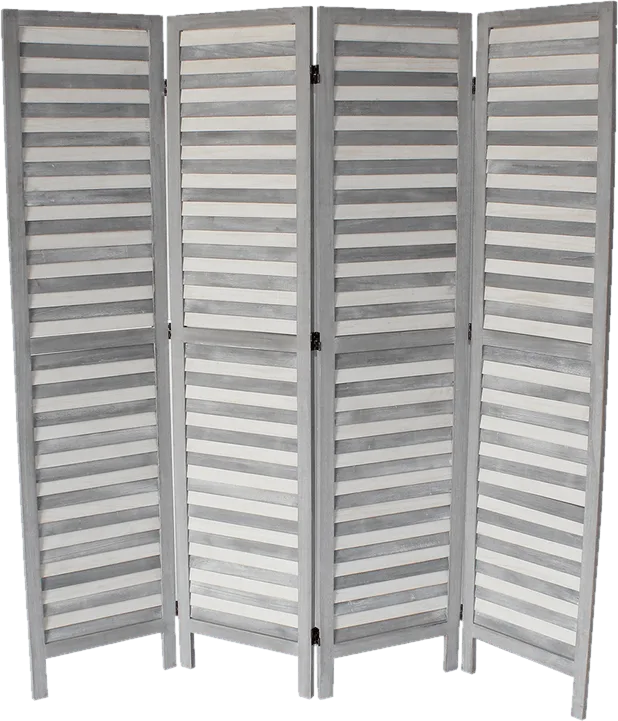
4 Panel Lactation Room Privacy Screen
-
4 Panel Lactation Room Privacy Screen: The screen stands 71 inches tall, offering substantial coverage for seated or standing use. At 71 inches, the screen is tall enough to shield a seated pumping parent from most eye-level views, which is the main privacy concern in a shared room.
-
4 Panel Lactation Room Privacy Screen: It is constructed from wood for a sturdy, classic look and is easy to position and move as needed to suit your room layout. Because it is freestanding and movable, you can adjust the layout without permanent installation or wall damage.
A simple placement routine for a 4-panel screen
Use this sequence to set up the screen so it actually blocks the views that matter. Adjust the angles to your room; these are starting points, not fixed rules.
- Measure the clear floor space first: The screen's overall width is 67 inches when the panels are in a straight run. Check that the floor area where you plan to place it can accommodate that width, plus room to angle the panels if needed.
- Identify the primary sightline: Stand at the door or the nearest window and look toward the pumping chair. That line of sight is what the screen should interrupt. Place the screen between the chair and that viewpoint.
- Angle the panels to close gaps: A straight line leaves open edges. Fold the connected panels into a shallow V or L shape so the ends turn toward the wall or toward the chair, reducing the chance of a clear view around the side.
- Keep the entry path clear: Leave enough space to walk in and out without moving the screen each time. The screen is movable, but a setup that requires daily repositioning is less likely to stay in place.
- Check the seated view: Sit in the pumping chair and look toward the door and any interior windows. If you can see over or around the screen from a seated position, adjust the angle or move the screen closer to the chair.
Layout choices that make a small lactation room work
In a tight room, the screen often works best as a corner enclosure: two panels along one wall and two panels turning out into the room. This uses the walls as part of the barrier and keeps the center of the room open for the chair and pump.
If the room is shared or doubles as a storage area, place the screen so the pumping zone is visually separate from the supply shelf or refrigerator. The screen does not lock, so it should not be the only thing separating a pumping parent from a busy hallway. Pair it with a door sign or a scheduling system.
Because the screen is freestanding and movable, you can shift it for cleaning or for a different chair position. That flexibility is useful in a workplace where the lactation room may be reconfigured.
What the screen does not do
A privacy screen is a visual barrier, not a soundproof booth or a locked door. Set expectations accordingly.
- It does not block sound: The supplied information describes a visual privacy barrier. It does not confirm any acoustic or sound-dampening properties. If sound privacy matters, address it with room scheduling or a white-noise machine.
- It is not a permanent partition: The screen is freestanding and designed to define a space without permanent installation. It should not be treated as a structural wall or a secured enclosure.
- It does not replace a room policy: Workplace lactation space privacy depends on clear use policies, signage, and scheduling as much as on any screen. The screen supports those measures; it does not substitute for them.
A note on care and stability
The supplied product information does not include specific cleaning instructions or weight limits for the 4-panel screen. Treat it as you would other wood furniture: avoid dragging it across the floor, and check that it stands stable on the surface where you place it. If you need detailed care guidance, confirm with the manufacturer before using any cleaning product.
Because the screen is 71 inches tall and freestanding, place it on a level floor and away from high-traffic paths where it could be knocked. The catalog does not confirm wall-anchoring hardware, so do not assume it can be secured to a wall without additional parts.