Quick answer
Choose your usual sneaker size in the Laeʻahi ʻIli, but expect a close, slightly snug initial fit from the full-grain leather. Wear them for short sessions at home first, and let the leather mold to your foot before judging the final fit.
Why the Laeʻahi ʻIli feels snug at first
Full-grain leather starts firm and gradually softens with body heat and movement. The wool-blend lining adds a soft, slightly cushioned feel that can make the shoe seem tighter on day one, especially if you normally wear canvas or knit slip-ons. That initial closeness is normal, but it should never pinch your toes or press hard across the instep.
Socks or no socks: what changes
The wool-blend lining is comfortable against bare skin, so many people wear this slip-on without socks. If you plan to go sockless, fit the shoe with the same barefoot condition you will use daily. If you prefer thin no-show socks, try them on during fitting because even a thin sock can change how the instep and heel feel. Thick socks may make the initial fit too tight and are better avoided until the leather has softened.
What to check before you wear them outside
Walk on a clean, carpeted surface for a few minutes. Your heel should stay in place without slipping, and your toes should have enough room to wiggle. The leather will stretch slightly where it flexes, so a fit that is merely snug—not painful—is usually the right starting point. If the shoe feels too tight across the top of your foot or your toes touch the front, do not count on break-in to fix it.
How to get the right fit and break in your Laeʻahi ʻIli
- Start with your usual sneaker size: Order the size you normally wear in men's sneakers. The Laeʻahi ʻIli is designed as a slip-on, so it should feel secure without being tight. If you are between sizes, choose the larger size only if your toes feel cramped; otherwise, stay with your usual size. Common mistake: sizing up too early. A slightly snug leather shoe often relaxes, while a too-large slip-on can slip off your heel.
- Try them on with the socks you plan to wear: Wear the same sock thickness you expect to use most often. For sockless wear, try the shoes on bare feet. For no-show socks, bring a pair. Walk around indoors for at least five minutes to let the leather warm up. Checkpoint: your heel should not lift more than a quarter inch, and your toes should not touch the front.
- Break them in gradually indoors: Wear the shoes for 30–60 minutes at a time around the house for the first two or three days. This lets the leather soften and conform to your foot without risking blisters or scuffs outside. Increase the time as the fit becomes more comfortable. Common mistake: wearing them for a full day immediately. Leather needs short, repeated flexing to break in evenly.
- Check pressure points after each session: After each indoor session, look for red marks or sore spots on your feet. Mild redness that fades quickly is normal; persistent pain or blisters mean the fit may be wrong. If a specific area rubs, try a thin no-show sock or a heel pad before deciding to return. Checkpoint: any sharp pressure or numbness means stop and reassess the size.
- Care for the leather to keep the fit consistent: Wipe the full-grain leather with a soft, damp cloth after wearing and let it air-dry away from direct heat. Condition the leather occasionally with a product suitable for full-grain leather. Proper care keeps the leather supple and prevents it from drying out and stiffening. Common mistake: using harsh cleaners or soaking the shoes, which can damage the leather and lining.
Product facts
-
Laeʻahi ʻili - Dark Java: Full-grain leather upper with subtle suede details and geometric debossing. Leather molds to your foot over time, so the initial fit should be close but not restrictive.
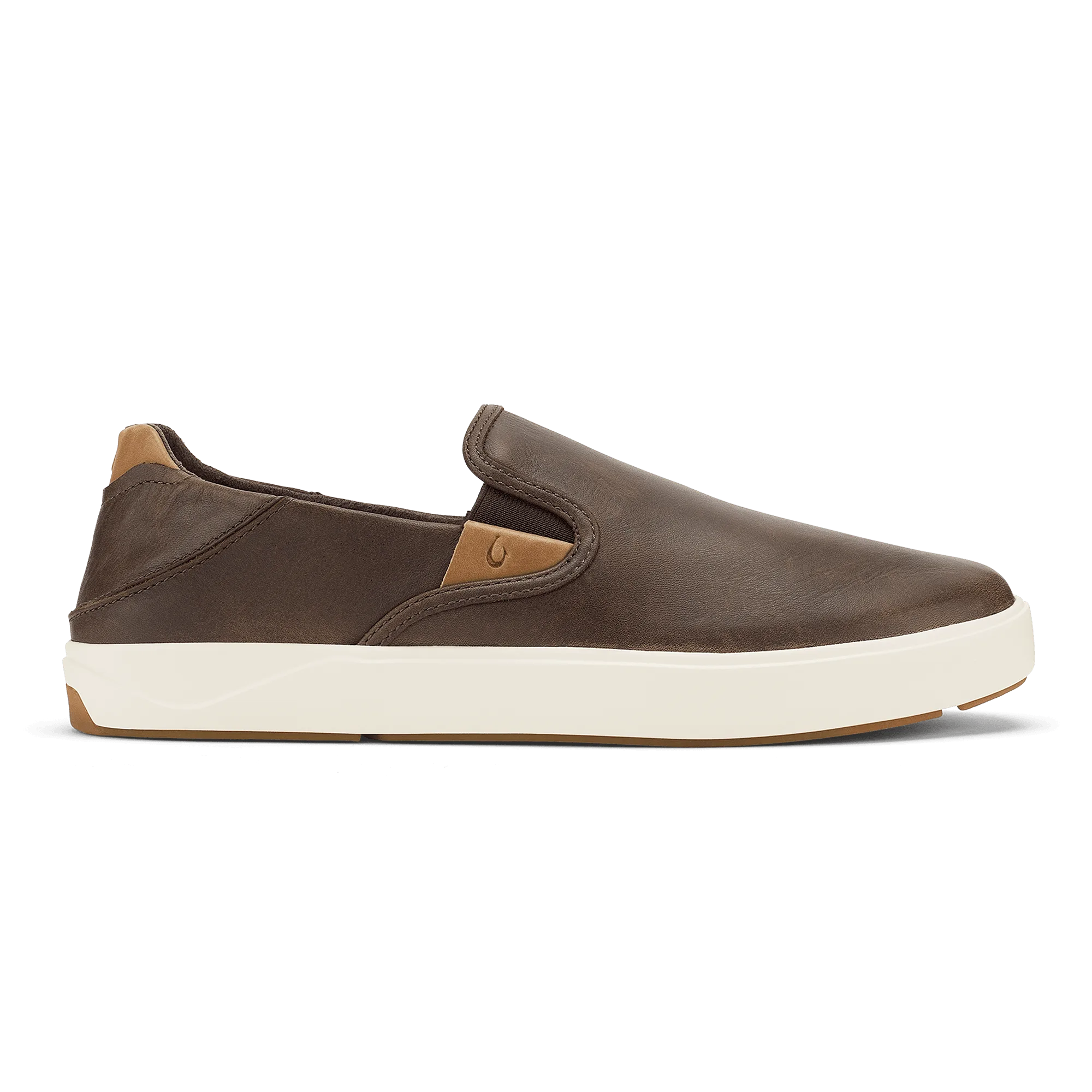
Laeʻahi ʻili - Dark Java
-
Laeʻahi ʻili - Dark Java: Ultra soft wool-blend lining. The lining adds comfort for barefoot wear and can affect how much room you feel inside the shoe.