Two Formulas Built for the Same Coat Concern
If you have a small breed with a white or light-colored coat, brown tear stains and dullness are common frustrations. Nature's Protection Superior Care offers two grain-free options aimed at exactly this problem: one with lamb and one with insect protein. Both are formulated for adult small breeds with light coats and both state they help reduce brown tear stains while supporting skin and coat health.
The real decision comes down to protein source and what each formula emphasizes. The lamb recipe highlights easily digestible lamb rich in iron, zinc, and essential amino acids. The insect recipe highlights sustainable, hypoallergenic insect protein rich in lauric acid. Both include MicroZeoGen and omega-3 and omega-6 for skin and coat support. Neither record supplies feeding amounts, so you will need to follow the packaging or your veterinarian's guidance for portions.
What the Lamb Formula Record Confirms
-
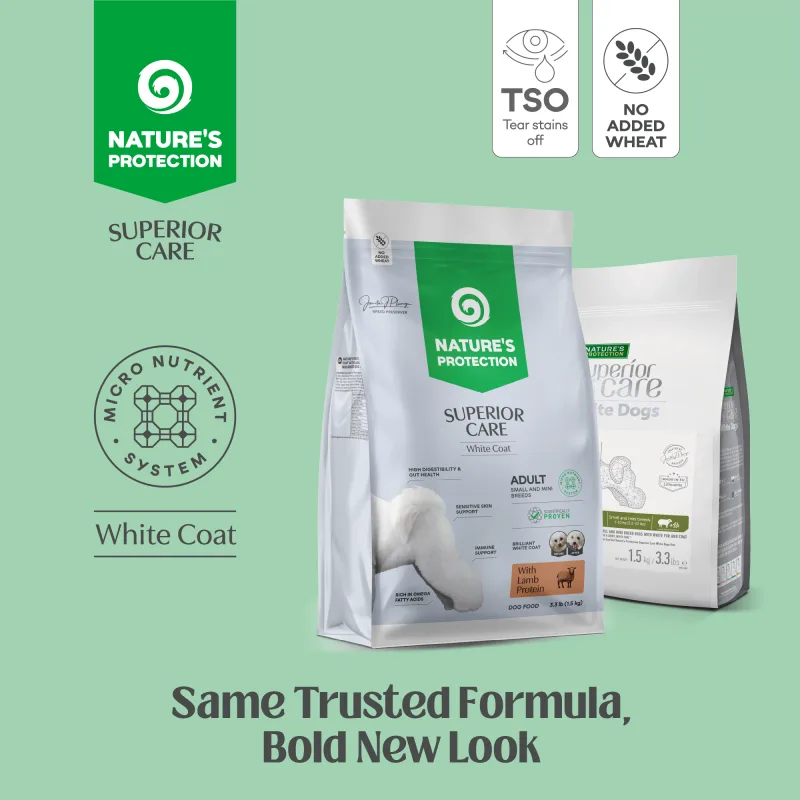
Adult Dogs Food for Light Coat Small Breeds with Lamb: Formulated for adult small and mini breeds with white and light-colored coats. Matches the specific size and coat concern this comparison addresses.
Adult Dogs Food for Light Coat Small Breeds with Lamb
-
Adult Dogs Food for Light Coat Small Breeds with Lamb: Grain-free, hypoallergenic, highly digestible formula that helps reduce brown tear stains and supports skin, coat, and immune health. Shows the core claims shared with the insect formula, so you can compare on protein source rather than basic purpose.
-
Adult Dogs Food for Light Coat Small Breeds with Lamb: Premium lamb protein is described as easily digestible and rich in iron, zinc, and essential amino acids for strong immunity and coat health. Explains the nutritional angle if you prefer a traditional meat protein.
-
Adult Dogs Food for Light Coat Small Breeds with Lamb: Includes MicroZeoGen, a natural volcanic mineral stated to detoxify the body and enhance nutrient absorption, plus omega-3 and omega-6 for skin hydration and coat shine. These are the supporting ingredients behind the coat and skin claims.
-
Adult Dogs Food for Light Coat Small Breeds with Lamb: No artificial colors, flavorings, or preservatives. Relevant if you are avoiding unnecessary additives in a daily food.
-
Adult Dogs Food for Light Coat Small Breeds with Lamb: Available in 3.3 lb and 22 lb options. Lets you match bag size to your dog's size and how quickly you go through food.
What the Insect Protein Formula Record Confirms
-
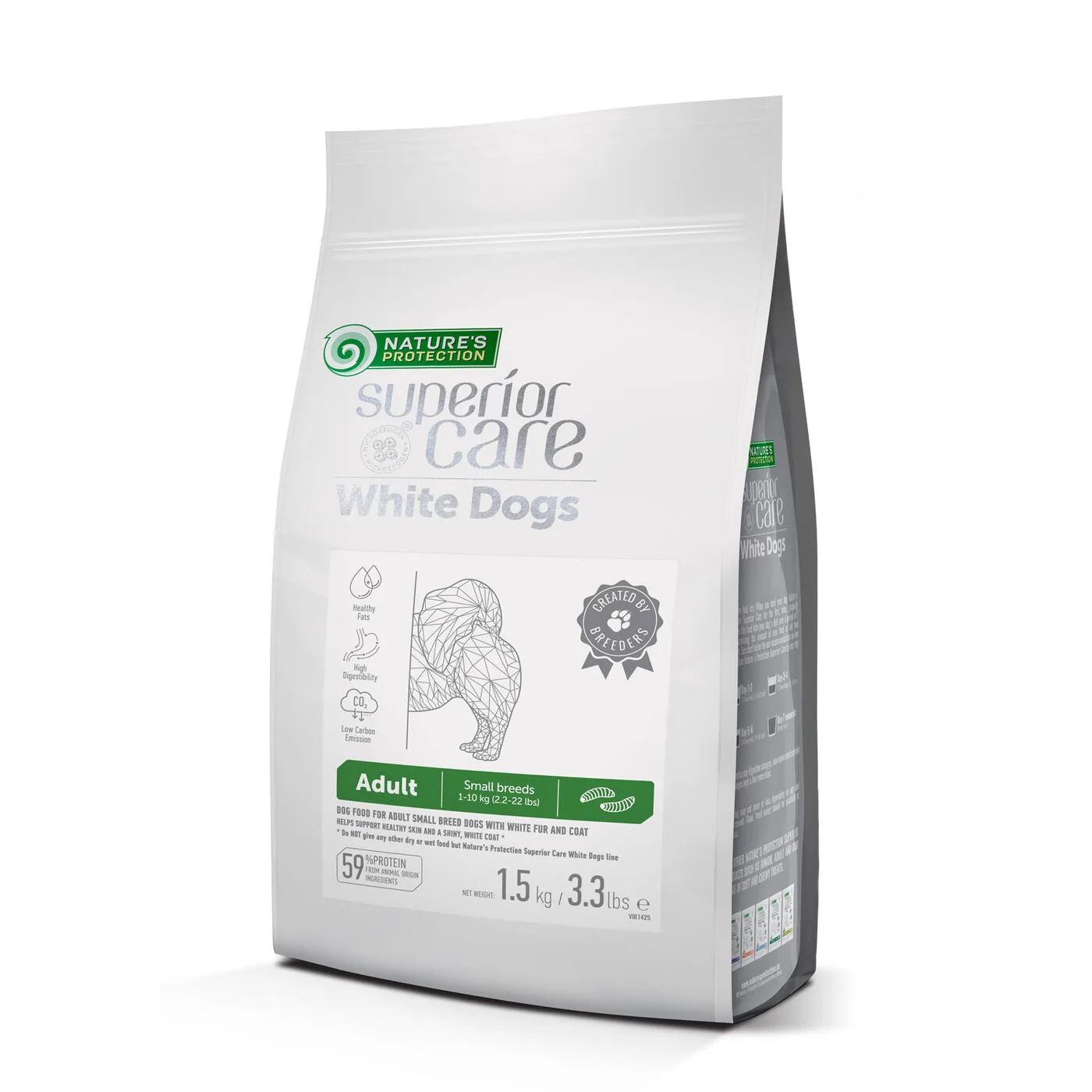
Adult Dogs Food for Light Coat Small Breeds with Insects: Formulated for adult small breeds with white and light-colored coats. Same target group as the lamb formula, so the comparison is direct.
Adult Dogs Food for Light Coat Small Breeds with Insects
-
Adult Dogs Food for Light Coat Small Breeds with Insects: Grain-free, hypoallergenic, highly digestible formula that helps reduce brown tear stains and supports skin, coat, and immune health. Confirms the shared core benefits, keeping the focus on protein choice.
-
Adult Dogs Food for Light Coat Small Breeds with Insects: Premium insect protein is described as sustainable, hypoallergenic, and rich in lauric acid for skin and immune support. Highlights the distinctive angle of this formula for skin support and sustainability.
-
Adult Dogs Food for Light Coat Small Breeds with Insects: Includes MicroZeoGen, a natural volcanic mineral stated to detoxify the body and enhance nutrient absorption, plus omega-3 and omega-6 for skin hydration, coat shine, and immune function. Shows the same supporting ingredients are present as in the lamb formula.
-
Adult Dogs Food for Light Coat Small Breeds with Insects: No artificial colors, flavorings, or preservatives. Same clean-label position as the lamb formula.
-
Adult Dogs Food for Light Coat Small Breeds with Insects: Available in 3.3 lb and 22 lb options. Same size choices, so bag size does not decide the comparison.
Where the Two Formulas Actually Differ
Both foods share the same grain-free, hypoallergenic, tear-stain-focused positioning and the same supporting ingredients. The meaningful differences are the protein source and what each protein brings to the table.
- Protein source: Lamb formula uses premium lamb protein; insect formula uses premium insect protein. This is the primary choice if your dog has a known sensitivity or you prefer a novel protein.
- Nutritional emphasis: Lamb is described as easily digestible and rich in iron, zinc, and essential amino acids for immunity and coat health. Insect protein is described as sustainable, hypoallergenic, and rich in lauric acid for skin and immune support.
- Sustainability angle: Only the insect formula explicitly mentions sustainability as a benefit of its protein source.
- Price at a glance: Catalog prices are USD 17.51 for the lamb 3.3 lb option and USD 17.99 for the insect 3.3 lb option. Both have a comparison price of USD 23.99. Prices can change, so check the current listing.
What the Records Do Not Tell You
Neither product record supplies feeding amounts, calorie content, or a guaranteed analysis. That means you cannot use these records alone to calculate portions or compare nutritional adequacy. Always follow the feeding guide on the bag or ask your veterinarian, especially for small breeds where portion size matters.
The records also do not state whether either formula is suitable for dogs with specific medical conditions, nor do they confirm how quickly tear stains might improve. Treat the tear-stain and coat claims as product positioning, not a guaranteed outcome. If your dog has a diagnosed allergy or skin condition, discuss protein choice with your vet before switching.
How to Choose Between Lamb and Insect Protein
Use these practical checkpoints to narrow the decision. They focus on what the records confirm and what you can reasonably infer from the protein descriptions.
- If your dog has had reactions to common meats: The insect formula is described as hypoallergenic and uses a novel protein, which may be worth discussing with your vet. The lamb formula is also described as hypoallergenic, but lamb is a more familiar protein.
- If you want a traditional meat-based recipe: Choose the lamb formula. It highlights easily digestible lamb with iron, zinc, and amino acids for coat and immunity.
- If sustainability matters to you: The insect formula explicitly calls out sustainable protein as a benefit.
- If you are managing tear stains on a light coat: Both formulas state they help reduce brown tear stains and support coat color. Since the shared benefits are the same, base your choice on protein preference and any vet advice.
- If you need a larger bag: Both come in 3.3 lb and 22 lb, so bag size does not force the decision. Pick the size that fits your storage and how fast your dog eats.
A Sensible Way to Trial Either Formula
When switching foods, do it gradually over several days, mixing increasing amounts of the new food with the old. This is general guidance, not a manufacturer instruction from these records. Start with the 3.3 lb bag if you are unsure, then move to the 22 lb bag once you know it suits your dog.
Keep notes on tear staining, coat appearance, and digestion for a few weeks. Because the records do not promise a timeline, your own observations are the best way to judge whether either formula works for your dog. If you see signs of digestive upset or skin irritation, stop and consult your veterinarian.