Quick Answer
To fit the Lander harness on an active dog, measure the chest girth and neck, adjust the straps so two fingers fit snugly under each strap, and always do a movement check before heading out.
Why Fit Matters for Active Dogs
A harness that fits well is the difference between a comfortable hike and a chafed, restricted dog. Active dogs move their shoulders and neck a lot, so a harness that is too tight can limit motion, while one that is too loose can slip or cause rubbing.
The Lander harness is designed for dynamic movement, but only when it fits correctly. Taking a few minutes to adjust it properly ensures your dog stays secure whether you're heading to the trailhead or just out for a walk.
Why Fit Matters More for Active Dogs
Active dogs twist, jump, and stretch. A harness that fits well at rest can shift during activity, leading to chafing or even escape. The Lander harness is built to hold up to heavy use, but a poor fit undermines its performance.
The Lander is crash-tested and holds over 3,300 lb of force, so it's engineered for security. But that security only works if the harness is snug in the right places. A loose fit can let your dog slip out or cause the harness to rub during long hikes.
Understanding Lander Harness Sizing
The Lander harness comes in multiple sizes, but the right size isn't just about weight—it's about chest girth and neck circumference. Measure your dog's chest at the widest point, just behind the front legs, and the neck at the base. Compare these to the size chart, but remember that every dog's body shape is different. A dog with a deep chest may need a larger size even if their weight falls in a smaller range.
Adjusting for Comfort and Security
Once you have the correct size, the fit depends on how you adjust the straps. The harness should be snug enough that it doesn't slide or twist, but loose enough to allow full range of motion. Pay special attention to the chest and girth straps—these are the main load-bearing points during active use.
Step-by-Step Lander Harness Fitting
- Measure your dog's girth: Use a soft tape measure around the widest part of the ribcage, just behind the front legs. Keep it snug but not tight. Compare to the Lander size chart; if between sizes, choose the larger size for comfort and adjustability. Re-measure every few months for growing or weight-changing dogs.
- Loosen all straps before putting on: Unclip the belly strap and loosen the chest and side straps completely. This makes it easier to slide the harness over your dog's head or have them step in, and prevents pulling fur or causing discomfort. Check that the straps are not twisted before securing.
- Position the harness correctly: Place the front chest piece so it sits on the sternum, not the throat. The back D-ring should rest between the shoulder blades. Adjust the side straps so the harness lies flat and doesn't shift when your dog moves. The harness should not restrict your dog's natural gait or rub under the armpits.
- Tighten to a snug but comfortable fit: Tighten the straps so you can fit two fingers flat under the harness at the chest and one finger at the neck. It should be snug but not constricting. Check that the harness doesn't slide or twist when your dog walks. If the harness slides or twists, it's too loose—tighten it gradually and recheck after a few minutes of wear.
- Do a final safety and comfort check: Attach the leash and have your dog move, sit, and lie down. Ensure the harness doesn't restrict movement or chafe. For active dogs, verify the harness stays in place during a short jog or climb. Recheck the fit after your dog has worn the harness for a few minutes; straps can settle and need a small adjustment.
Lander harness at a glance
-
Lander™ harness: The Lander harness is crash-tested and holds over 3,300 lb of force. A secure fit is critical so the harness stays in place during a crash or sudden pull, protecting your dog without slipping.
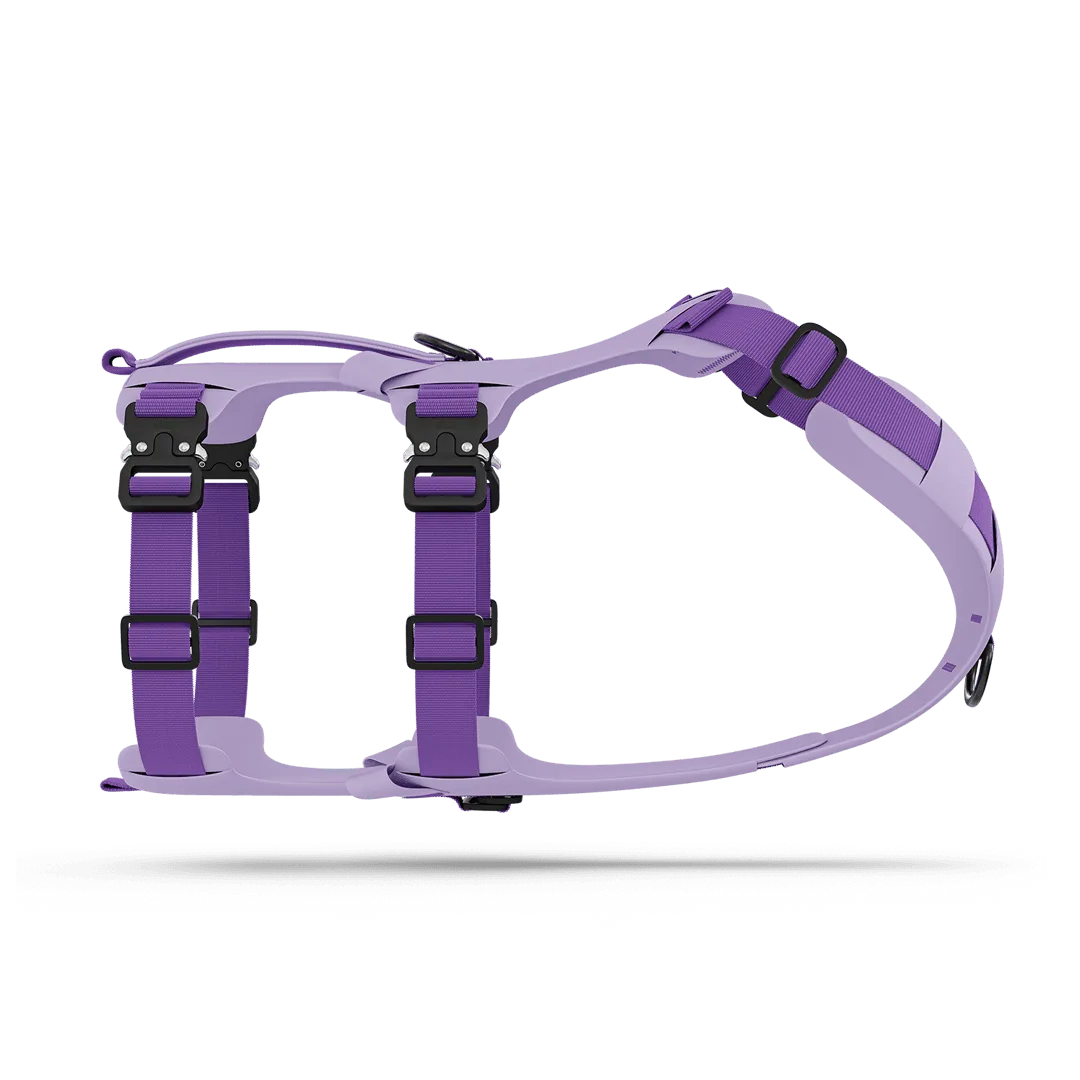
Lander™ harness
-
Lander™ harness: It adapts fast with modular add-ons and still feels light on trail. The modular design lets you adjust the harness for different activities, but a proper base fit is essential before adding any attachments.