Quick Answer
Lapsang souchong is a black tea dried over pinewood fires, so it tastes intensely smoky, resinous, and campfire-like, with a smooth, slightly sweet black tea base underneath. Brew it with water just off the boil (about 95°C/203°F) for 3 to 5 minutes, then taste and adjust. It has roughly the same caffeine as other black teas, so treat it as a medium-caffeine cup.
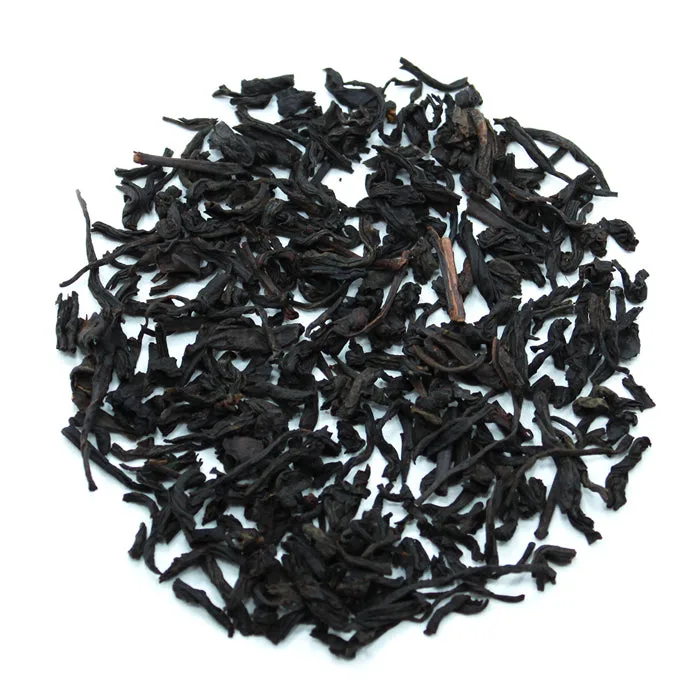
Lapsang souchong
Lapsang souchong is one of the few teas people recognize by smell before they even sip it. The pinewood smoke is unmistakable, and that single characteristic drives most of the questions readers send us: Is it supposed to smell like a bonfire? Can you drink it without milk? How long do you steep it before it turns bitter?
This FAQ answers those questions directly. If you already know you want a smoky cup and prefer something easier to source, our Cowboy https://teahippierx.com/products/untitled-jul28-12-15-6283b1d2fdb3c581944d65cb-753701Earl Grey is a gentler smoked option worth trying alongside a classic lapsang. Otherwise, read on for taste, brewing, and caffeine answers.
What Does Lapsang Souchong Taste Like?
The first thing you notice is smoke: pine resin, woodsmoke, and something close to a campfire or a smoked meat rub. Underneath that, lapsang souchong is still a black tea, so you get a malty, slightly sweet body with a clean, dry finish. The smoke is strongest in the aroma and the first sip, then it settles into the background as the cup cools.
It is not a subtle tea. If you like smoked foods, peaty whisky, or mezcal, the flavor profile will feel familiar. If you usually drink delicate greens or floral oolongs, start with a shorter steep and a smaller amount of leaf so the smoke does not overwhelm everything else in the cup.
- Smoke dominates the aroma; the black tea base shows up in the body and finish.
- The flavor softens noticeably as the cup cools, so taste it at two temperatures before deciding.
How to Brew Lapsang Souchong
Use about 1 teaspoon of loose leaf per 8 ounces (240 ml) of water. Heat the water to roughly 95°C (203°F) — just off a rolling boil — and steep for 3 to 5 minutes. Start at 3 minutes, taste, and add 30 seconds at a time if you want more depth. Going past 5 minutes pulls out tannins and turns the cup harsh and ashy rather than smooth.
Lapsang souchong handles milk and a little sugar well because the smoke cuts through dairy, but try the first cup plain. If you want a lighter, more aromatic smoke, brew it slightly cooler and shorter. If you want it bolder, add more leaf rather than more time — that keeps the cup strong without making it bitter.
- Leaf: about 1 tsp per 8 oz (240 ml).
- Water: 95°C / 203°F.
- Time: 3–5 minutes; adjust in 30-second steps.
- Re-steep: many lapsang leaves give a decent second cup with a longer steep.
How Much Caffeine Is in Lapsang Souchong?
Lapsang souchong is a black tea, so its caffeine level is medium — comparable to other black teas and higher than most green or white teas. The exact amount varies with leaf grade, how much leaf you use, and how long you steep, so treat it as a moderate-caffeine cup rather than a precise number.
If you are caffeine-sensitive, keep your steep under 4 minutes and drink it earlier in the day. If you want the smoke without the caffeine, look for a smoked herbal blend instead, or brew lapsang at a lower temperature for a shorter time to reduce extraction.
- Medium caffeine, similar to other black teas.
- Shorter steep and less leaf both reduce caffeine per cup.
Is Lapsang Souchong a Pinewood Smoked Tea?
Yes. Traditional lapsang souchong is smoke-dried over burning pinewood, which is where the resinous, campfire character comes from. That process is what separates it from other smoked teas, which may use different woods or a lighter smoke treatment.
Because the smoke comes from the drying method rather than added flavoring, the intensity varies between batches and producers. If you want a smoked tea that is easier to drink every day, a lighter smoked blend may suit you better than a heavily smoked traditional lapsang.
- Pinewood smoke is the defining production step, not an added flavor.
- Smoke intensity varies by batch — taste before committing to a large tin.
How Should You Drink It?
Plain, in a mug, is the classic way. It also works as a morning tea when you want something bolder than a standard breakfast blend, and it holds up to milk and sugar if you prefer a softer cup. Some drinkers use it as a cooking tea, adding it to marinades or braises for a smoky note.
If the full smoke is too much, blend a small amount of lapsang with a smoother black tea. A pinch of lapsang added to a malty black tea gives you the campfire aroma with a gentler body. Our Kambaa, a strong, malty Kenyan black tea, is a good base for that kind of blend.
- Try it plain first, then add milk or sugar if you want it softer.
- Blend a pinch with a malty black tea to tame the smoke.
Lapsang Souchong FAQ Checkpoints
Taste
Expect pinewood smoke first, then a malty black tea body with a dry finish. If you dislike smoked foods, this tea is probably not for you.
Brewing
1 tsp per 8 oz, 95°C water, 3–5 minutes, adjusting in 30-second steps. Stop before 5 minutes to avoid a harsh, ashy cup.
Caffeine
Medium, in line with other black teas; less leaf and shorter steeps lower it. Drink it earlier in the day if you are caffeine-sensitive.
Tea Hippie Options for Smoky and Malty Cups
- Kambaa: A heavy, rich copper-colored cup that is strong, malty, and bold, made from Kenyan black tea from the Nandi Highlands. A sturdy malty base for blending with a smoky tea, or a bold standalone cup if lapsang is too intense.
- SlytherBrew: A Japanese green tea spiced with cinnamon and orange peel, with medium caffeine and high antioxidants, making about 15–20 cups. A spiced, warming alternative for drinkers who want complexity without pinewood smoke.
- Le Marche Spice: A rounded bright copper cup with strong cinnamon notes and a light touch of orange, made from black tea, cinnamon, orange peel, and natural flavors. A spiced black tea that sits between plain black tea and a fully smoky cup.
Lapsang souchong rewards a little experimentation: start with a short steep, taste as it cools, and adjust from there. If the smoke turns out to be more than you want, blend it with a malty black tea like Kambaa and you get the campfire aroma with a gentler cup.