Start with the bag in front of you
Feeding a large breed adult dog well is less about memorising a number and more about building a routine you can repeat. The bag gives you the recipe's nutritional profile, the ingredients and a daily feeding guide based on your dog's weight. Your job is to match that guide to your dog's body condition, activity level and the size bag you buy.
This guide walks through the label of MyPetSays Super Premium Large Breed Adult Dog Food - Chicken & Rice, explains what the recipe supplies for large breed adults, and shows how to use the 12kg, 15kg, 24kg and 30kg bag options in a real feeding routine. It does not replace the feeding guide printed on the bag or your vet's advice.
What this chicken and rice recipe supplies
The recipe is built around chicken and rice. Chicken makes up 37% of the recipe, including dried chicken, chicken fat and chicken gravy, and rice is included at 27%. The analytical constituents list crude protein at 25%, crude fat at 14% and crude fibre at 3%, with metabolisable energy of 377 kcal/100g.
For large breed adults, the recipe also includes a joint care pack: glucosamine at 355 mg/kg, methylsulfonylmethane at 335 mg/kg and chondroitin sulphate at 250 mg/kg. These are the label facts to look for if joint support is part of why you are choosing a large breed recipe.
The range is formulated without common food allergens for dogs - beef, pork, wheat, wheat gluten, dairy and soya - and is naturally preserved using rosemary extract, with no added artificial colours or preservatives. Rice is described as a carbohydrate source ideal for dogs with sensitive digestion, and beet pulp provides soluble and insoluble fibre.
Label facts for your feeding decision
-
Super Premium Large Breed Adult Dog Food - Chicken & Rice: Analytical constituents: crude protein 25%, crude fat 14%, crude fibre 3%, crude ash 6%, moisture 8%, NFE 44%, omega 6 2.9%, omega 3 0.5%, calcium 1.3%, phosphorus 0.8%. These figures tell you the nutritional profile you are feeding, so you can compare it with your dog's current food and with any advice from your vet.
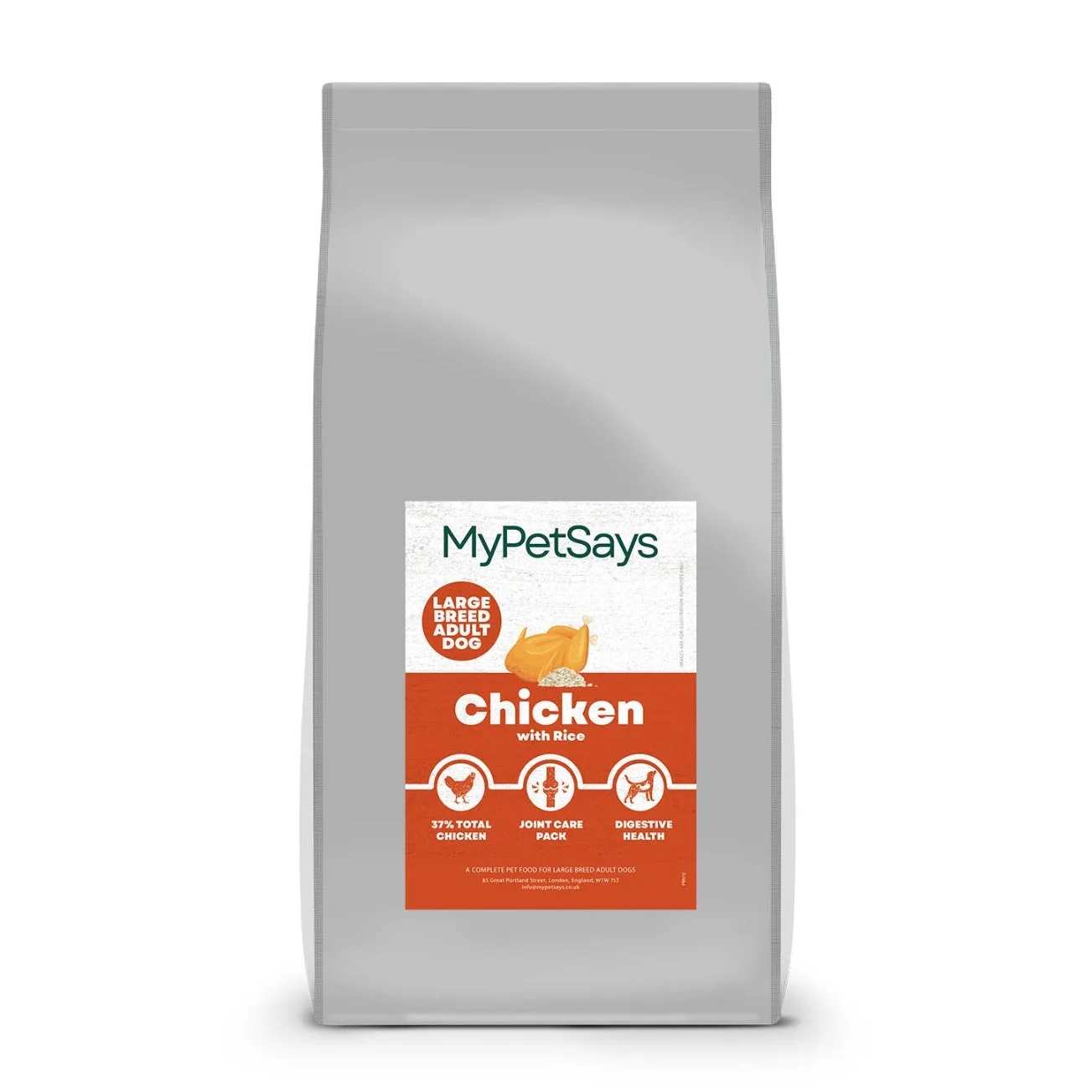
Super Premium Large Breed Adult Dog Food - Chicken & Rice
-
Super Premium Large Breed Adult Dog Food - Chicken & Rice: Metabolisable energy 377 kcal/100g. Energy density is the number behind portion size. A more energy-dense food means a smaller weight of kibble delivers the same calories, so always follow the bag's guide rather than copying a cup amount from another food.
-
Super Premium Large Breed Adult Dog Food - Chicken & Rice: Joint Care Pack includes glucosamine (355 mg/kg), methylsulfonylmethane (335 mg/kg) and chondroitin sulphate (250 mg/kg). These are the joint-support ingredients included specifically for large breed dogs, which is a common reason owners choose a large breed recipe.
-
Super Premium Large Breed Adult Dog Food - Chicken & Rice: Chicken 37% (including dried chicken 29%, chicken fat 7% and chicken gravy 1%), rice 27%, barley, oats, beet pulp 2%, brewer's yeast, omega 3 supplement, minerals, vitamins. The ingredient list shows chicken and rice as the main ingredients, with beet pulp as a fibre source and omega 3 and 6 for skin and coat support.
How to set a daily feeding routine
The bag's feeding guide is the starting point. The steps below help you apply it consistently without inventing amounts.
- Weigh your dog and check body condition: Use an accurate weight and look at your dog's waist and rib coverage. The bag's guide is usually organised by adult body weight, so you need a current weight to use it.
- Read the feeding guide on your bag size: Feeding guides can vary slightly between bag sizes and recipes. Use the guide printed on the bag you actually bought, and note that the 15kg bag is labelled Working Dog with a different colour but the same composition and kibble size as the other sizes.
- Divide the daily amount into meals: Split the daily total into the number of meals your dog is used to. The bag does not prescribe a meal frequency in the supplied information, so keep your existing routine unless your vet advises otherwise.
- Monitor weight and adjust gradually: Weigh your dog regularly and adjust the amount in small steps based on body condition. If your dog gains or loses weight, change the portion gradually rather than making a sudden cut or increase.
- Keep fresh water available: Dry food is a concentrated source of nutrition, so make sure your dog has clean water at all times.
What the bag does not tell you about portions
The supplied product information does not include a daily feeding amount table, and it does not specify a recommended number of meals per day. That is not a gap in the recipe; it is a reminder that portion size depends on your individual dog. Two large breed adults of the same weight can need different amounts if one is more active, younger or has a different body condition.
Use the feeding guide on the bag as your baseline, then treat your dog's body condition as the real checkpoint. If you are unsure, ask your vet to help you set a target weight and daily amount. This guide cannot replace that individual assessment.
Choosing between the 12kg, 15kg, 24kg and 30kg bags
All four bag sizes contain the same recipe and kibble size. The difference is the bag label and the amount of food you store.
- 12kg: A practical size if you have one large breed dog and want to keep the food fresh without a long storage period.
- 15kg - Working Dog: The 15kg bag is labelled Working Dog and has a different colour, but the composition and kibble size are exactly the same as the other bag sizes.
- 24kg: A larger bag for households with more than one dog or for owners who prefer fewer deliveries.
- 30kg - Working Dog: The largest option, labelled Working Dog. Choose it if you have the storage space and go through food quickly enough to keep it fresh.
Switching to this recipe without upsetting digestion
If your dog is moving from another food, transition gradually over several days. The supplied information does not give a specific transition schedule, so a sensible approach is to start with a small proportion of the new food mixed into the old and increase it over a week or so, watching for changes in appetite, stool quality and comfort.
Because this recipe contains rice and beet pulp, both described as supportive of sensitive digestion, some owners find it suits dogs that have struggled with richer foods. But every dog is different. If your dog has a diagnosed condition or is on a prescription diet, speak to your vet before switching.
Where this guide stops
This article has covered the label facts, the joint support, the bag sizes and a practical routine for using the feeding guide on the bag. It has not given a specific daily amount because the supplied information does not include one, and because the right amount depends on your dog.
Use the bag's guide, monitor your dog's body condition, and ask your vet if you need a tailored plan. That combination is more reliable than any generic portion chart.