Quick answer
To wear a latex vest waist trainer under everyday outfits, start with a thin moisture-wicking base layer, fasten the trainer snugly but comfortably, and choose tops with some stretch or texture to conceal lines. Adjust the hook-and-eye closure as needed for a smooth silhouette.
Why latex needs a barrier layer
Latex creates high compression and promotes perspiration, which is great for training but can cause discomfort or skin irritation if worn directly against the skin for long periods. A thin, moisture-wicking barrier layer absorbs sweat and reduces friction, making the trainer more comfortable for all-day wear. This layer also helps prevent the latex from sticking to your outer clothes, which can create bunching or visible ridges.
Choosing outfits that work with a vest trainer
The vest style extends over the torso, so it can show through thin, clingy fabrics. Opt for tops with some structure—like a button-up shirt, a blazer, or a sweater with a relaxed fit—to mask the trainer's edges. High-waisted pants or skirts can help hold the bottom of the trainer in place and prevent it from rolling up. Avoid tight, silky materials that highlight every contour unless you're wearing a seamless camisole over the trainer.
Step-by-step: layering your latex vest waist trainer
- Start with a moisture-wicking base layer: Put on a thin, seamless camisole or tank top made of breathable fabric like polyester or nylon. This barrier protects your skin from latex and absorbs sweat. Common mistake: skipping this layer and wearing the trainer directly against skin, which can cause chafing or irritation. Check that the base layer is smooth and free of wrinkles to avoid lumps under the trainer.
- Fasten the trainer snugly but comfortably: Wrap the Latex Vest Waist Trainer around your torso and secure the hook-and-eye closures starting from the bottom row. Aim for a snug fit that allows you to breathe deeply and move freely. Common mistake: fastening too tight, which restricts breathing and causes the trainer to roll or dig in. You should be able to slide a finger under the edge of the trainer; if not, loosen one row.
- Smooth out any bulges or wrinkles: Run your hands over the trainer to smooth the latex and lining, ensuring no folds or creases. Adjust the boning so it sits flat against your body. Common mistake: ignoring small wrinkles that can turn into pressure points or visible lines under clothes. Pay extra attention to the top and bottom edges—they should lie flat without curling.
- Choose an outfit that conceals the trainer's edges: Select tops with some texture, structure, or a relaxed fit—like a chunky knit sweater, a button-down shirt, or a blazer. High-waisted bottoms can help anchor the trainer. Common mistake: wearing thin, tight fabrics that show every contour and highlight the hook-and-eye closures. Test your outfit in a mirror under different lighting to spot any visible lines before heading out.
- Adjust as needed throughout the day: After a few hours, check the fit and re-fasten or loosen the closures if the trainer has shifted. If you feel discomfort or restricted breathing, remove the trainer and take a break. Common mistake: ignoring signs of discomfort and wearing the trainer for too long without adjustment. Set a reminder to check your fit every 3–4 hours, especially on your first few wears.
Product facts
-
Latex Vest Waist Trainer: Features a 100% latex core with polyester and spandex lining, plus a flexible boned structure. The lining adds a layer of comfort against the skin, while the boning helps the trainer maintain its shape under clothing without digging in.
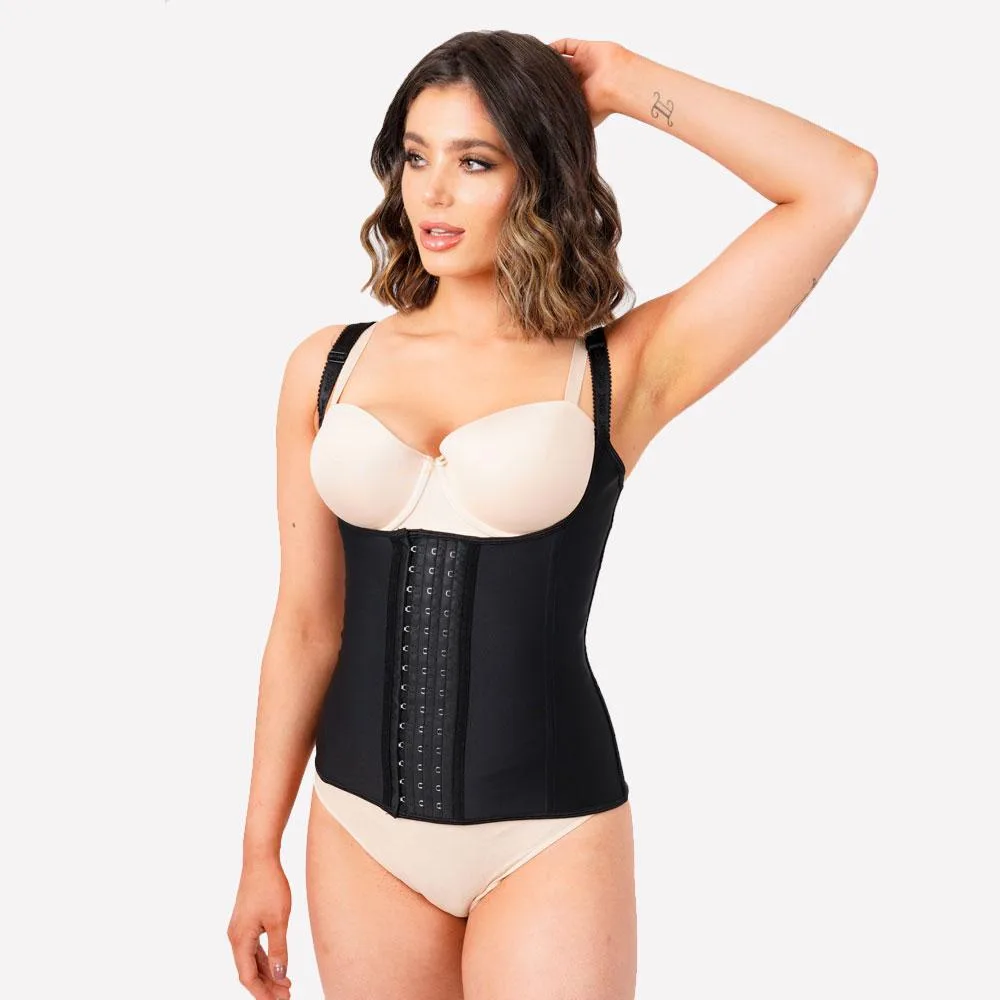
Latex Vest Waist Trainer
-
Latex Vest Waist Trainer: Has 3 rows of adjustable hook and eye closures and a 30cm length. You can customize the fit for different outfits, and the 30cm length covers the waist area without extending too low under most tops.