Quick answer
Choose plastic when you want a cheap, easy-to-wipe mask you can wear for a short party, photo booth, or group costume. Choose latex when you need the mask to move with your face, sit closer to your features, and survive more than one season. If you only have one night and a tight budget, plastic wins; if you care about comfort and long-term use, latex is worth the extra cost.
The real difference: how each material behaves on your face
Plastic masks are rigid shells. They hold a shape, sit away from your skin, and usually rely on a thin elastic band or a small eye-hole cutout. That stiffness is why they photograph so sharply: the mask keeps its expression no matter how you move. It is also why they can feel clammy and why the eye holes rarely line up perfectly with your own eyes.
Latex masks are flexible and stretchy. They pull over your head, conform to your face, and let you open your mouth or raise your eyebrows without the mask fighting back. The trade-off is that latex needs more care: it can tear if you yank it on, and it traps heat and sweat against your skin. Neither material is universally better; they solve different problems.
Comfort, visibility, and breathability
Plastic wins on airflow in one narrow sense: because the shell sits away from your face, air can move around the edges. But that same gap means the mask can shift, and the hard edges can press into your cheeks or nose. Visibility depends entirely on how the eye holes are cut, and there is no adjustment on most plastic masks.
Latex sits flush, so it moves with you and stays in place. That closeness improves visibility because the eye openings stay aligned with your eyes. The downside is heat: latex does not breathe, so you will sweat. If you run hot or plan to dance, plan a cooling break every 30 to 45 minutes. This is the single biggest reason people abandon latex masks mid-party.
Durability and storage: which lasts longer
Plastic masks are stiff but brittle. They survive a single event well, but they crack if you step on them, over-bend the band, or store them under heavy props. They also scratch, and scratches show under party lighting. Expect one good season unless you store them flat and alone.
Latex masks are elastic but vulnerable to oils, sunlight, and heat. With powder, a cool dark box, and gentle handling, latex can last several seasons. Without that care, it degrades, gets tacky, and tears at the eye or mouth openings. If you want a mask to last, latex rewards maintenance; plastic rewards careful packing.
Cost, group costumes, and photo booth use
Plastic is the budget and group-costume material. You can buy several masks for the price of one latex piece, which matters when you are outfitting a family, a team, or a party. Plastic also wipes clean with a damp cloth, so shared use between guests is practical.
Latex costs more but gives a single wearer a better fit and a more convincing look in close-up photos. For a photo booth, plastic masks read clearly from a distance and hold a pose; latex masks look more natural but need the wearer to commit to the character. If your event has a mask station that many people touch, plastic is easier to sanitize between users.
Latex vs plastic trade-offs at a glance
- Fit and movement: Latex stretches and moves with your face; plastic stays rigid and sits away from your skin. Choose latex for close-up photos and expressive characters; choose plastic for a fixed, readable look.
- Comfort and heat: Latex traps heat and sweat against your skin; plastic allows some airflow around the edges but can press on your cheeks and nose. If you overheat easily, plan breaks with either material, and test the mask for 10 minutes before the event.
- Durability and care: Plastic cracks and scratches but wipes clean; latex can last several seasons with powder and cool, dark storage but degrades with heat, sunlight, and oils. Store plastic flat and alone; store latex powdered and away from heat if you want it to survive to next year.
- Cost and group use: Plastic masks cost less and suit groups or shared photo booth props; latex costs more and suits one committed wearer. Set your budget per person before you choose, especially for family or team costumes.
How these masks fit the material choice
- Halloween Killer Kiss Gene Simmons Plastic Face Mask: Halloween Killer Kiss Gene Simmons Plastic Face Mask is a plastic face mask priced at USD 3.19, with a catalog comparison price of USD 4.99. A low-cost plastic option for a one-night rock costume or group theme where budget and easy cleanup matter more than a custom fit.
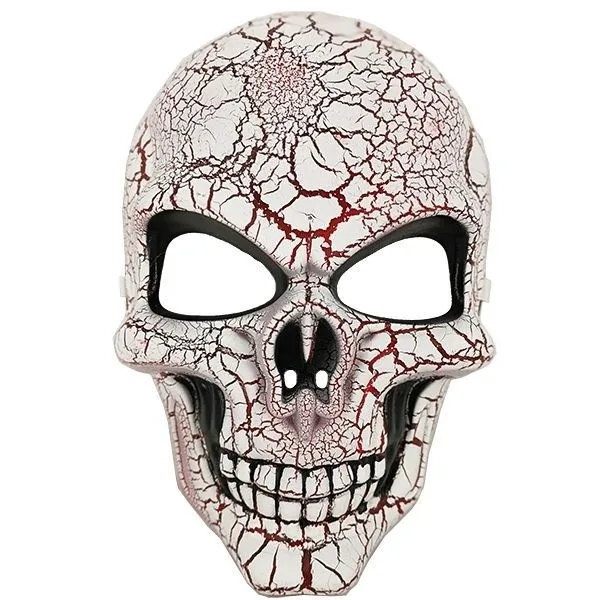
- Halloween Evil Demon Skeleton Face Mask: Halloween Evil Demon Skeleton Face Mask is a plastic face mask priced at USD 3.24, with a catalog comparison price of USD 4.99. Another budget plastic choice that suits a scary group costume or a photo booth prop you can wipe down between guests.
- Halloween Rotting Ghostly Zombie Face Mask: Halloween Rotting Ghostly Zombie Face Mask is priced at USD 7.70, with a catalog comparison price of USD 11.00, and the catalog describes vacant grey eyes and a mouth poised for its next victim. A higher-priced zombie mask for buyers who want a more detailed scary look and are willing to spend more for the character effect.
- Halloween Crazed Laughing Clown with Bulging Eyes Face Mask: Halloween Crazed Laughing Clown with Bulging Eyes Face Mask is priced at USD 4.82, with a catalog comparison price of USD 6.99. A mid-priced clown mask that sits between the cheapest plastic options and the zombie mask, useful when you want a strong expression without the top price.
Which material should you buy?
Best for
- One-night parties, group costumes, and photo booth props where budget and easy cleaning matter
- Buyers who want a rigid, clearly readable mask that holds a pose in photos
- Anyone outfitting several people and needing multiple masks at a low cost
Not for
- Wearers who need a close, flexible fit for long events or expressive characters
- Buyers who want a mask to last several seasons with proper care
- Anyone who overheats easily and cannot take cooling breaks