Two Introductions, Two Directions
Plus-Plus offers two Learn to Build sets that both promise a gentle start into creative construction. The Learn to Build Basic set is a broad, colorful introduction with 400 pieces and two baseplates. The Learn to Build Robots set is a more focused kit with 250 pieces, wheels, and hubs for building five specific robots. Your choice comes down to whether you want an open-ended sampler or a themed building project.
What Each Set Contains
-
Learn To Build - Basic: 400 pieces in 16 colors, 2 green baseplates, and a guide book. Suggested for ages 5+. The larger piece count and two baseplates make this set ideal for building both 2D mosaics and 3D structures like animals, people, and buildings.
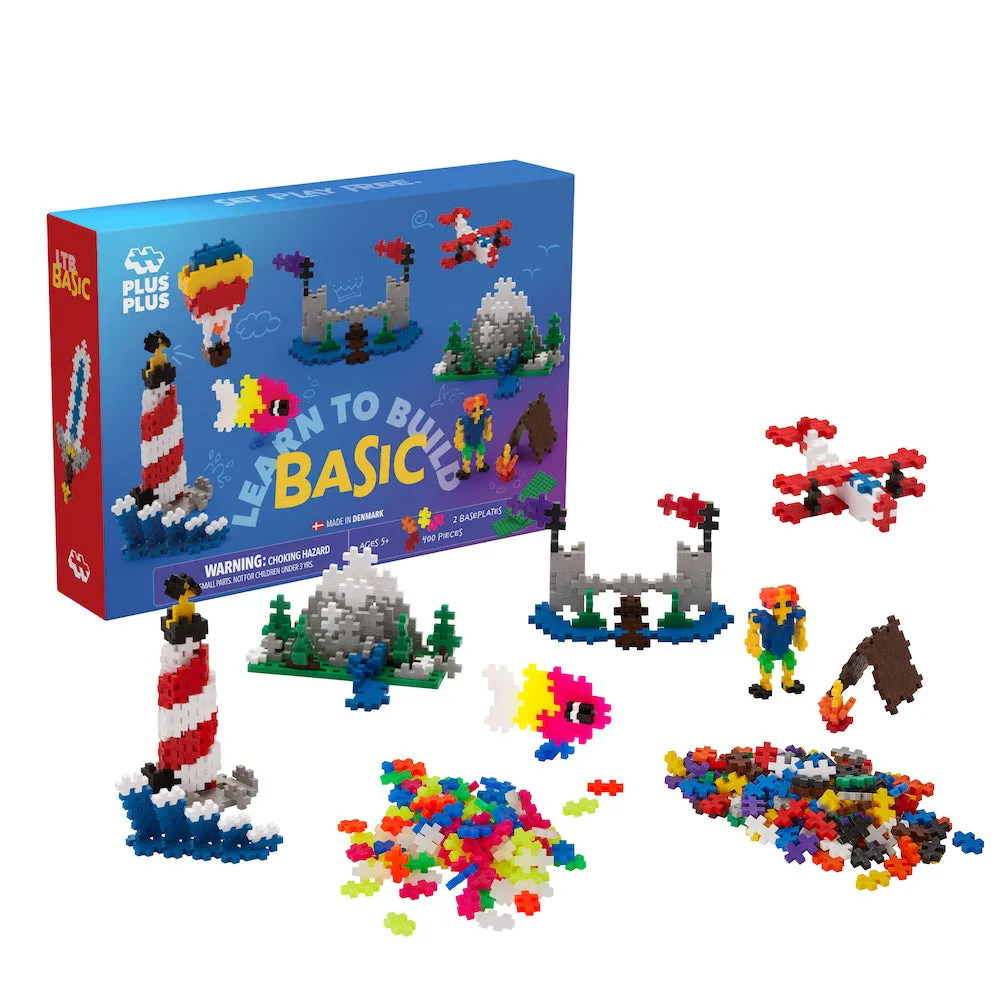
Learn To Build - Basic
-
Learn To Build - Robots: 250 pieces in 10 colors, 8 wheels, 33 hubs, 1 large hub, and a guide book. Suggested for ages 5+. The specialized wheel and hub parts allow builders to create robots with moving parts, a feature missing from the Basic set.
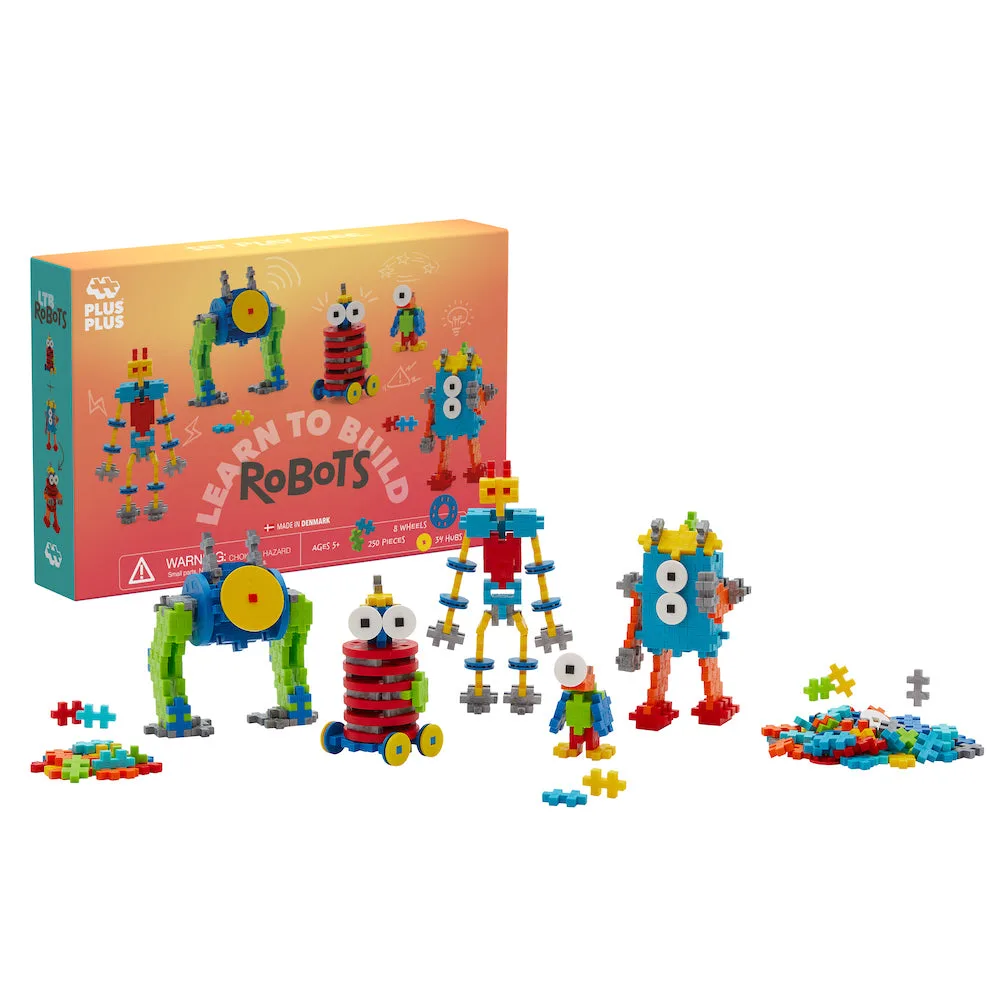
Learn To Build - Robots
Basic vs Robots at a Glance
- Piece Count: Basic: 400 pieces. Robots: 250 pieces. Basic gives you more raw material for open-ended play.
- Color Variety: Basic: 16 colors including neon and transparent. Robots: 10 colors. Basic offers a wider palette for creative builds.
- Special Parts: Robots includes wheels and hubs for movable builds. Basic has none, but includes two baseplates for stable structures.
- Guide Focus: Basic guides you through general 2D and 3D builds. Robots guides you through five specific robot designs, then encourages customization.
- Price: Both are priced for entry-level builders. Robots is the more affordable way to try the system.
How the Play Experience Differs
The Basic set is a classic starter kit. You follow the guide to make a few animals or buildings, then you're free to mix colors and invent your own scenes. The two baseplates help keep builds sturdy, which is helpful for younger builders or group play.
The Robots set is more structured. The guide shows you how to build five specific robots, and the wheels and hubs let you add movement. After that, you can swap arms, legs, and wheels to make your own creations. It's a great choice if your child is already interested in robots or machines.
Which One Should You Pick?
Choose the Learn to Build Basic set if you want a broad introduction with lots of pieces and colors, or if you're not sure what your child will enjoy building. It's the better value for open-ended play.
Choose the Learn to Build Robots set if your child is specifically into robots, vehicles, or moving builds. The wheels and hubs add a mechanical dimension that the Basic set doesn't offer, and the lower price makes it a low-risk test run.
Shared Quality and Materials
Both sets are made in Denmark at a 100% wind-powered factory. The pieces are made from recyclable polyethylene plastic and are BPA-free and phthalate-free. Each standard piece measures .75 x .5 in (20mm x 12mm). Both sets include a guide book and access to free PDF instructions and a mobile app for additional build ideas.
A Note on What's Not Confirmed
The supplied information does not include a detailed piece-by-piece inventory for either set, so exact color counts or the number of each piece type are not available. Both sets are suggested for ages 5 and up, but no specific safety or care instructions beyond the material safety statements are provided. If you need precise part lists or storage advice, you may want to check the product packaging or contact the manufacturer directly.