Leather vs cotton: a durability question with a practical answer
When you need to replace shoelaces, the choice often comes down to leather or cotton. Both close your shoes, but they behave very differently over time. Leather laces, especially square-cut ones, are built to last through years of use and can be trimmed to fit exactly. Cotton laces are softer and cheaper, but they fray, stretch, and lose their shape faster. Here is what the evidence says about strength and longevity.
How leather laces hold up
Square leather laces are cut flat rather than round, so they sit flush against the eyelets and keep their shape even after repeated tightening. The leather darkens and softens with wear, but it does not snap like a cotton cord under tension. Because leather laces can be trimmed to the exact length for your shoes, there is no excess to catch or fray. The supplied information confirms that these laces are meant to be trimmed and re-tied for as long as the shoes last.
- Shape retention: Square-cut leather laces lie flat against the eyelets and hold their shape, unlike round cotton laces that can roll or bunch.
- Adjustable length: You can trim leather laces to the perfect length for any shoe, eliminating loose ends that wear out.
- Aging gracefully: Leather develops a patina and becomes more supple, but does not lose structural integrity the way cotton fibers do.
Where cotton laces fall short
Cotton shoelaces are widely available and inexpensive, but they have a shorter lifespan. The fibers fray at the tips, stretch unevenly, and can snap when pulled tight over eyelets. Unlike leather, cotton cannot be trimmed to size without unraveling unless you seal the ends. For daily wear on boots or sneakers, cotton laces often need replacing every few months, while a pair of leather laces can last years.
- Fraying and snapping: Cotton fibers break down from friction against eyelets, leading to frayed ends and eventual breakage.
- Stretching: Cotton laces stretch over time, which means you have to retie them more often to maintain a snug fit.
- No trimming option: Cotton laces come in fixed lengths; cutting them causes unraveling unless you add aglets or seal the ends.
Evidence from Buttero leather laces
-
Leather Laces - Dark Brown: Square leather laces in dark brown, cut to be trimmed and re-tied for as long as the shoes last. Cut square rather than round, so they sit flatter against the eyelets and hold their shape over time. The square cut and trim-to-fit design directly address the weaknesses of cotton laces: they stay flat, hold shape, and can be adjusted to avoid excess wear.
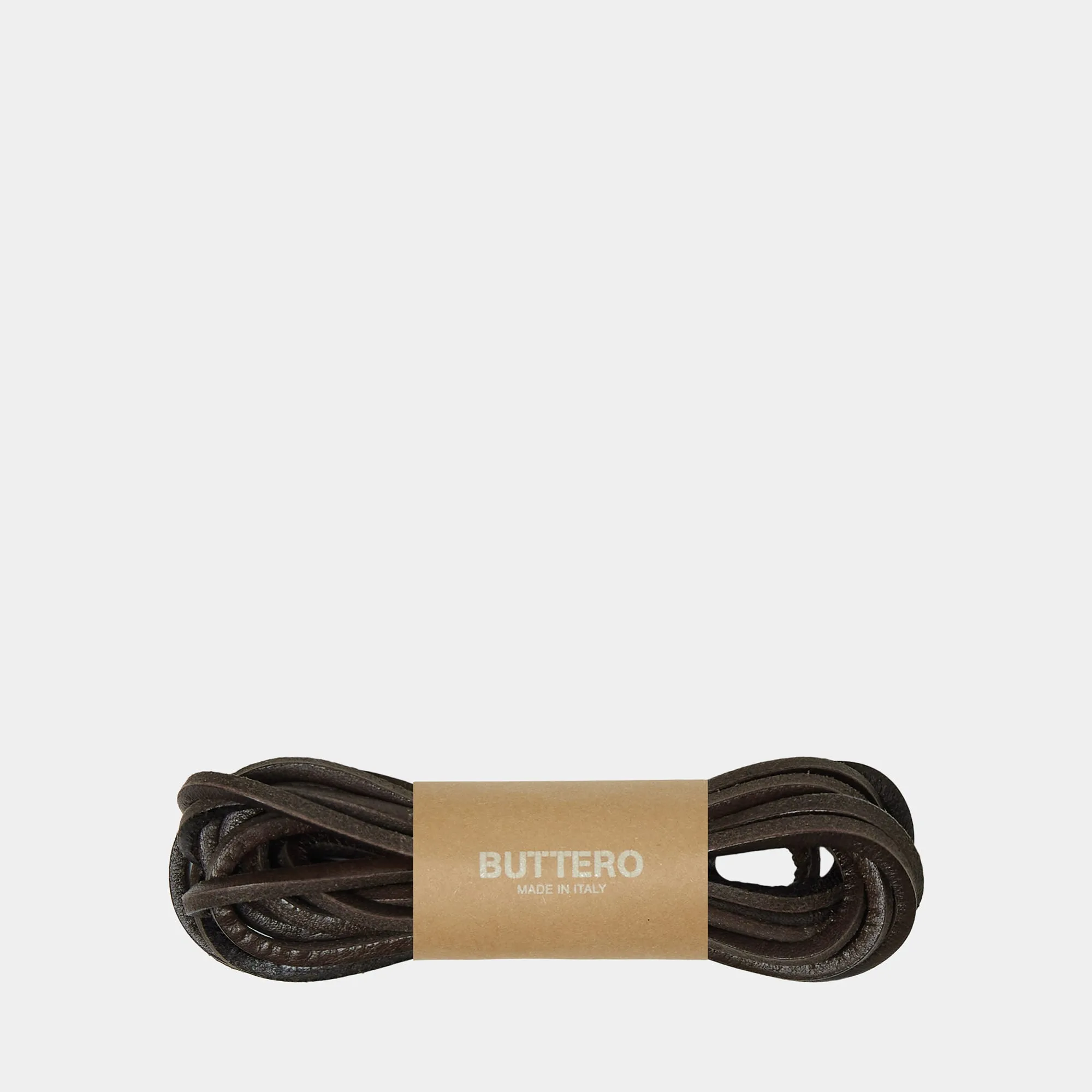
Leather Laces - Dark Brown
-
Leather Laces - Natural: A pair of square leather laces in natural, built to age right alongside the boots or sneakers they close. Length can be adjusted simply by trimming them down. Leather laces age with the shoe, unlike cotton which degrades faster. The ability to trim means you get a custom fit that reduces stress on the lace.
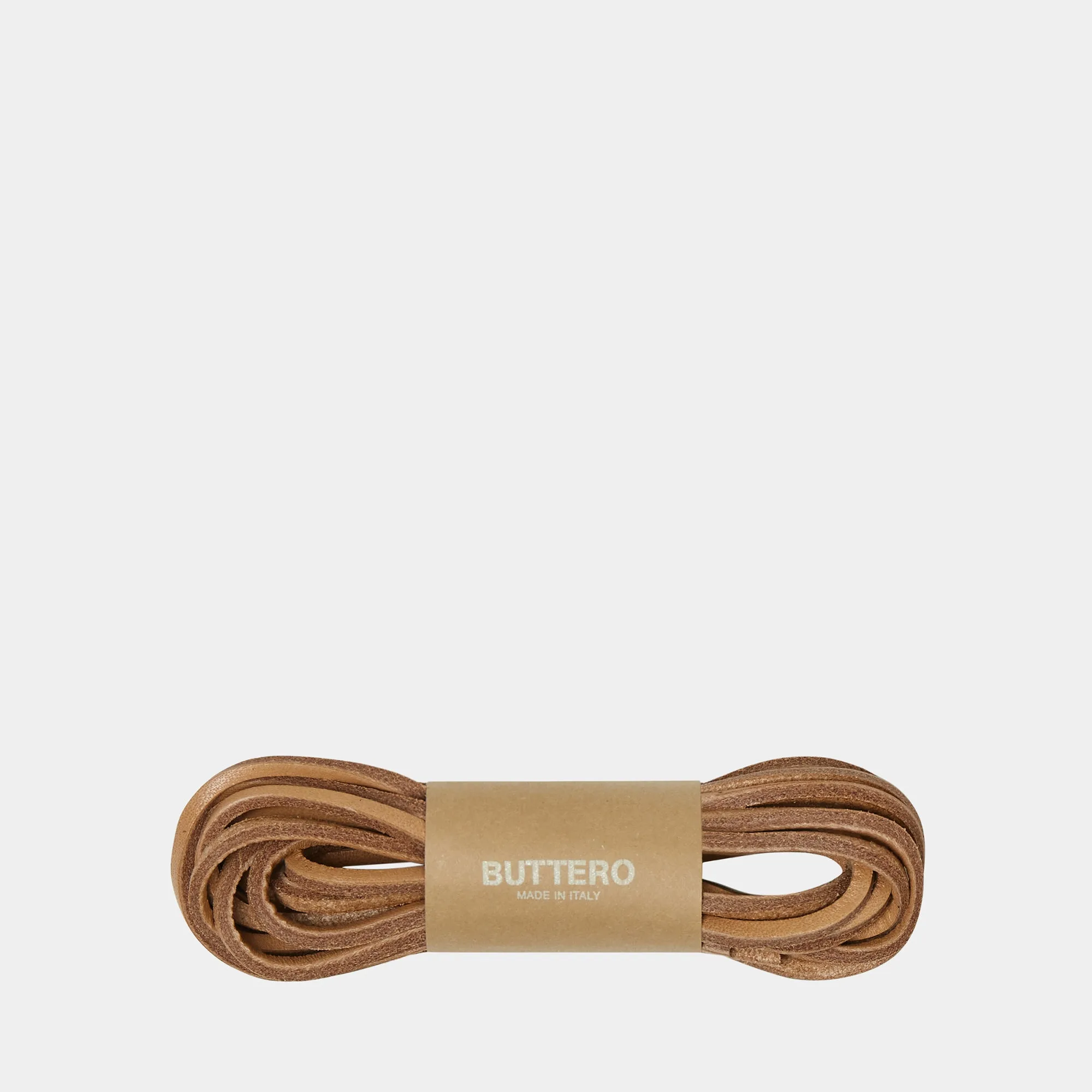
Leather Laces - Natural
When cotton still makes sense
Cotton laces are lighter and cheaper, which can be useful for casual sneakers you rotate often or for children's shoes that are outgrown quickly. They also come in more colors and patterns. But if you want a single pair of laces that outlasts the shoe and does not need frequent replacement, leather is the stronger choice. The square-cut leather laces from Buttero offer a durability that cotton cannot match, especially for boots and derby shoes that see regular wear.
Choosing the right length for your shoes
Leather laces are available in two lengths: 130 cm for sneakers and derby shoes, and 160 cm for lace-up ankle boots and hiking boots. Measure your current laces or the number of eyelet pairs to pick the right size. Because you can trim leather laces, it is better to go slightly longer than too short.