Quick answer
Make the Leather Card Holder Kit first if you want the lowest-cost, lowest-risk introduction to setting brass rivets; choose the Leather Wallet Kit first if you want a more functional everyday piece and don't mind a slightly higher material cost.
What actually differs between the two kits
The Leather Wallet Kit builds a four-card-slot wallet with two cash pockets and a magnetic snap closure, while the Leather Card Holder Kit makes a minimalist holder with two slots for cards and cash. Both use vegetable-tanned leather and brass rivets, and both require the same basic tools: a metal dot anvil, a hammer, and a hard surface.
The wallet adds a magnetic snap, which introduces one more hardware step beyond rivets. If you have never set a snap, the card holder lets you practice rivet setting without that extra closure. The wallet's four slots and cash pockets also mean more leather layers to align, so it takes a little more patience at the assembly stage.
Leather character and patina apply to both
Both kits use veg-tanned leather that will darken and develop a worn-in patina over time. Natural inconsistencies are part of the material, not a defect. That means neither kit is the right choice if you expect perfectly uniform color or grain out of the box. The trade-off is that you get a piece that ages uniquely to you.
Cost and quantity: one wallet or several card holders
At catalog prices, the Leather Wallet Kit is listed at USD 46.15 (compared to USD 65.00), while the Leather Card Holder Kit - Wholesale is listed at USD 11.55 (compared to USD 17.50). The card holder's wholesale listing makes it a low-cost way to try the craft or to make several gifts, but it is a single minimalist design. The wallet costs more upfront and gives you a more complete everyday item with more card and cash storage.
Trade-offs to weigh before you choose
- Hardware steps: The card holder requires only brass rivets; the wallet adds a magnetic snap closure. If you want to focus on one hardware skill first, start with the card holder. If you are ready to practice both rivets and a snap, the wallet gives you that variety. Check that you have a metal dot anvil, a hammer, and a hard surface before starting either kit.
- Assembly complexity: The wallet's four card slots and two cash pockets mean more leather layers to line up than the card holder's two slots. Choose the card holder if you want a shorter, simpler assembly; choose the wallet if you are comfortable taking a little more time to align layers.
- Cost and output: The card holder is listed at USD 11.55 (compared to USD 17.50), while the wallet is listed at USD 46.15 (compared to USD 65.00). Pick the card holder for a low-cost first attempt or multiple small gifts; pick the wallet when you want one more substantial finished piece.
Product facts at a glance
-
Leather Wallet Kit: Features brass rivets, four card slots, two cash pockets, and a magnetic snap closure. The extra snap and more slots make it a more involved build than a simple riveted holder, but you finish with a fuller everyday wallet.
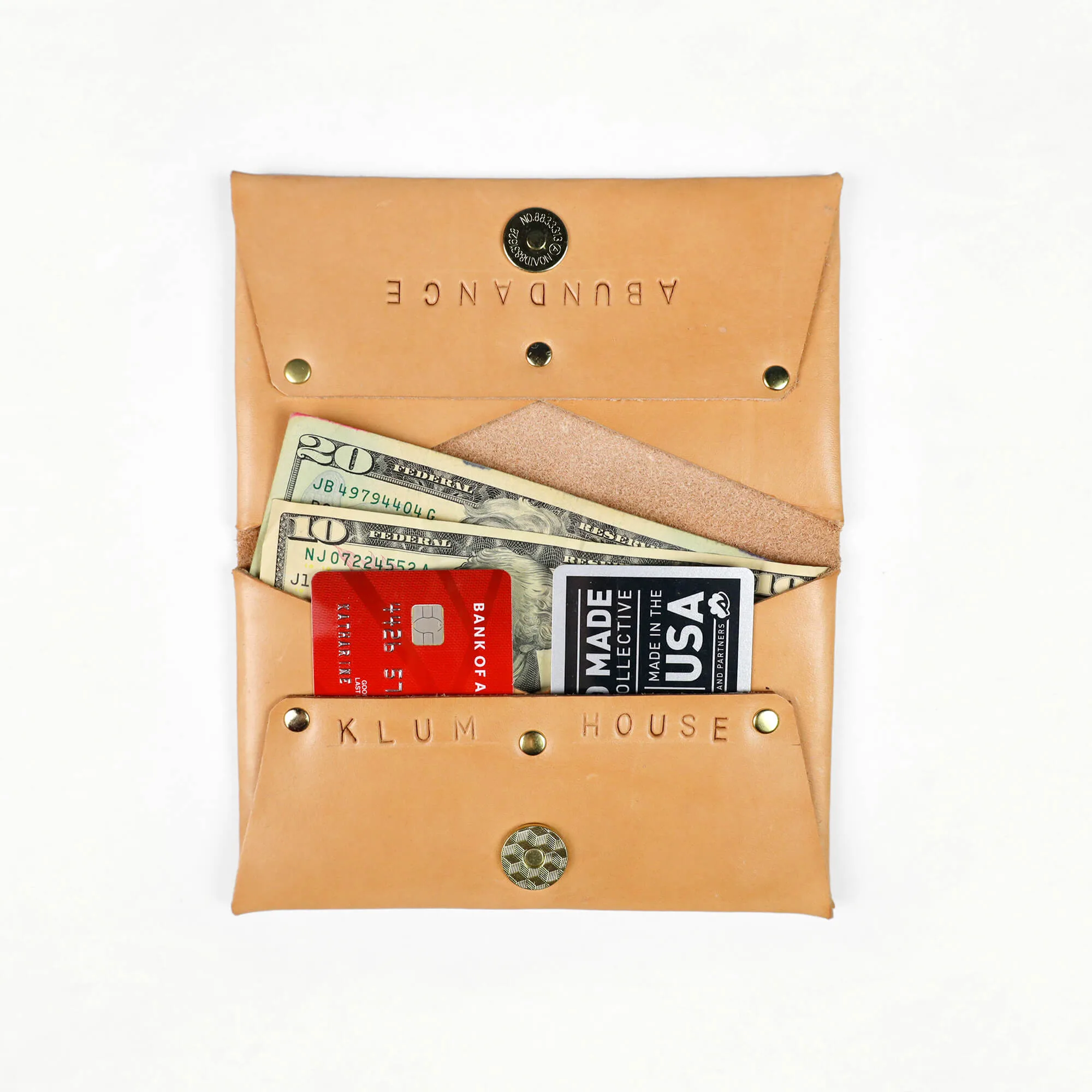
Leather Wallet Kit
-
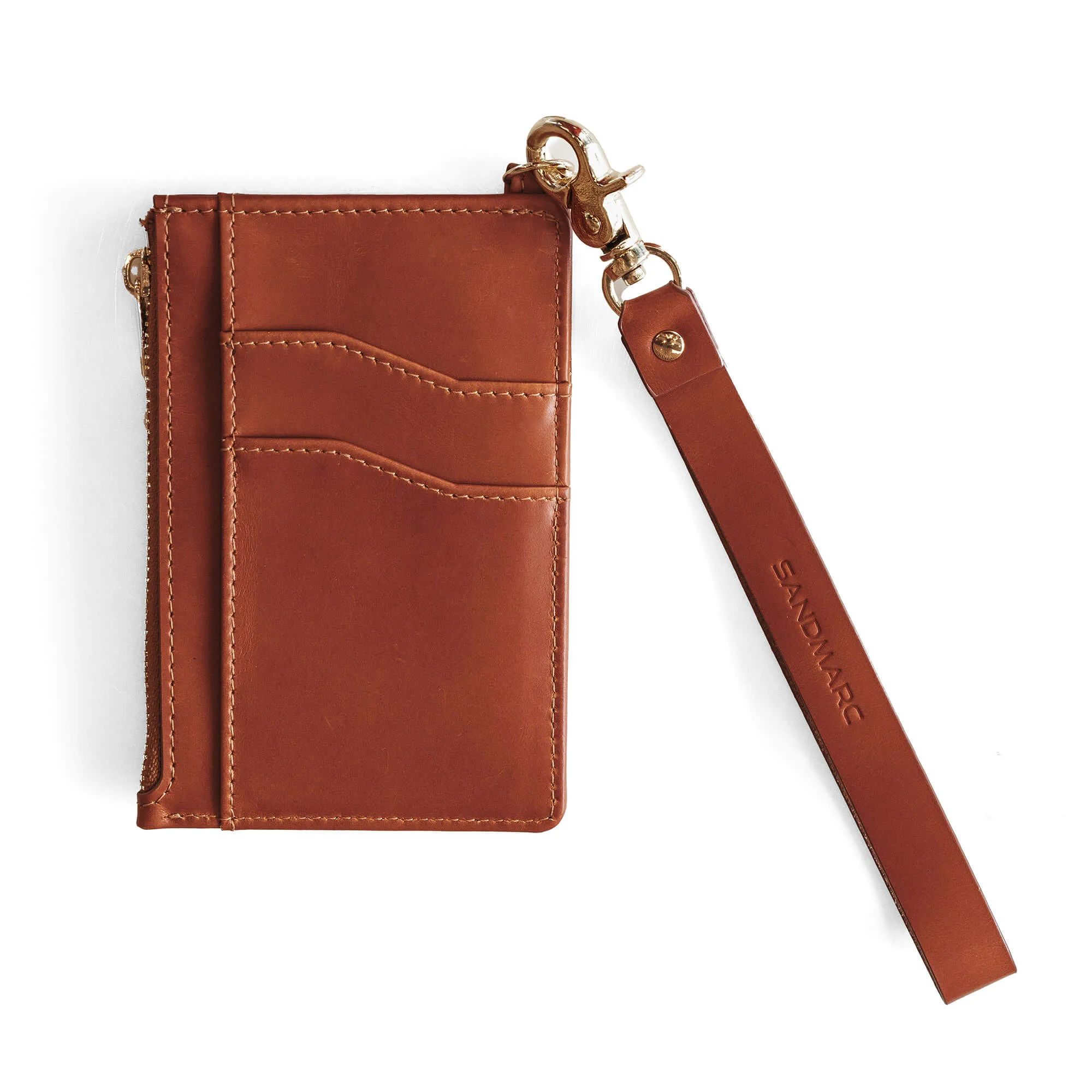
Leather Card Holder Kit - Wholesale: Minimalist design with vegetable-tanned leather, brass rivets, and two slots for cards and cash. Fewer components and a lower catalog price make it a practical first project for testing your rivet-setting setup.
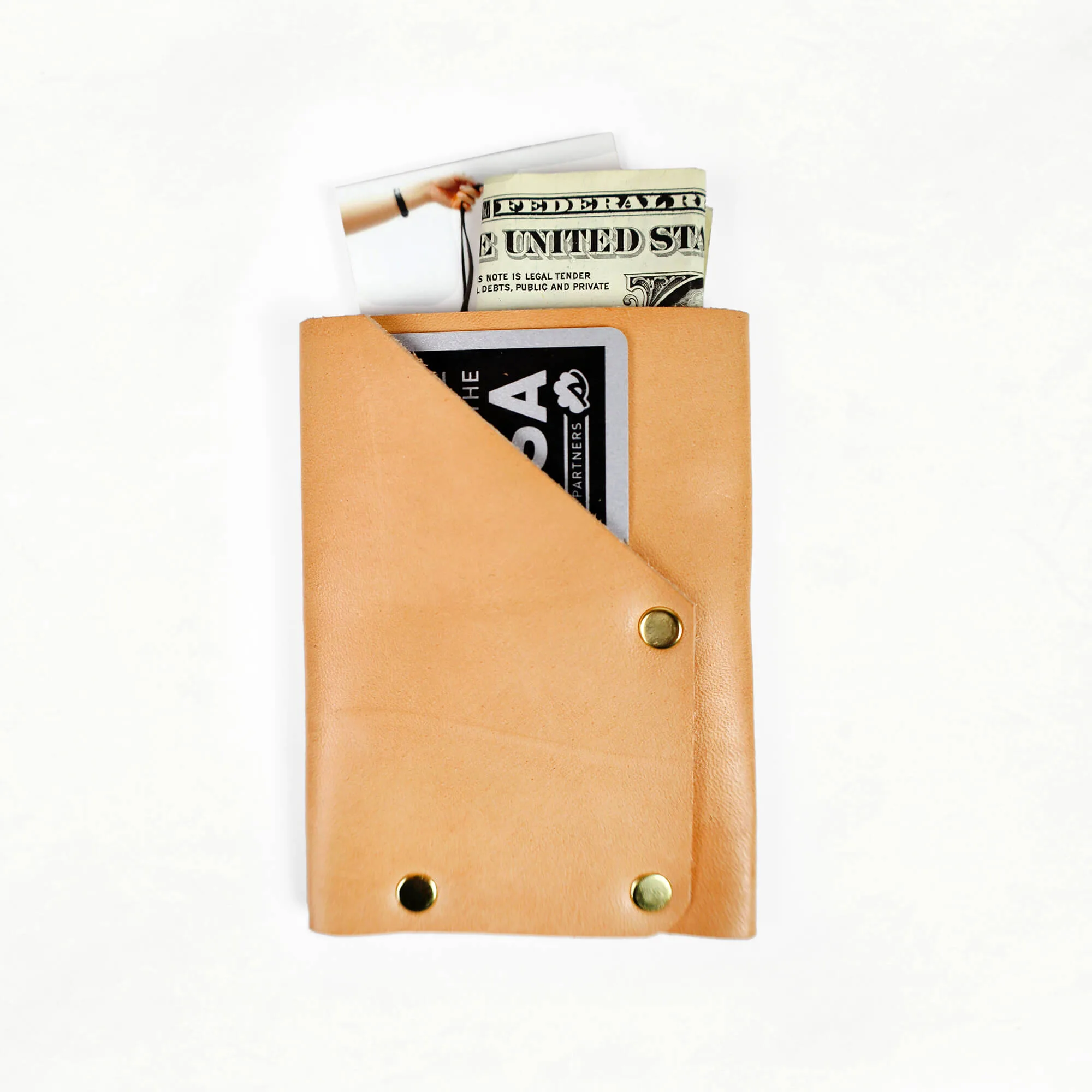
Leather Card Holder Kit - Wholesale
Which kit fits your first project
Best for
- A first-time leather crafter who wants the lowest-cost way to practice setting brass rivets
- Someone making several small gifts or testing a new hobby without a large upfront spend
Not for
- Crafters who want a wallet with card slots, cash pockets, and a magnetic snap in one project
- Anyone looking for a project with more than two card/cash slots