Quick answer
If you need focused, adjustable light for detailed tasks, a task lamp is your best bet. If you want ambient lighting with dimming flexibility, a desk lamp might suffice. For most workstations, a task lamp like the Humanscale https://snuglivingcoai.shop/products/task-light-275673Task Light offers superior control and eye comfort.
Choosing between an LED desk lamp and an LED task lamp can feel confusing, but the distinction matters for your comfort and productivity. Desk lamps typically provide general illumination, while task lamps are designed to concentrate light on a specific area, reducing glare and eye strain during detailed work.
In this comparison, we’ll break down the key differences, highlight trade-offs, and help you decide which lighting solution fits your workspace. We’ll also look at real product examples to ground the discussion.
What is an LED desk lamp?
An LED desk lamp is a versatile light source designed to illuminate a broader area of your desk. It often features an adjustable arm or head, but its primary purpose is ambient lighting. This makes it ideal for reading, writing, or general computer work where you don’t need pinpoint precision.
Desk lamps may come with dimming options and color temperature controls, but they typically spread light more evenly. This can reduce harsh shadows but may not provide the intense, focused beam required for intricate tasks like soldering or detailed drafting.
- Good for general illumination and reducing overall eye strain.
- May not offer the precision needed for close-up work.
What is an LED task lamp?
An LED task lamp is engineered to deliver concentrated light exactly where you need it. With features like adjustable arms, heads, and multiple dimming steps, task lamps excel at illuminating a specific work area without spilling light across the room. This reduces glare on screens and minimizes eye fatigue during prolonged focus.
Task lamps often include advanced features such as heat-shedding designs and step-dimming controls, allowing you to fine-tune brightness for the perfect balance. They are a favorite among professionals who spend hours at a desk, from designers to engineers.
- Ideal for focused work like reading small print, crafting, or detailed assembly.
- Provides better control over light direction and intensity.
Key differences at a glance
The main difference lies in the beam spread and adjustability. Desk lamps typically offer a wider, softer light, while task lamps provide a narrower, more intense beam. Task lamps also tend to have more articulation points, letting you position the light precisely.
Another factor is dimming. Many task lamps offer multi-step dimmers, such as a 7-step control, which gives you fine-tuning capability that standard desk lamps may lack. This is crucial for adapting to different times of day and tasks.
- Consider the size of your workspace and the type of tasks you perform.
- Think about whether you need adjustable color temperature or just brightness.
Trade-offs to consider
- Light coverage: Desk lamps offer broad illumination, but task lamps focus light on a specific area. If you work on large blueprints, a desk lamp might be better; for detailed electronics work, a task lamp wins. Match the beam spread to your primary task.
- Adjustability: Task lamps typically have more joints and swivels, letting you direct light precisely. Desk lamps may have a simpler design with fewer adjustment points. If you need to reposition light frequently, choose a task lamp.
- Dimming control: Many task lamps offer step-dimming (like 7 steps) for fine control. Desk lamps may have only a simple on/off or a few brightness levels. If you work in varying light conditions, step-dimming is a valuable feature.
Real product examples
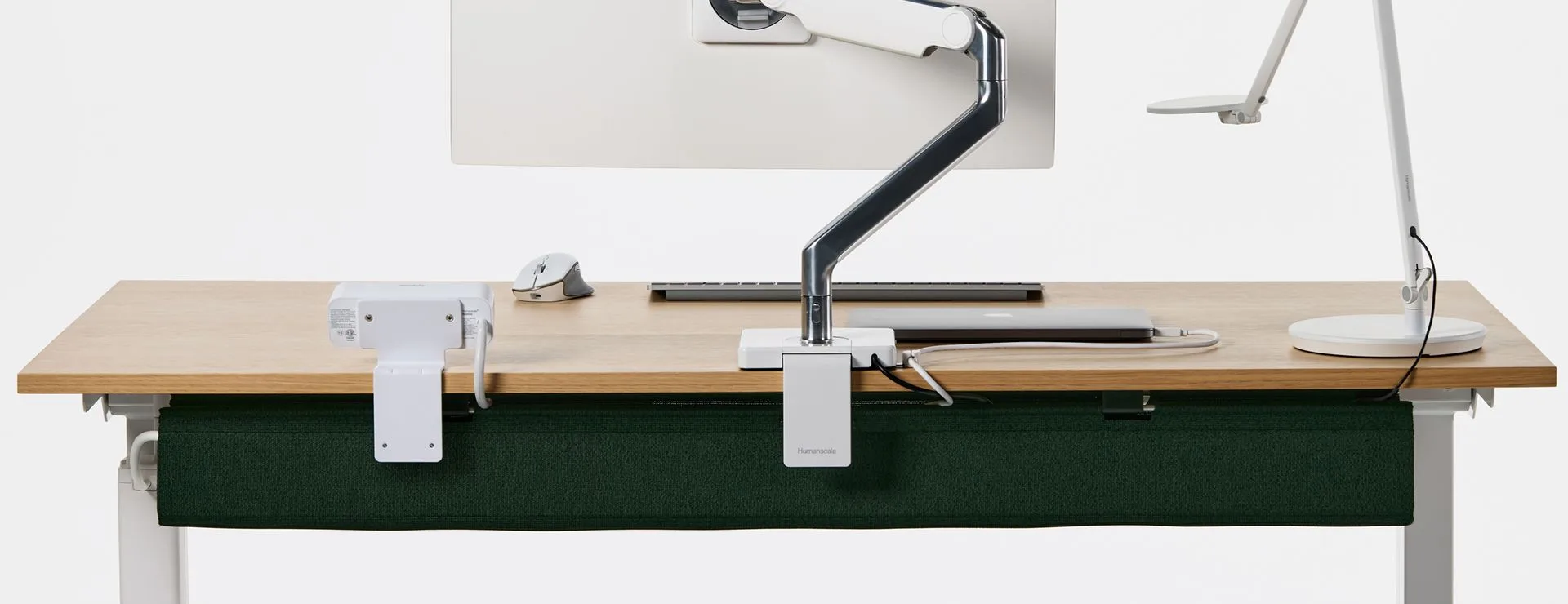
- Task Light: Humanscale's Element Classic and Element 790 are ergonomic LED desk lamps with a unique heat shedding design and 7-step dimmer control for optimal lighting. The 7-step dimmer lets you fine-tune brightness to match your task and time of day, while the heat-shedding design keeps the lamp cool even during extended use—a practical benefit for long work sessions.
- Monitor Arm Desk Mount: Humanscale's M/Flex multi-monitor arm system provides unprecedented flexibility and ergonomic performance for today's agile work environment. While not a light, this monitor arm helps you position your screen at the correct height and distance, complementing your task lighting to reduce glare and eye strain.
Which should you choose?
Best for
- People who do detailed, close-up work like reading, drawing, or crafting and need focused light.
- Professionals who spend long hours at a desk and want precise control over brightness to reduce eye strain.
Not for
- Those who need general room illumination and rarely do precision tasks—a desk lamp may suffice.
- Very tight budgets, as task lamps often come with a higher price tag.
Ultimately, the choice between an LED desk lamp and a task lamp depends on your specific work habits. If you prioritize precision and adjustable lighting, a task lamp is a worthwhile investment. For broader, ambient light, a desk lamp might be all you need. Assess your tasks and workspace to make the right call.