Tube Light vs Panel: The Core Difference
When choosing between an LED tube light and a panel light for video, the main difference comes down to shape and light spread. Tube lights are long and narrow, producing a linear beam that's great for creative accents, edge lighting, or filling tight spaces. Panels are broader and square, offering a wide, even wash of light that's ideal for key lighting or illuminating larger areas.
Your choice depends on the look you want and the portability you need. Tube lights are often lighter and easier to hold for run-and-gun shooting, while panels typically offer more raw output and larger diffusion options.
Portability and Handling
For handheld or on-the-go video work, a tube light like the ULANZI VL119 is a strong contender. It weighs just 205g (0.45 lb) and measures 50 cm long, making it easy to grip for extended periods. Its slim profile fits into bags and tight setups where a panel might be bulky.
Panel lights, by comparison, are often heavier and require a stand or mounting bracket for comfortable use. If you frequently shoot handheld or in cramped spaces, a tube light offers more flexibility.
ULANZI VL119 at a Glance
-
ULANZI VL119 Handheld Light LED Video Tube Light: Weighs 205g (0.45 lb) and measures 50 cm long, 3.7 cm wide. Its lightweight, slender design makes it easy to hold for long takes or position in tight spots.
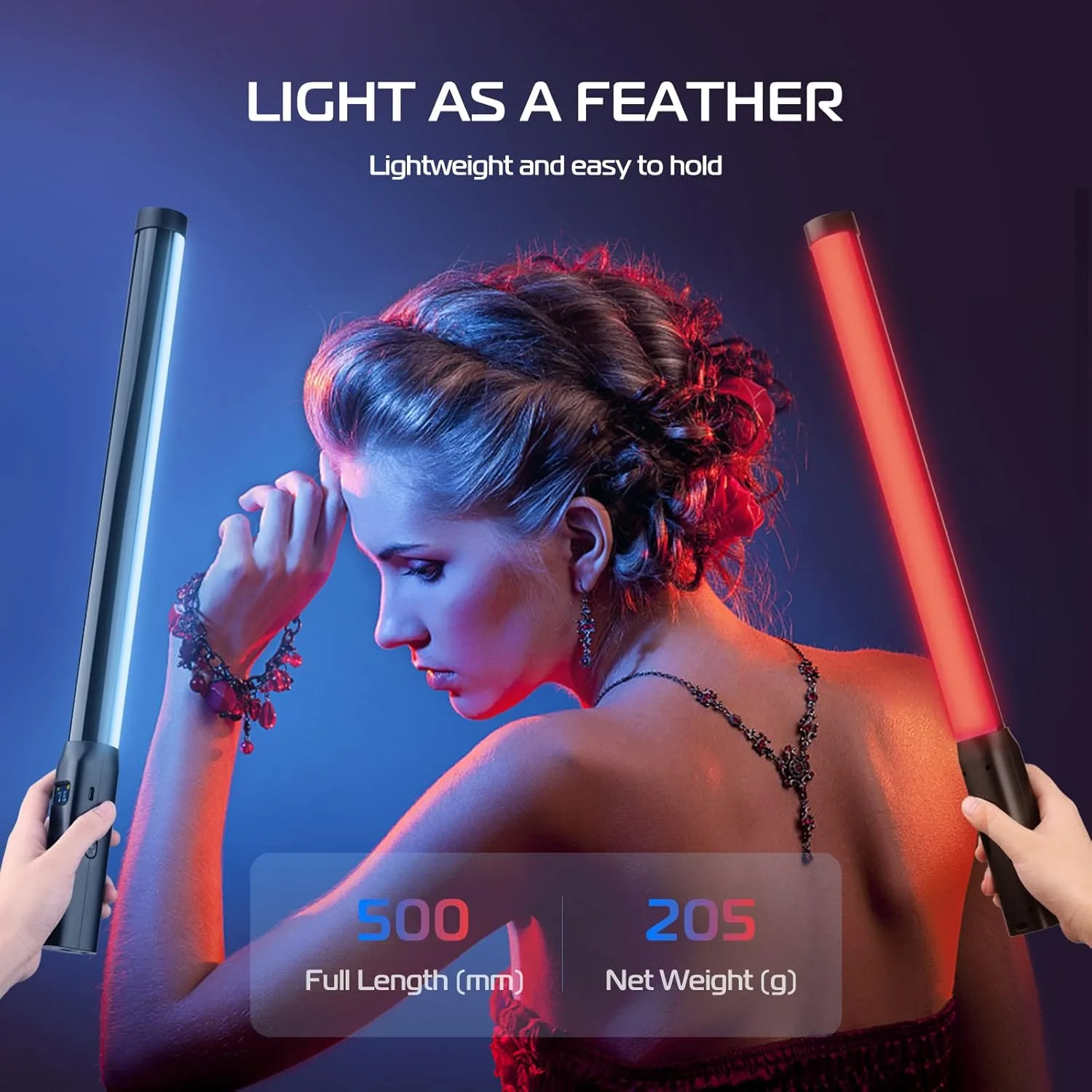
ULANZI VL119 Handheld Light LED Video Tube Light
-
ULANZI VL119 Handheld Light LED Video Tube Light: Features 114 high CRI95+ LED beads with a 120° illumination angle and brightness up to 395 LUX at 0.3 m. Provides natural, high-quality light with good coverage for close-up or subject-focused video.
-
ULANZI VL119 Handheld Light LED Video Tube Light: Offers RGB, CCT, and Scene modes with 20 lighting effects, plus adjustable hue (0°–360°), brightness (0%–100%), and color temperature (2500K–9000K). Gives you creative control over color and mood without needing gels or additional filters.
-
ULANZI VL119 Handheld Light LED Video Tube Light: Powered by a 2600 mAh rechargeable battery, lasting up to 70 minutes at max power; recharges in 2 hours via USB-C. Sufficient for short shoots or as a fill light; can be used while charging for extended sessions.
Light Quality and Versatility
Both tube and panel lights can produce high CRI values, but tube lights often have a more focused linear spread that works well for rim lighting or highlighting textures. The ULANZI VL119's 120° illumination angle and adjustable color temperature (2500K–9000K) let you match ambient light or create warm or cool accents.
Panel lights typically offer a wider, softer beam that's better for key lighting a subject's face or evenly lighting a background. They also tend to have higher maximum brightness, though tube lights like the VL119 can still reach 395 LUX at close range—enough for many indoor or interview setups.
For creative video, the VL119's 20 lighting effects and RGB mode add flair that a standard panel may lack. If you need both practical and artistic lighting, a tube light offers more built-in options.
Tube Light vs Panel: Quick Comparison
- Best for: Tube: handheld, creative, rim lighting, tight spaces. Panel: key lighting, wide coverage, studio setups.
- Portability: Tube: lighter (e.g., 205g), easy to hold and pack. Panel: heavier, usually needs a stand.
- Light spread: Tube: linear, directional. Panel: broad, even.
- Color control: Tube: often includes RGB and effects (e.g., VL119). Panel: usually CCT only or requires accessories.
- Battery life: Tube: moderate (e.g., 70 min at max). Panel: varies, often longer but heavier batteries.
Which Should You Choose?
If you shoot handheld vlogs, interviews in tight spaces, or want creative color effects, a tube light like the ULANZI VL119 is a practical, lightweight choice. Its RGB modes and effects add versatility without extra gear.
If you need a strong, even key light for studio or controlled environments, a panel light's larger surface and higher output may serve you better. Consider your typical shooting scenario: tube lights excel in mobility and creativity, while panels dominate in raw illumination and softness.