Quick Answer
For most left-handed groomers, the key is to choose scissors with blades that mirror right-handed models: curved blades for shaping rounded areas, thinning blades for reducing bulk, and straight blades for precise cuts. Focus on 440C stainless steel for durability and a handle design that feels comfortable in your left hand.
Blade Type: Curved, Thinning, or Straight?
The blade shape determines what the scissors do best. Curved blades are ideal for shaping and contouring rounded areas like the face, paws, and tail. Thinning scissors have teeth that reduce bulk and soften harsh lines, perfect for thick or dense coats. Straight blades are for precise, straight cuts, but they are not covered in this guide. Choose based on the coat type and the grooming tasks you do most often.
Handle Design and Ergonomics
Left-handed scissors have handles that are shaped to fit the left hand, with the thumb ring positioned for a natural grip. An ergonomic handle reduces hand fatigue during long grooming sessions, which is especially important if you groom multiple pets or do professional work. Look for handles that feel balanced and allow a relaxed grip.
Steel Quality and Durability
High-quality steel, like 440C stainless steel, holds a sharp edge longer and resists corrosion. This means less frequent sharpening and a longer tool life. While cheaper scissors may save money upfront, they often dull quickly and need replacement, making quality steel a better long-term investment.
Decision Rules for Choosing Left-Handed Scissors
- Start with the coat type: If your pet has a thick, dense coat, choose thinning scissors to reduce bulk. If you need to shape rounded areas, choose curved scissors. For straight cuts, look for straight scissors (not covered here). Match the blade type to your primary grooming task.
- Check the handle orientation: Make sure the scissors are specifically designed for left-handed use. The thumb ring should be on the side that feels natural for your left hand. Try holding the scissors to see if the grip is comfortable. Comfort is key to avoiding hand fatigue.
- Look for 440C stainless steel: This steel grade offers a good balance of sharpness and durability. It holds an edge longer and resists rust, which means you won't need to sharpen as often. Investing in quality steel pays off over time.
- Consider the blade length: Longer blades cover more surface area, which can speed up grooming, but they may be harder to control in tight areas. Shorter blades offer more precision. Choose a length that matches your comfort and the size of the areas you groom. Test different lengths if possible to find what feels best.
Products to Consider
-
Premium Curved Left-Handed Pet Grooming Scissors: Premium Curved Left-Handed Pet Grooming Scissors feature 440C stainless steel and a curved blade design ideal for shaping and contouring rounded areas. This is a great choice for groomers who need precision when trimming around the face, paws, and tail.
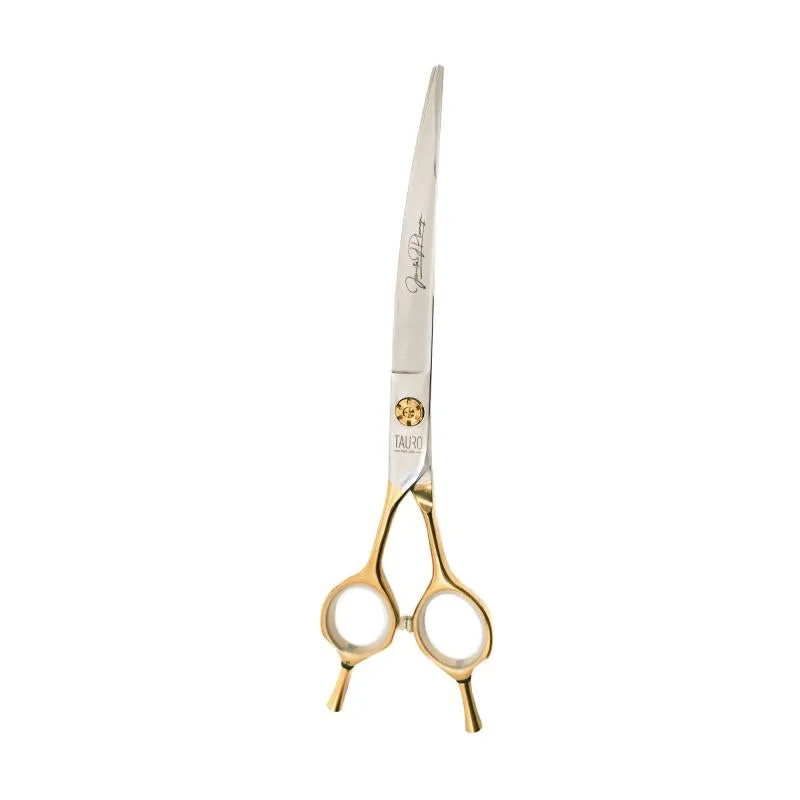
Premium Curved Left-Handed Pet Grooming Scissors
-
Ergonomic 7” Left-Handed Thinning Scissors – Razor Sharp 440C Steel: Ergonomic 7” Left-Handed Thinning Scissors have 56 precision-cut teeth to reduce bulk and soften harsh lines, especially on dense coats. If your pet has a thick coat, these thinning shears help create a natural, fluffy finish without leaving scissor marks.
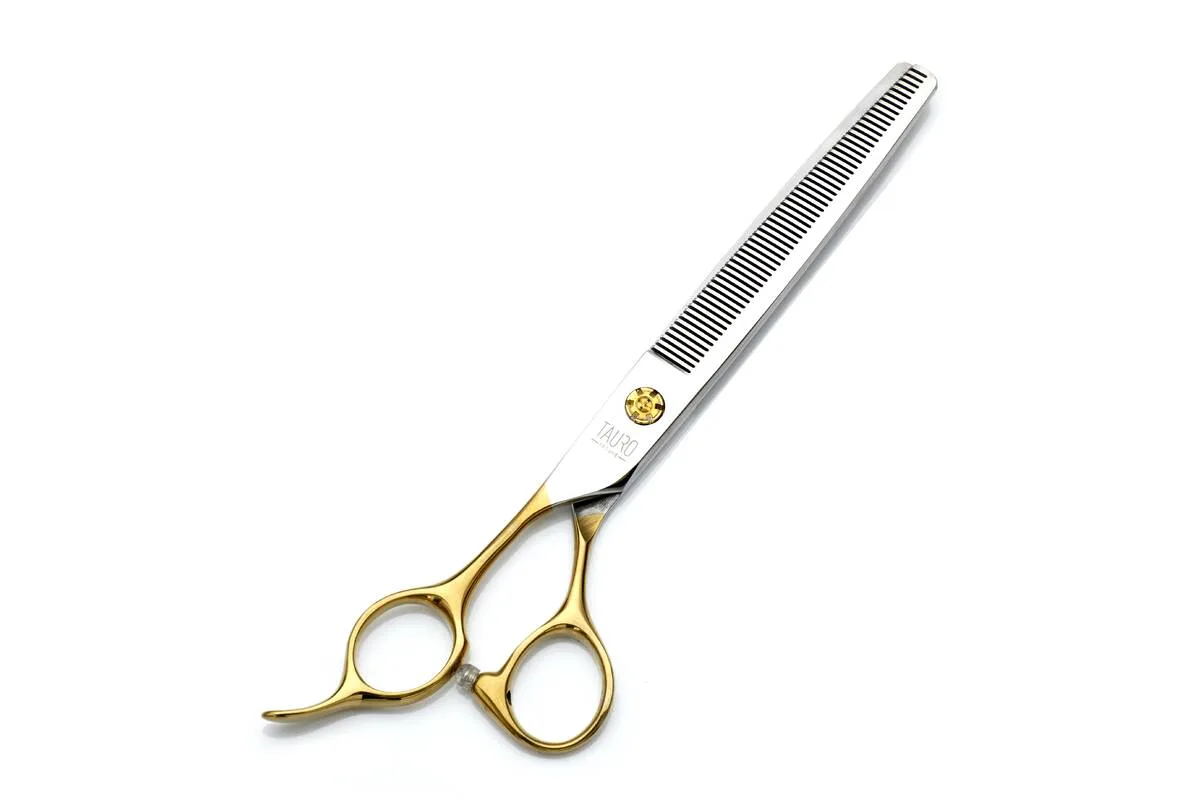
Ergonomic 7” Left-Handed Thinning Scissors – Razor Sharp 440C Steel
Who Should Choose What
Best for
- Groomers who need to shape rounded areas and want precision – choose curved left-handed scissors.
- Owners of pets with thick or dense coats – choose thinning scissors to reduce bulk and soften lines.
Not for
- Groomers who primarily make straight cuts – consider straight scissors instead.
- Those who prefer a universal (ambidextrous) design – left-handed scissors are specifically shaped for left-hand use.