What the LEIT 02 record actually tells you
The LEIT 02 is part of the Leit Collection, which explores stepped geometry through layered planes and horizontal seams. That design language is the only technical detail the supplied catalog confirms. It does not list bulb type, wattage, voltage, dimming compatibility, or mounting hardware. So when you troubleshoot dim light, flicker, or bulb fit, you are working from a partial evidence base, not a full manufacturer spec sheet.
That matters because the most common causes of sconce flicker and dim output live in the bulb, the dimmer, or the wiring, not in the fixture's visual design. Without confirmed bulb or dimmer specs, the honest approach is to verify compatibility before you buy and to test methodically after installation.
Confirmed LEIT 02 design facts
-
LEIT 02: The Leit Collection explores stepped geometry as an architectural language, using repetition and segmentation to articulate volume and depth. This is the only design description the catalog supplies. It tells you the fixture is meant to read as architecture, but it does not confirm electrical or bulb specifications.
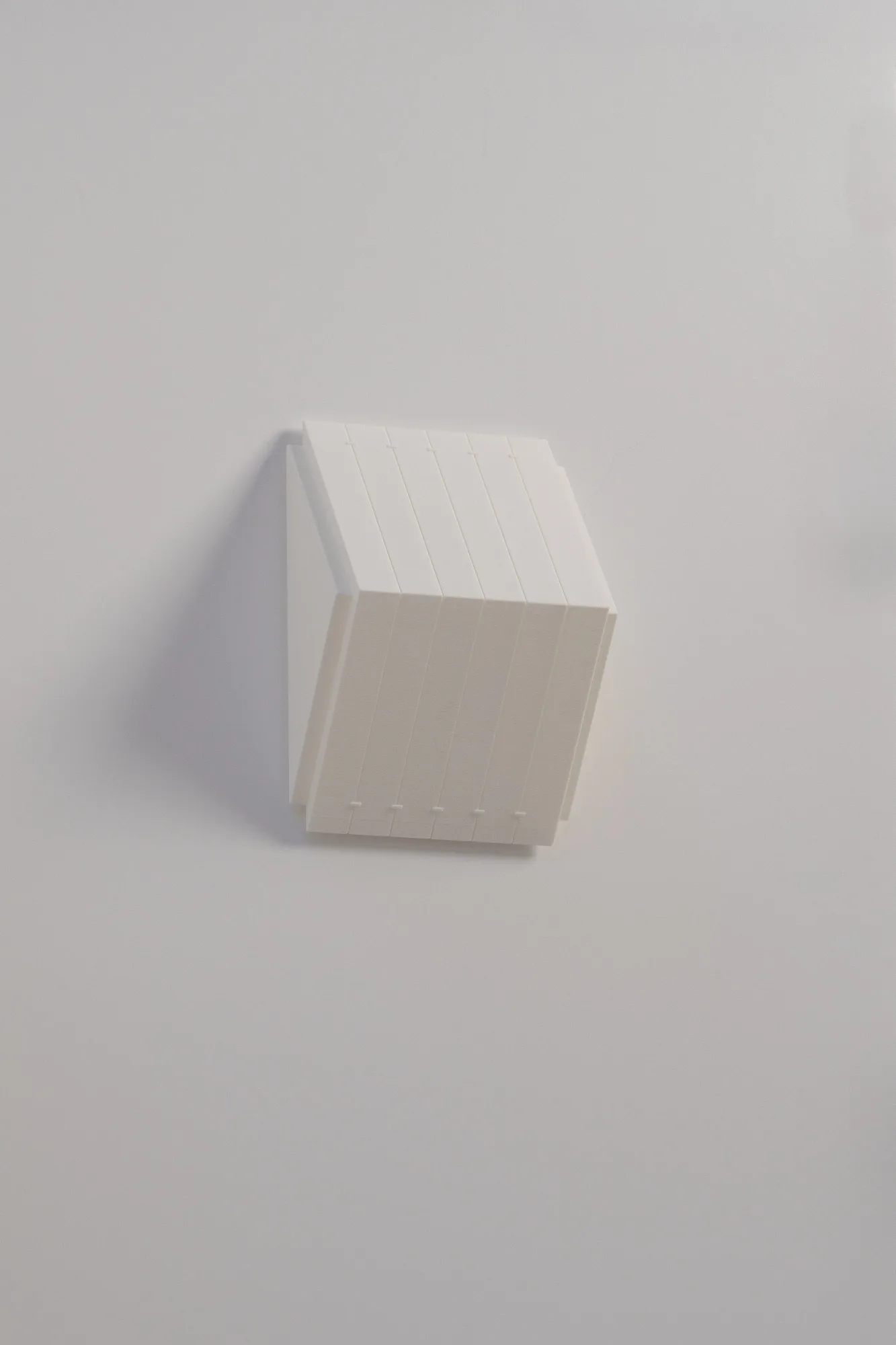
LEIT 02
-
LEIT 02: Each piece is composed through layered planes and horizontal seams, allowing structure and proportion to emerge through controlled variation. Layered planes and horizontal seams may affect how light spills and how easily you can access the bulb area, but the catalog does not provide installation or maintenance steps.
Dim light: separate expectation from fault
- Check the bulb first: If the LEIT 02 uses a replaceable bulb, swap in a known-good bulb of the same type and wattage. A dim or aged bulb is a common cause of low output. The catalog does not confirm the bulb type, so match whatever is currently installed or verify with the seller.
- Confirm dimmer compatibility: If the sconce is on a dimmer, the dimmer and bulb must be compatible. The LEIT 02 record does not state dimming capability, so do not assume it dims smoothly with every LED. Test at full brightness first, then dim slowly to see where flicker or drop-off begins.
- Rule out voltage and wiring: A dim sconce on a circuit with other loads can point to wiring or voltage issues. The catalog supplies no voltage rating for the LEIT 02, so have a qualified electrician verify the circuit rather than guessing.
- Distinguish design from defect: The stepped, layered design may produce shadows or uneven spill that reads as dimness. Compare the fixture against a plain wall wash before assuming a fault.
Flicker: a step-by-step sconce flickering fix
- 1. Tighten the bulb: A loose bulb in the socket is a frequent cause of flicker. With the power off, reseat the bulb firmly. The catalog does not describe the socket, so do not force anything.
- 2. Swap the bulb: Try a different bulb of the same type. If the flicker stops, the original bulb was the problem. If it continues, move to the next check.
- 3. Test without the dimmer: If the sconce is on a dimmer, bypass it temporarily or test the fixture on a non-dimmed circuit. Flicker that disappears points to dimmer-bulb incompatibility. The LEIT 02 record does not confirm dimmer compatibility, so this test is the only reliable way to know.
- 4. Check the circuit load: Flicker that affects multiple fixtures on the same circuit may be a wiring or load issue. Call an electrician; do not open the wall yourself unless you are qualified.
- 5. Know when to stop: If flicker persists after a bulb swap and a dimmer bypass, the cause is likely in the wiring or the fixture's internal connection. The supplied catalog does not include repair instructions, so contact the seller or a licensed electrician.
Wall sconce bulb fit: what to verify before buying
- Bulb type and base: The LEIT 02 catalog does not list a bulb base. Before ordering, ask the seller to confirm the base type (for example, E26 or E12) so you can match bulbs you already own.
- Maximum wattage: No wattage limit is supplied for the LEIT 02. Using a bulb with too high a wattage can damage a fixture or create a safety risk. Confirm the maximum rating with the seller before installing a higher-output bulb.
- Bulb shape and clearance: The layered planes and horizontal seams may leave limited room around the bulb. A bulb that is too long or too wide may not fit or may protrude awkwardly. Measure the opening if you can, or ask the seller for clearance dimensions.
- Dimmer and smart bulb compatibility: If you plan to use a dimmable LED or a smart bulb, confirm compatibility with the fixture and any dimmer. The catalog does not confirm either, so this is a pre-purchase question, not an assumption.
When the problem is the fixture, not the bulb
If you have swapped bulbs, bypassed the dimmer, and checked the circuit, and the LEIT 02 still flickers or runs dim, the issue may be inside the fixture. The supplied record includes no troubleshooting, repair, or warranty details. At that point, stop testing and contact the seller or a licensed electrician. Do not disassemble the fixture based on generic online advice, because the LEIT 02's internal construction is not documented in the catalog.
The same applies to fit problems that appear after installation. If a bulb physically does not seat or the fixture will not sit flush, the cause may be the mounting surface or the fixture's design rather than the bulb. The catalog gives no mounting specifications, so a conversation with the seller is more useful than trial and error.
A realistic pre-purchase checklist for the LEIT 02
Because the LEIT 02 record is design-focused, treat bulb and dimmer compatibility as open questions. Before you buy, ask the seller to confirm the bulb base, maximum wattage, dimming compatibility, and any clearance dimensions around the bulb. If you need a sconce that works with a specific bulb you already own, verify that first. The LEIT 02's stepped geometry is its confirmed strength; electrical specifics are not confirmed in the supplied information, so a few direct questions now will save troubleshooting later.