Start with what the can already gives you
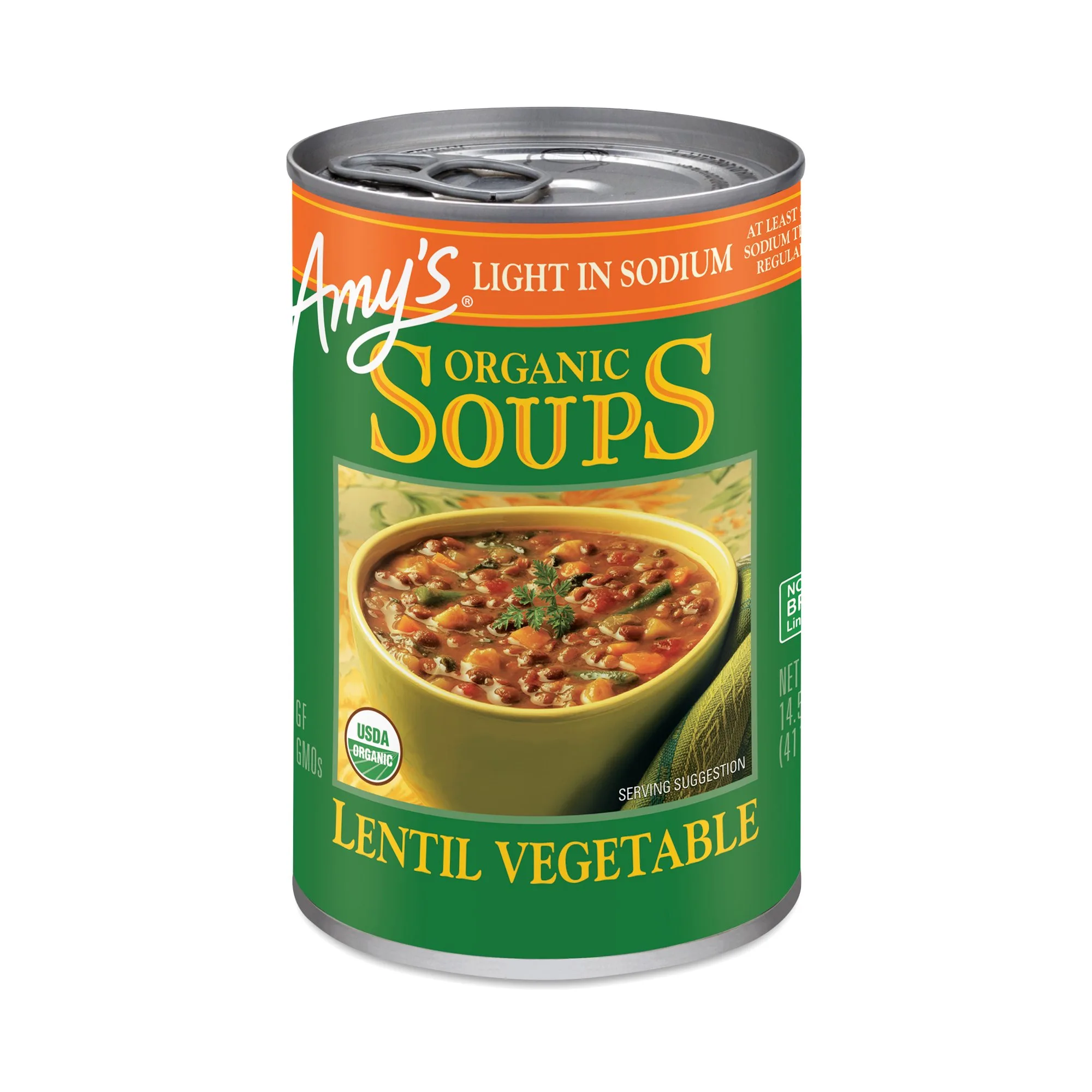
Amy’s Organic Light in Sodium Lentil Vegetable Soup is built around organic green lentils, celery, spinach, carrots, and potatoes. The label describes it as having 50% less sodium than Amy’s Homestyle Vegetable Soup, with 6g of plant-based protein and 5g of fiber per serving. It is also labeled Non-GMO, USDA-Certified Organic, Gluten Free, Dairy Free, and Vegan.
That combination means you do not need to add much to make it a meal. The soup already carries vegetables, lentils, and seasoning. Your job is to round it out without drowning the lower-sodium profile in salty ingredients.
The label facts that shape your serving plan
-
Lentil Vegetable Soup, Low in Sodium: One 14.5-oz can contains 6g of plant-based protein and 5g of fiber per serving. These numbers help you judge whether the can works as a light lunch on its own or needs a side to feel filling.
Lentil Vegetable Soup, Low in Sodium
-
Lentil Vegetable Soup, Low in Sodium: The soup is made with organic green lentils, celery, spinach, carrots, and potatoes. Knowing the vegetable mix helps you choose add-ins that complement rather than duplicate the existing flavors.
-
Lentil Vegetable Soup, Low in Sodium: It is described as Light in Sodium with 50% less sodium than Amy’s Homestyle Vegetable Soup. This is the key reason to treat salty add-ins cautiously; the lower-sodium base is the point of the product.
A simple way to heat and serve one can
The label gives two supported heating methods. Use one of them rather than improvising a different cooking time.
- Microwave method: Heat the soup in a microwave-safe bowl for 1 minute 30 seconds to 2 minutes.
- Stovetop method: Heat in a saucepan on the stove and stir occasionally.
- Check before serving: Stir before eating so the vegetables and lentils are evenly distributed, and let the soup stand briefly if it is too hot.
Add-ins that work with the lower-sodium base
The soup is a base, not a blank canvas. Choose additions that add texture, freshness, or substance without pushing the sodium back up.
- Fresh greens: Stir a handful of spinach or another quick-wilting green into the hot soup just before serving. The can already lists spinach, so this reinforces the existing flavor rather than fighting it.
- Cooked grains: Add plain cooked rice, barley, or small pasta to turn a cup of soup into a more filling bowl. Cook them separately and add at serving time so they do not absorb all the broth.
- Unsalted or low-sodium beans: Rinse canned beans before adding them. This adds plant protein and texture while keeping the sodium profile closer to the original can.
- Fresh herbs and acid: A squeeze of lemon or a sprinkle of fresh parsley or basil brightens the flavor without relying on salt.
- Plain yogurt or a dairy-free alternative: A spoonful stirred in at the table adds creaminess. Check the label on your yogurt or alternative if you are managing sodium or avoiding dairy.
Add-ins to approach with caution
Because the soup is intentionally lower in sodium, salty additions can quickly undo that benefit. The label does not list a sodium amount per serving in the supplied information, so use your own dietary targets when deciding how much of these to add.
- Bacon, ham, or salted sausage: These are high-sodium meats and will change the soup’s lower-sodium profile substantially.
- Soy sauce, bouillon, or salted stock: These are concentrated sodium sources. If you use them, start with a small amount and taste first.
- Salted crackers or cheese: They can work as a side, but portion them deliberately rather than treating them as a free addition.
Making it a fuller meal without extra salt
One can is a useful lunch base, but it may not be enough on its own for a hearty dinner. Pair it with a simple side that adds calories and texture without competing for attention. A slice of whole-grain bread, a small salad with a light dressing, or a piece of fresh fruit are straightforward options.
If you are packing it for work, keep add-ins separate until you are ready to eat. Cooked grains, fresh greens, and yogurt all hold up better when added just before serving rather than sitting in the soup for hours.
Storage and leftovers: what the supplied information covers
The supplied product information does not include specific storage instructions or a shelf life after opening. As a practical rule, refrigerate any soup you do not serve promptly and follow the can’s own label for any additional guidance. Do not leave the soup at room temperature for extended periods.
If you add cooked grains or beans, store them separately from the soup when possible. That keeps their texture from turning soft and makes it easier to reheat only what you plan to eat.
Product facts for your shopping list
- Lentil Vegetable Soup, Low in Sodium: Amy’s Organic Light in Sodium Lentil Vegetable Soup comes in a 14.5-oz can. The can size helps you plan whether it serves one person as a main dish or two as a starter.
- Lentil Vegetable Soup, Low in Sodium: The soup is labeled Vegan, Gluten Free, Dairy Free, Non-GMO, and USDA-Certified Organic. These labels matter if you are matching the soup to a specific dietary pattern, but check the full ingredient list on the can for your own allergen needs.